


A Training and Assessment Strategy (TAS) is the high-level document that explains how an RTO will deliver and assess a qualification, while a Training Plan sets out how training will be scheduled and managed for an individual learner or a specific cohort. For RTOs, understanding this difference is essential because both documents support quality delivery, learner progress, and compliance under the Standards for RTOs 2025, which took effect on 1 July 2025.
Running a Registered Training Organisation in Australia requires more than simply delivering training. It requires clear planning, documented systems, and evidence that training and assessment are structured to meet learner, industry, and regulatory expectations. A well-developed TAS supports qualification design and compliance, while a training plan helps organise delivery for learners in practical, workplace-based, apprenticeship, or traineeship contexts.
If these documents are confused or poorly developed, an RTO may struggle to demonstrate that training has been properly planned, resourced, and delivered. That is why this distinction matters for managers, compliance staff, trainers, and assessors alike.
In simple terms, a Training and Assessment Strategy explains how an RTO intends to deliver and assess a qualification or skill set, while a Training Plan explains how that training will be organised for a learner or cohort in practice.
A TAS is the blueprint. It sets the framework for delivery, assessment, learner support, resources, trainers, and course structure. A training plan is the roadmap. It turns that framework into a schedule or delivery sequence that shows what will happen, when it will happen, and who is involved.

Both documents are important, but they serve different purposes:
Without both working together, an RTO can face gaps between what is documented and what is actually delivered.
A Training and Assessment Strategy (TAS) is a document that sets out how an RTO will deliver and assess a qualification, accredited course, skill set, or unit grouping. Under the current regulatory framework, RTOs must be able to demonstrate that their training and assessment systems are structured, appropriate, and aligned to the relevant training product and learner needs.
A strong TAS usually includes:
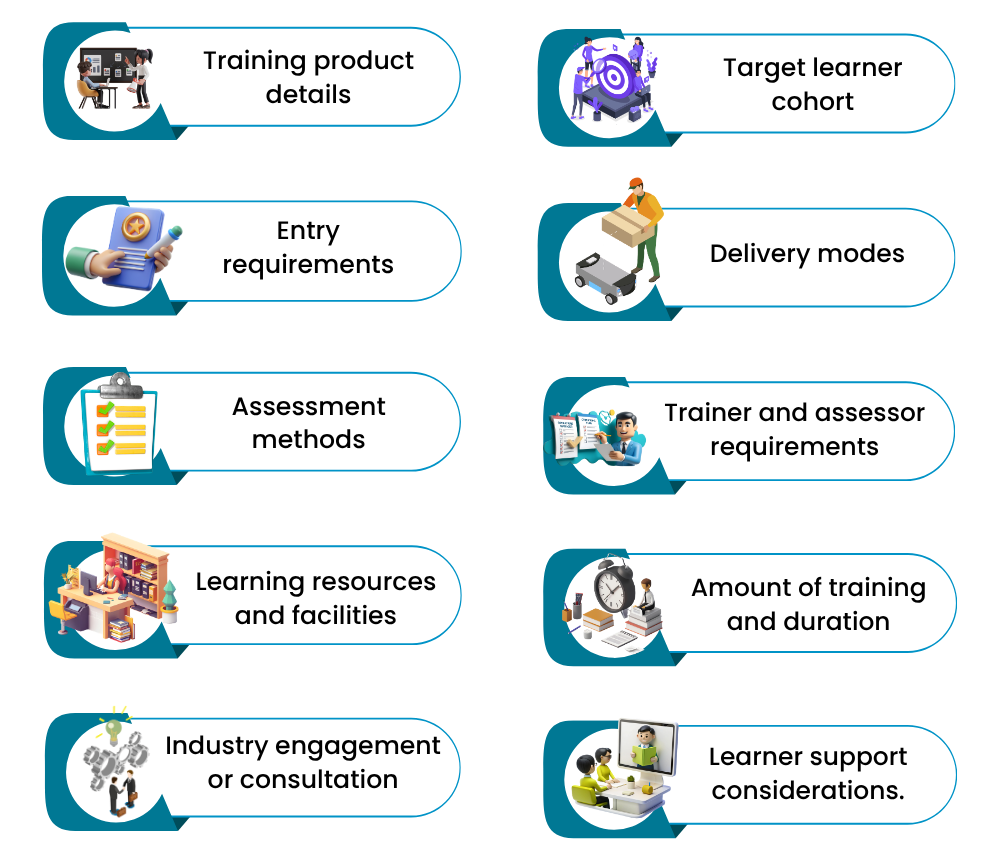
This document helps show that training has been planned before delivery begins. During audit or regulatory review, the TAS is often one of the first documents examined because it provides evidence of how the RTO has designed the course. ASQA’s 2025 regulatory direction places strong emphasis on quality outcomes, learner needs, and training systems that are genuinely fit for purpose.
A TAS matters because it helps an RTO:
A poorly prepared TAS can create compliance risks, especially if it does not reflect the actual delivery model or learner context.
A Training Plan is a more detailed and operational document. It outlines how training will be delivered to an individual learner or a specific group of learners, especially in apprenticeships, traineeships, and workplace-based training arrangements.
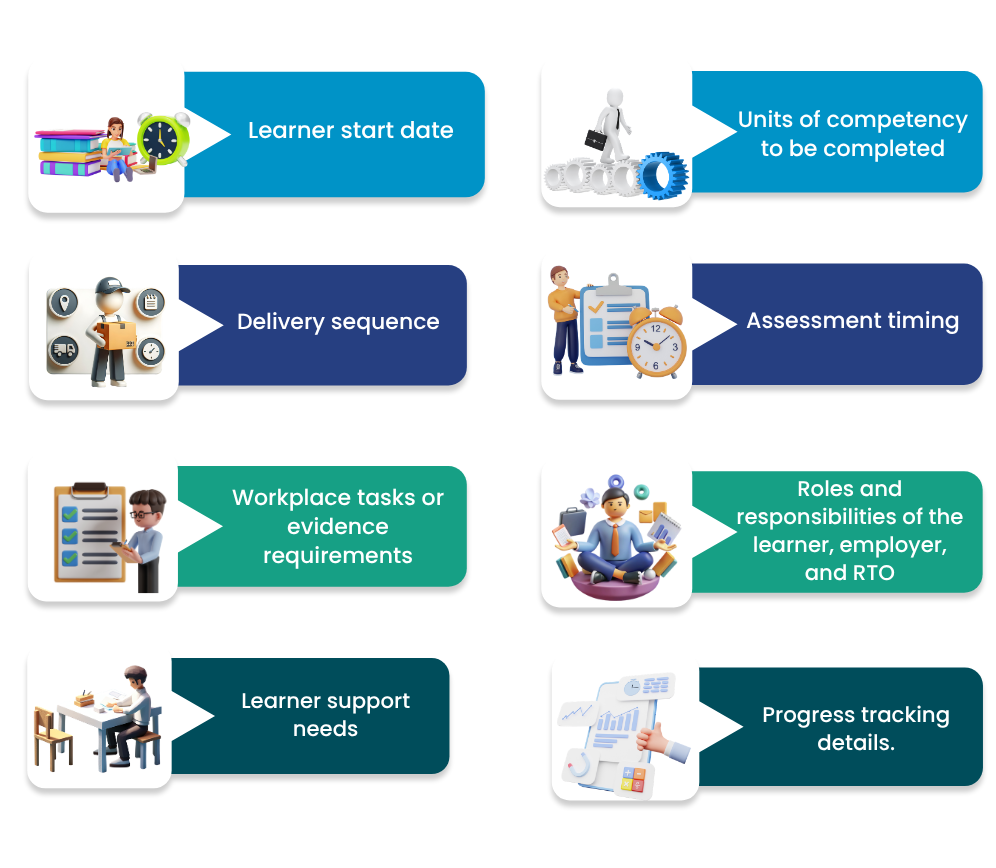
A training plan typically includes:
Where the TAS sets the broader framework, the training plan applies that framework in practice. It acts as a working document that helps everyone involved understand how the learner will move through the program.
In many workplace-based arrangements, the training plan also functions as a practical agreement between the learner, employer, and RTO. It helps keep delivery organised and supports the learner to stay on track.
Here is a clearer comparison.
Aspect | Training and Assessment Strategy (TAS) | Training Plan |
| Purpose | Sets out how the RTO will deliver and assess a qualification or course | Sets out how training will be scheduled and managed for a learner or cohort |
| Scope | Usually covers the full qualification, skill set, or course offering | Usually applies to an individual learner, workplace arrangement, or cohort |
| Focus | Compliance, structure, delivery model, assessment approach, learner cohort, resources | Trainers, assessors, learners, employers, and workplace supervisors |
Detail level | High-level framework | Detailed operational document |
Main users | RTO managers, compliance staff, auditors, trainers and assessors | Trainers, assessors, learners, employers, workplace supervisors |
| Timing | Developed before delivery begins | Used during delivery and updated as needed |
| Function | Demonstrates planning and consistency | Supports implementation and learner progress |
The TAS ensures the program is designed properly.
The Training Plan ensures it is delivered in an organised way.
RTOs should usually develop the TAS first, then create training plans that align with that strategy. That helps maintain consistency across delivery sites, learner cohorts, and workplace settings.
A compliant TAS should not be a generic template filled in once and forgotten. It should reflect how the RTO actually delivers and assesses the qualification.

Before developing the TAS, identify:
This helps ensure the strategy is realistic and fit for purpose.
The TAS should clearly show how learners will achieve the required outcomes of the training product. Units, assessment methods, sequencing, resources, and trainer capability should all align with the relevant requirements.
Industry input helps confirm that the training reflects current workplace expectations. Consultation can also help shape delivery methods, assessment conditions, equipment requirements, and job-role relevance.
One of the most common compliance issues occurs when the TAS says one thing, but delivery happens differently. Make sure the document reflects real delivery duration, learner support, facilities, staffing, and assessment practice.
TAS documents should be reviewed when:
Version control is essential so the RTO can show what changed and why.
A Training and Assessment Strategy is the document that explains how an RTO will deliver and assess a qualification, skill set, or course. It usually covers delivery modes, learner cohort, assessment methods, resources, staffing, and course structure.
No. A TAS is the high-level design and compliance document, while a Training Plan is the practical delivery schedule or progression document for a learner or cohort.
A TAS helps demonstrate that training and assessment have been planned properly and are aligned with learner needs, training product requirements, and the RTO’s delivery model. The 2025 Standards for RTOs place strong emphasis on quality systems and outcomes.
A strong TAS should include the training product details, target learner group, entry requirements, amount of training, delivery mode, assessment approach, trainer and assessor requirements, learning resources, facilities, and any relevant industry input.
Training plans are commonly used in apprenticeships, traineeships, and workplace-based delivery. They are also useful when an RTO needs to document the sequence, timing, and responsibilities for a learner or cohort.
A TAS should be reviewed whenever there are changes to the training product, learner cohort, delivery model, industry expectations, or compliance requirements. It should also be reviewed after validation or audit feedback.
Understanding the differences between the Training and Assessment Strategy vs Training Plan is essential for any RTO that wants to deliver structured, compliant, and industry-relevant training.
A TAS gives your organisation the strategic framework for delivery and assessment. A training plan turns that framework into an actionable path for learners. When both documents are aligned, your RTO is in a stronger position to support learner outcomes, maintain consistency, and demonstrate compliance.

