


In the rapidly evolving education and training landscape, Registered Training Organisations (RTOs) play a crucial role in equipping individuals with the skills and knowledge they need for a successful career. As technology continues to reshape the way we learn, providing learners with contextualised learning materials that align with real-world scenarios is becoming increasingly important.
This blog post explores the potential of contextualised learning materials in RTO education and training, highlighting their benefits to learners and educators.
Contextualising a unit of competency is necessary for RTOs to ensure that their learners experience the highest quality of training. This process involves adapting the material provided to each learner’s individual professional environment and cultural background so that they can apply it successfully in practice after leaving the classroom. Contextualising helps create content that resonates with students, rather than simply providing generic information and industry guidelines which do not apply in every situation or workplace setting. Through this process, an RTO is able to provide content that encourages students to think critically about how best to use the skills they have acquired in their future employment.
By letting learners actively engage with the material presented, contextualisation allows them to make better connections between theoretical knowledge, practical understanding and real-world application while giving them greater confidence when entering a job role outside of RTO training. For an RTO to deliver high levels of training quality, all learning materials must be properly contextualised – taking into account the individuals involved and any statutory regulations or work-relevant conditions specific to their industry and position.
Contextualising training materials and assessment tools is an important step to ensure that the qualification or endorsed course provides learners with the skills required for their industry of choice. When contextualising materials, it’s important to consider the practical and theoretical elements while also examining the professional attributes that learners will need in the workforce. It’s also necessary to recognise any legal requirements specific to each industry when capturing the information that needs to be included in the qualification or endorsed course.
The process of contextualising can be complex and time-consuming but is essential in ensuring your materials are up-to-date with regard to content, relevance, and accuracy. To assist you, we’ve created a comprehensive RTO materials contextualisation guide containing detailed advice on how to modify your existing materials and recognition tools for your qualification or endorsed course. The guide explains what needs to be done during each step of this process, giving you an efficient system that ensures all content is tailored correctly for each sector. Our dedicated team is always here if you need further support throughout this process.
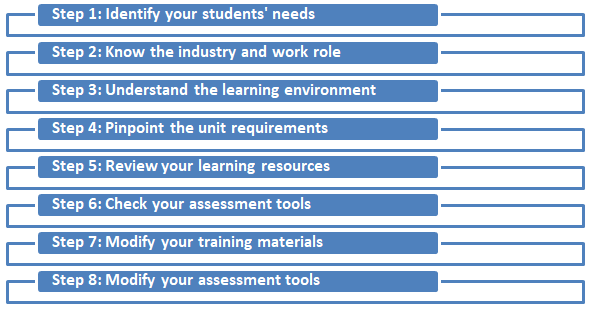
For a detailed overview of the step-by-step process, read our blog A Comprehensive Guide to Contextualising Units of Competency.
Contextualisation is an important part of training and assessment resources. It involves tailoring the learner materials and assessments in ways that make them relevant to the specific industry, context or setting in which they are being used. This process should take into account the learner’s individual circumstances, as well as the current industry and market conditions for that particular area. Contextualising learning material can be presented in a way that resonates with students to help them achieve better understanding and performance.
RTOS must get contextualisation right when developing their training and assessment materials; otherwise, they risk being deemed non-compliant by regulatory bodies such as the Australian Skills Quality Authority (ASQA). Unfortunately, many organisations fall into this trap due to confusion over what actually constitutes appropriate contextualisation. Contextualisation should not simply be a way of making a piece of material more interesting – it must be based on practical examples from within the industry and up-to-date information about emerging developments to make relevant connections for learners. The wrong approach to contextualising will lead to irrelevant material which has little chance of engaging trainees on a meaningful level.
Traditional approaches to education often rely on generic and abstract learning materials, detached from real-life situations. While these materials may cover the theoretical aspects of a subject, they often fail to bridge the gap between knowledge and its practical application. On the other hand, contextualised learning materials are designed to immerse learners in relevant, authentic scenarios that replicate the challenges they are likely to encounter in their future workplaces.
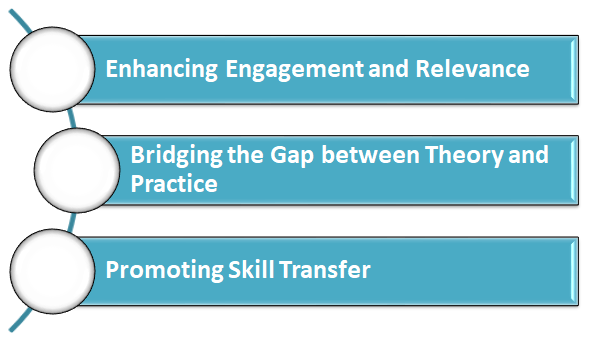
Contextualised learning materials have the power to capture learners’ attention by presenting content within a meaningful context. By relating the subject matter to real-life situations, learners can better understand its relevance and develop a deeper level of engagement. This approach fosters active participation, critical thinking, and problem-solving skills, making learning more dynamic and enjoyable.
One of the primary challenges in education and training is ensuring that learners can apply their theoretical knowledge in real-world scenarios. Contextualised learning materials help bridge this gap by presenting content in a practical context, allowing learners to explore the application of concepts and theories in authentic settings. This application-based approach facilitates a deeper understanding of the subject matter and better prepares learners for the challenges they may face in their professional careers.
Contextualised learning materials are particularly effective in promoting skill transfer. By presenting content in context, learners can better understand how different skills and knowledge areas intersect and complement each other. This approach encourages learners to transfer their newly acquired knowledge and skills across various situations, improving their adaptability and problem-solving abilities.
 To harness the full potential of contextualised learning materials, RTOs need to incorporate them strategically into their curriculum design and delivery.
Identify the Learning Outcomes: Clearly define the desired learning outcomes and competencies. This will help align the contextualised learning materials with the specific skills and knowledge learners need to acquire.
Analyse Industry Needs: Conduct thorough research on industry trends, job requirements, and emerging skill demands. This analysis will guide the selection of appropriate scenarios and ensure that the contextualised learning materials reflect real-world challenges.
Collaborate with Industry Partners: Foster collaborations with industry partners to gain insights into their specific needs and requirements. By involving industry professionals in the design and development of contextualised learning materials, RTOs can ensure their relevance and effectiveness.
Leverage Technology: Embrace technological tools and platforms to deliver contextualised learning materials efficiently. Virtual reality simulations, interactive videos, and online platforms can create immersive and engaging learning experiences, further enhancing the effectiveness of contextualised learning materials.