


Australia’s international education sector contributes billions of dollars annually to the national economy and supports hundreds of thousands of student enrolments across vocational education, higher education, schools, and English language providers. As international student numbers continue to grow, regulatory scrutiny has intensified, particularly within the Vocational Education and Training (VET) sector.
One of the most significant regulatory developments in 2026 is the temporary suspension of new CRICOS registration applications and many CRICOS add-to-scope applications assessed by ASQA.
The announcement has created uncertainty among Registered Training Organisations (RTOs), especially those considering expansion into international education or planning to broaden their CRICOS delivery scope.
Despite widespread discussion across the sector, there is still considerable confusion about what the suspension actually means. Some providers mistakenly believe existing CRICOS registrations have been suspended, while others are uncertain about their ongoing obligations under the ESOS framework.
The reality is more nuanced.
For existing CRICOS providers, international student delivery can continue. However, the suspension sends a clear message that regulatory expectations around governance, compliance, student support, and provider capability are becoming increasingly rigorous.
This article explains what the CRICOS registration suspension means, why it was introduced, how it affects RTOs, and what providers should do now to protect their compliance position and prepare for future growth.
The Commonwealth Register of Institutions and Courses for Overseas Students (CRICOS) is Australia’s official register of education providers approved to deliver training and education to international students studying on student visas.
For an RTO, CRICOS registration represents far more than permission to enrol overseas learners. It demonstrates that the organisation has met additional requirements under Australia’s international education framework and can comply with obligations designed to protect overseas students.
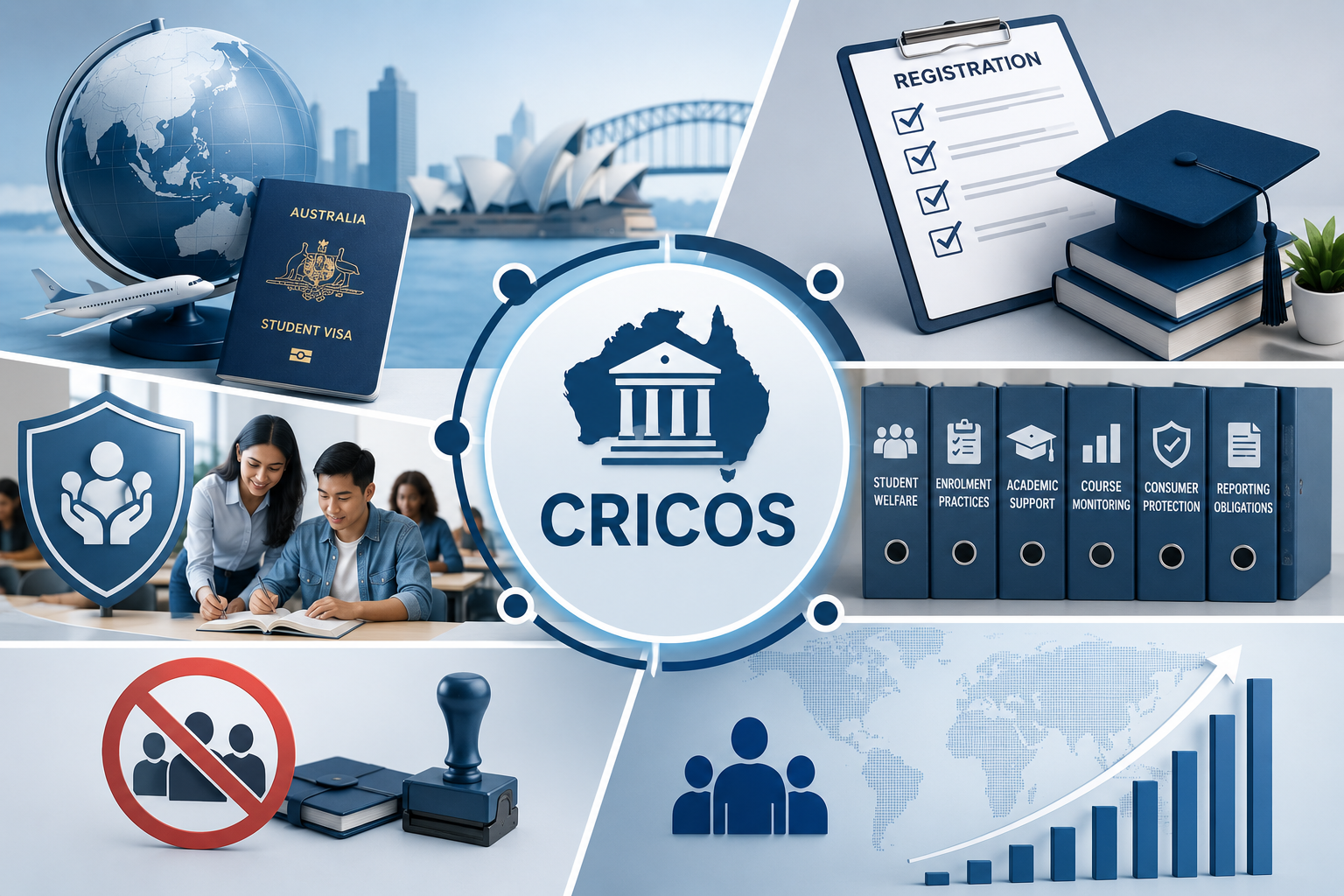
CRICOS providers must meet requirements relating to student welfare, enrolment practices, academic support, course monitoring, consumer protection, reporting obligations, and ongoing compliance with the National Code and ESOS legislation.
Without CRICOS approval, an RTO cannot recruit or enrol international students requiring a student visa.
For providers seeking to diversify revenue streams and expand their market reach, CRICOS registration has traditionally represented a significant growth opportunity.
One of the biggest misconceptions surrounding the 2026 announcement is that CRICOS registrations themselves have been suspended.
This is not the case.
The temporary measure primarily impacts:

New CRICOS registration applications

Many CRICOS add-to-scope applications

Certain expansion activities involving international student delivery
Existing CRICOS providers remain able to continue operating under their approved registration arrangements.
This means providers can continue:

Understanding this distinction is essential because it changes how RTOs should respond.
Rather than preparing for operational disruption, most existing providers should focus on strengthening compliance systems and demonstrating ongoing capability.
The international education sector has experienced significant growth in recent years.
While growth creates opportunities, it also increases regulatory risks.
Government agencies have expressed concerns about maintaining educational quality, protecting student interests, and ensuring providers entering the market possess the resources and governance structures necessary to deliver quality outcomes.
The suspension provides regulators with additional capacity to strengthen oversight while reviewing how future CRICOS growth should occur.
From a regulatory perspective, the objective is not to restrict genuine providers but to ensure future expansion supports the long-term integrity and reputation of Australia’s education system.
For high-quality RTOs, stronger regulatory oversight can ultimately benefit the sector by improving confidence among students, employers, industry stakeholders, and government agencies.
Although existing providers can continue operating, the suspension should not be viewed as a signal that compliance risks have reduced.
In many respects, the opposite is true.
Periods of regulatory change often coincide with increased scrutiny.
Providers should expect continued focus on:
International students require access to appropriate academic and non-academic support services throughout their learning journey.
RTOs should be able to demonstrate how student needs are identified, monitored, and addressed.
Monitoring academic progression remains a key compliance obligation.
Providers should have systems capable of identifying students at risk and implementing timely intervention strategies.
Education agents continue to play an important role in international student recruitment.
However, RTOs remain accountable for ensuring agents operate ethically and accurately represent courses and services.
Marketing materials must accurately reflect course outcomes, delivery arrangements, fees, support services, and student expectations.
Misleading promotional practices remain a significant compliance risk.
Accurate and timely reporting remains one of the most critical responsibilities for CRICOS providers.
Strong administrative systems are essential for maintaining compliance.
Many compliance issues do not arise from deliberate misconduct.
Instead, they develop gradually through weak systems, inadequate oversight, or poor documentation practices.
Some of the most common risk areas include:

A recurring challenge for many RTOs is assuming that operational activity alone demonstrates compliance.
In reality, regulators assess evidence.
If compliance activities cannot be documented and verified, providers may struggle to demonstrate that obligations have been met.
Rather than adopting a wait-and-see approach, providers should use this period to strengthen compliance maturity.
Practical actions include:
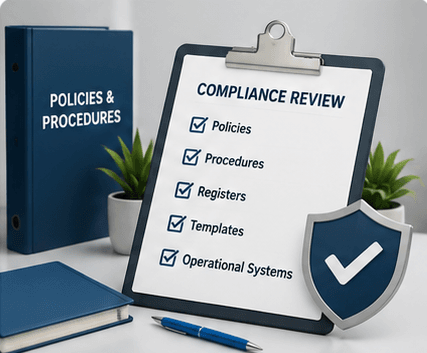
Review all policies, procedures, registers, templates, and operational systems relating to international student delivery.

Verify that records contain sufficient evidence of enrolment processes, support activities, intervention strategies, and ongoing monitoring.

Ensure senior leadership receives regular compliance reporting and maintains oversight of key risk areas.

Review agreements, monitoring activities, performance measures, and due diligence records.

Use audit findings, complaints data, stakeholder feedback, and performance outcomes to drive ongoing improvement activities.
Many RTOs had planned to expand their international operations through additional CRICOS courses or new registration applications.
While these plans may need to be postponed, the suspension creates an opportunity to strengthen organisational capability before future applications become available.
Providers that invest in compliance, governance, quality assurance, and learner outcomes today will be better positioned when application pathways reopen.
The strongest organisations will emerge from this period with improved systems, stronger evidence, and greater confidence in their ability to meet regulatory expectations.
ASQA’s CRICOS registration suspension is one of the most important regulatory developments affecting the VET sector in 2026. While the temporary measure affects new applications and certain expansion activities, existing CRICOS providers can continue delivering training to international students.
The announcement should not be viewed solely as a restriction on growth. Instead, it serves as a reminder that quality, accountability, governance, and compliance remain central to Australia’s international education framework.
For RTOs committed to long-term success, the priority should be clear: strengthen systems, improve evidence, support students effectively, and maintain a culture of continuous compliance improvement.

The 2026 CRICOS registration suspension is a temporary pause affecting new CRICOS registration applications and many add-to-scope applications assessed by ASQA. The measure was introduced to strengthen oversight and maintain the integrity of Australia’s international education sector.
No. Existing CRICOS providers can continue enrolling and delivering training to international students under their approved registrations, provided they continue meeting all compliance obligations.
Yes. RTOs that already hold CRICOS registration can continue enrolling eligible international students into approved CRICOS courses and delivering training as usual.
CRICOS registration refers to an education provider’s approval to deliver courses to overseas students studying on student visas. CRICOS approval is often used to describe the successful registration of both the provider and its approved courses on the CRICOS register.
The suspension was introduced to strengthen quality assurance, improve regulatory oversight, and ensure that providers entering or expanding within the international education market have appropriate governance, resources, and compliance systems in place.
In most cases, new CRICOS registration applications are affected by the suspension. Providers considering future CRICOS registration should continue preparing their compliance systems and documentation so they are ready when application pathways reopen.
Existing CRICOS providers must continue complying with all relevant ESOS legislation and National Code requirements, including student support, monitoring academic progress, record keeping, reporting obligations, and education agent management.
Yes. The suspension does not reduce ASQA’s regulatory responsibilities. Providers should continue maintaining compliance records and be prepared for audits, monitoring activities, or compliance reviews.
Common risk areas include inadequate student support documentation, poor record keeping, weak governance arrangements, inaccurate reporting, ineffective education agent oversight, and outdated policies and procedures.
RTOs can use this period to strengthen governance structures, review compliance frameworks, improve internal audit processes, enhance student support systems, and ensure all documentation accurately reflects operational practices.
Many add-to-scope applications are affected by the suspension. Providers planning to introduce new CRICOS courses should monitor regulatory updates and prepare supporting evidence for future applications.
The Education Services for Overseas Students (ESOS) framework establishes the legislative requirements that protect international students studying in Australia. It outlines provider obligations relating to quality, welfare, consumer protection, and compliance.
The National Code sets standards that CRICOS providers must meet when delivering education and training to overseas students. Compliance with the National Code is a key requirement of maintaining CRICOS registration.
Yes. Separate from the 2026 application suspension, ASQA can take regulatory action against providers that fail to meet compliance requirements. This may include conditions, suspension, or cancellation of registration in serious cases.
RTO leaders should prioritise compliance governance, student support systems, internal audits, staff capability, evidence collection, risk management, and continuous improvement activities to ensure ongoing compliance and future readiness.


