


ASQA’s Smart Regulation approach represents the most significant shift in VET regulation in over a decade, designed to cut red tape while maintaining quality training outcomes. This comprehensive reform focuses on giving RTOs more flexibility in how they demonstrate compliance, reducing unnecessary paperwork, and using technology and data to make regulation smarter and more efficient.
Smart Regulation is ASQA’s strategy to identify and eliminate unnecessary regulatory burden while improving productivity across the VET sector. The approach follows three core principles: “trimming” efforts that offer limited value, “dumping” administrative tasks where outcomes can be achieved other ways, and “refining” risk-based regulation using ASQA’s full range of powers. This means less time spent on compliance paperwork and more focus on delivering quality training outcomes for students and industry.
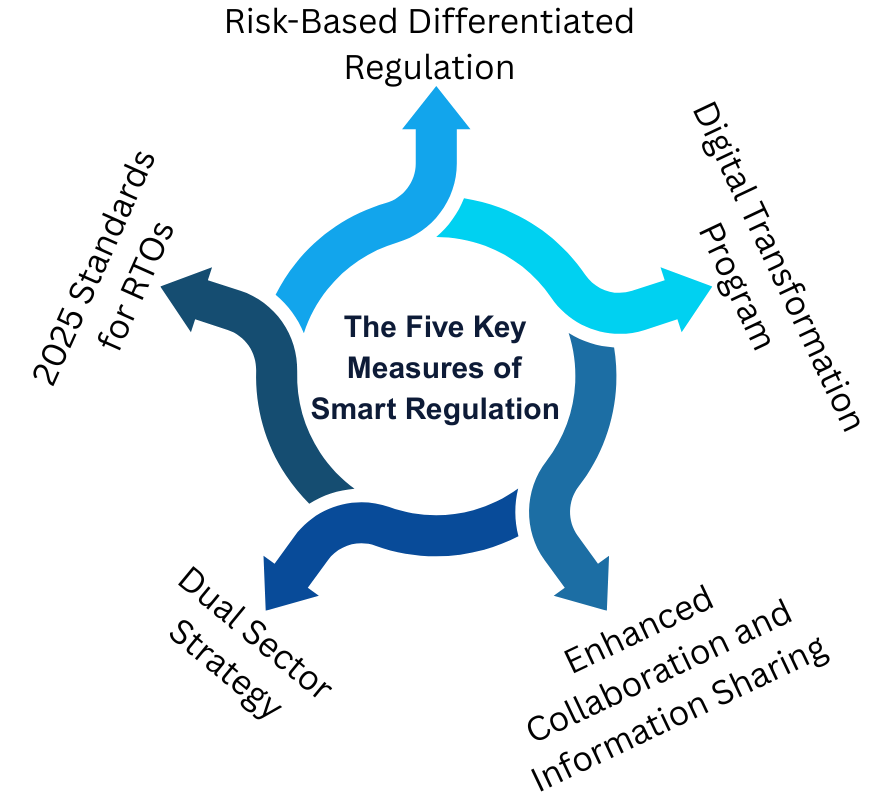
1. 2025 Standards for RTOs: Flexibility Over Checklists
The 2025 Standards, which came into effect on 1 July 2025, represent the biggest change in how RTOs demonstrate compliance. Instead of prescriptive tick-box requirements, the new Standards focus on quality outcomes and give providers freedom to demonstrate compliance in ways that suit their unique operations.
Key changes include:
ASQA’s sector engagement program showed providers rated their preparedness at 4.0 out of 5 and motivation for change at 4.6 out of 5, indicating strong sector readiness. The revised assessment approach allows RTOs to tailor their compliance systems to their specific context, size, and student cohorts.
2. Dual Sector Strategy: Reducing Duplication for VET and Higher Education Providers
For the 57 providers delivering both VET and higher education, ASQA and TEQSA have released a joint Dual Sector Regulatory Strategy to eliminate duplicative administration. This three-year program focuses on improved information sharing between regulators, aligned regulatory processes and evidence requirements, and support for providers to strengthen governance.
The strategy directly responds to the Australian Universities Accord Final Report’s call to streamline regulation for dual sector providers.
Benefits include:
3. Risk-Based Differentiated Regulation: Rewarding Compliant RTOs
ASQA’s maturing risk-based approach means compliant providers get less regulatory burden while high-risk providers receive closer scrutiny. This differentiated regulation considers the level of oversight providers already have from other government departments and uses this for greater assurance with reduced administrative load.
The approach works on two levels:
High-performing RTOs benefit through streamlined assessments, longer registration periods, greater autonomy, and delegated course accreditation capabilities. Meanwhile, higher-risk providers may face more regulatory activities, registration conditions, or shortened registration periods. ASQA considers scale, impact, and the provider’s commitment to maintain compliance before deciding next steps.
4. Digital Transformation Program: Modernizing Regulatory Systems
ASQA’s Digital Transformation Program is implementing contemporary systems to interface directly with the VET sector and improve efficiency. This multi-year investment focuses on whole-of-government best practices and cost recovery efficiency maximization.
Key digital improvements include:
The transformation enables providers to find relevant information easier and supports real-time performance tracking through data analytics.
5. Enhanced Collaboration and Information Sharing
ASQA is working closely with the Department of Employment and Workplace Relations (DEWR) and other regulators to reduce legislative complexity and improve system efficiency. This includes identifying opportunities to remove duplication across the entire VET ecosystem.
The collaborative approach extends to sector stakeholders through ongoing engagement, additional resources, and listening to providers to identify gaps in understanding. ASQA’s commitment includes measuring and sharing effectiveness of implementation to ensure positive outcomes for learners, industry, and the economy.

ASQA’s Smart Regulation approach signals a mature, modern regulatory environment that trusts compliant providers while protecting students and industry through targeted, risk-based oversight. The key is shifting your mindset from checklist compliance to genuine quality assurance and continuous improvement.


