

Registered Training Organisations (RTOs) are pioneering transformative training projects to hone essential foundation skills in the heart of the Australian vocational education landscape. Leveraging a robust collection of RTO materials and dynamic training packages, these hubs of learning are your gateway to unparalleled ICT training and LLND specialist support. With seasoned vet practitioners and adept industry trainers at the helm, we are crafting a future where Australian training meets industry demands seamlessly.
As we venture further, we spotlight the pivotal role of the Australian VET system in fostering a competent workforce. Delve into the intricacies of the foundation skills training package, a rich resource designed to elevate your learning experience. In this evolving domain, we bridge skill gaps and nurture a culture of continuous development, integrating cutting-edge ICT training resources and innovative instructional strategies. Join us in this transformative journey, where training research meets practical application, setting new benchmarks in the vocational education sector.

In the dynamic world of vocational education, the role of Language, Literacy, Numeracy, and Digital Literacy (LLND) stands as a cornerstone. These foundational skills are the bedrock of comprehensive training projects, vital in the ever-evolving landscape of Australian training.
At the core of every successful training program is a robust foundation in LLND skills. These skills span a wide array of abilities, crucial in comprehending and effectively utilising training materials. In RTO learning, LLND skills pave the way for a seamless transition into diverse vocational training programs, facilitating the easy grasp of complex concepts.
From bustling hubs in South Australia to tranquil settings in Western Australia, LLND specialists are tirelessly crafting learning resources to meet learners’ diverse needs. Armed with a profound understanding of adult literacy and numeracy programs, these specialists are pivotal in developing training resources that resonate with learners at various levels.
Despite the focused efforts to bolster LLND skills support, learners often face several challenges during their training journey. These challenges range from language barriers, necessitating improved English language skills, to difficulties in understanding complex training materials. Moreover, adapting to the digital literacy demands of modern training programs stands as a significant hurdle.
To counter these issues, RTOs across Australia actively implement support strategies catering to individual learner needs. These strategies encompass offering personalised training programs and providing additional support materials, ensuring learners acquire the necessary training to excel in their chosen vocational paths.
To cultivate a nurturing and inclusive learning environment, RTOs have embraced various strategies to assist learners. These strategies encompass individual tutoring, offering learners one-on-one guidance from experienced practitioners, and flexible RTO assessment tools that cater to diverse learning styles.
Furthermore, RTOs are adapting tasks to allow for more practice, aiding learners in bridging skill gaps effectively. Through collaborative efforts with industry professionals and vocational training providers, RTOs are crafting training resources that are both engaging and informative, facilitating a seamless learning experience for all.
To further strengthen the LLND skills support system, numerous resources and support services have been established across Australia. These include the Reading Writing Hotline, a vital resource offering advice on reading and writing learning materials, and various apps assisting with literacy development. Additionally, learners can utilise technology, such as Microsoft Word, to translate text into other languages, enhancing their comprehension of the training materials.
In the fluctuating landscape of Australian vocational education, the decreasing number of LLND specialists is becoming a critical issue. These professionals, once a thriving force in the sector, are now facing a decline, raising concerns about the future availability and quality of RTO training materials and resources.
In the past, Australia was home to a vibrant ecosystem of LLND specialists cultivated through extensive training programs and courses from renowned institutions. These experts were the pillars of RTO training resources, crafting engaging and educational materials. However, a significant shift has occurred, with fewer institutions offering specialist graduate qualifications in adult literacy and numeracy, impacting the richness of training projects and foundation skills development.
As we stand in 2025, the outlook appears somewhat bleak. Opportunities for pursuing specialist qualifications in adult literacy and numeracy are narrowing, with only a handful of RTOs offering primarily online courses. This shift, influenced by changes in government policy and educational institutions leaning towards cost-cutting measures, has led to a decline in the quality of RTO learning materials, a trend that demands urgent attention and reversal.
This decline brings multiple repercussions. There is a growing concern about the dwindling quality of RTO training resources, coupled with an increasing reliance on VET trainers. These trainers, although equipped with TAELLND411 units, lack the qualification as literacy specialists. This situation presents a significant challenge, especially in meeting learners’ specific requirements and ensuring the creation of comprehensive training materials that foster industry currency and literacy skills development.
Despite the hurdles, hope persists. The inception of the TAELLND411 unit, mandated by ASQA, stands as a glimmer of hope. While primarily serving as an awareness unit, it urges trainers to collaborate with adult literacy experts, nurturing a culture of continuous learning and professional development. This collaborative approach might herald the resurgence of LLND specialists, securing the future availability of quality training resources and materials.
In the dynamic world of Australian vocational education, securing LLND specialist support has emerged as a central concern for RTOs. This support, often orchestrated by experienced LLND practitioners, is crucial in elevating the quality of RTO training resources and learning materials. In this segment, we explore the diverse channels through which LLND support can be accessed, emphasising the pivotal role of TAFE colleges, independent consultants, and government initiatives in cultivating a nurturing learning environment.
The necessity for LLND specialists within RTOs is more evident now than ever before. These specialists, armed with a rich repository of knowledge and expertise, play a vital role in crafting training materials that meet the diverse needs of learners. From steering vocational training projects to advising on RTO learning resources, LLND specialists are the cornerstone in nurturing an inclusive and supportive learning culture.
To meet the diverse needs of learners, RTOs have embraced various approaches to LLND support. While TAFE colleges and large RTOs typically house in-house LLND specialists, smaller RTOs often collaborate with independent consultants. These consultants, with their extensive experience, bring a fresh perspective, aiding in the creation of training materials that are both engaging and insightful.
To strengthen the LLND support system, the Australian government has initiated several funding programs. These initiatives, which frequently offset the costs associated with LLND support, have encouraged a culture of continuous learning and development. For instance, state-based apprenticeship and traineeship funding programs often allocate extra resources for learners in need of LLND support, guaranteeing access to essential training resources and fostering foundation skills.
Integration is key in the realm of LLND support. By harmoniously integrating LLND support with vocational training projects, learners can directly correlate the assistance they receive with the technical skills they are developing. This approach enhances the learning experience, effectively bridging skill gaps and fostering a culture of continuous improvement and professional development.
In the vibrant sphere of Australian vocational education, the focus on amplifying Language, Literacy, Numeracy and Digital Literacy (LLND) support within Registered Training Organisations (RTOs) is paramount. In this section, we delve into the diverse strategies and resources pivotal in cultivating a nurturing and inclusive learning environment, spotlighting the role of technology, government initiatives, and collaborative endeavours in refining the quality of RTO training materials and learning resources.]
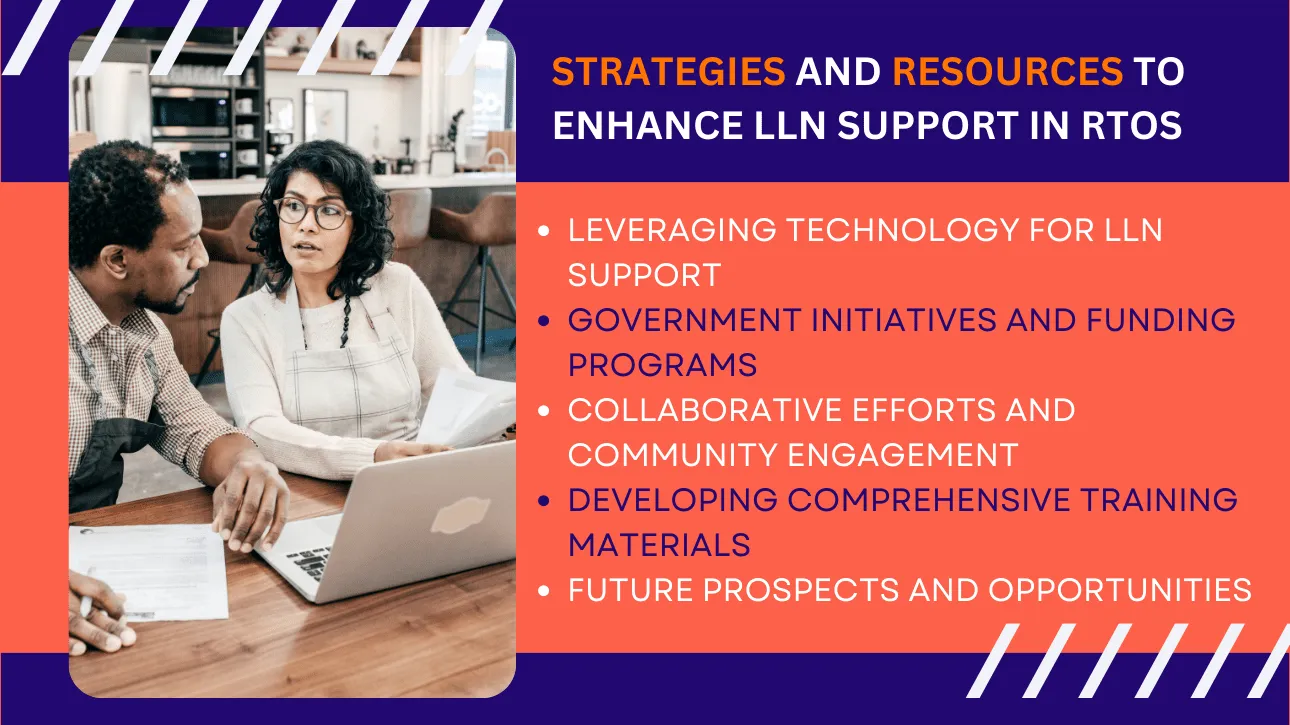
In the digital era, technology emerges as a formidable ally in bolstering LLND support. From harnessing apps that aid literacy development to platforms offering enriching online courses, technology has transformed the delivery of LLND support. Tools like Microsoft Word have become vital in translating text into various languages, dismantling language barriers and fostering an inclusive learning environment.
The Australian government has spearheaded numerous funding programs and initiatives to strengthen the LLND support system. These ventures, often led by industry organisations and educational institutions, are centred on crafting training materials that meet the diverse needs of learners. These initiatives, offering subsidies for LLND programs and extra funding for the development of learning materials, are fostering a culture of continuous learning and professional development.
Collaboration is a fundamental element in enhancing LLND support within RTOs. Through concerted efforts with industry professionals and vocational training providers, and community services, RTOs are forging a nurturing and inclusive learning environment. Furthermore, community and industry engagement fosters a holistic approach to LLND support, encouraging a culture of innovation and continuous improvement.
At the core of every successful training program lies a comprehensive set of training materials. Crafted by experienced LLND practitioners and specialists, these resources facilitate a seamless learning journey. Offering insights into industry best practices and presenting case studies of businesses, these materials are invaluable resources for learners, aiding them in navigating the intricacies of the vocational training landscape.
Looking ahead, the prospects for amplifying LLND support in RTOs are promising. With unified efforts from government entities, educational institutions, and industry organisations, there is escalating momentum towards creating strategies and resources that cater to the evolving needs of learners. From nurturing professional development opportunities to enhancing the quality of RTO training materials, the future brims with potential for innovation and growth in the sector.
In Australia’s vibrant and ever-evolving sphere of vocational education, navigating the challenges and crafting viable solutions in Language, Literacy, and Numeracy (LLND) support stands as a critical task for Registered Training Organisations (RTOs). As we delve into this section, we will explore the potential hurdles and the innovative strategies that are being implemented to overcome them, focusing on fostering a nurturing, inclusive, and adaptive learning environment.
Identifying potential challenges is the first step in the journey towards enhancing LLND support. These challenges may range from linguistic barriers, where learners grapple with language literacy, to adapting to the rapidly evolving digital literacy landscape. Moreover, developing compliant learning resources that cater to the diverse needs of learners stands as a significant hurdle in the current scenario.
To navigate these challenges, RTOs are crafting innovative, adaptive, and inclusive solutions. These solutions encompass a wide array of strategies, from developing training materials aligned with the industry’s needs to fostering a supportive learning environment where learners can thrive. Moreover, the emphasis on professional development programs has been instrumental in equipping trainers with the necessary skills to facilitate a seamless learning experience.
Collaboration remains a cornerstone in crafting viable solutions in LLND support. Through collaborative efforts with industry professionals and community services, RTOs are working towards developing innovative and effective strategies. Moreover, engaging with the community allows for a more holistic approach to LLND support, fostering a culture of innovation and continuous improvement.
Leveraging government initiatives and funding programs is a viable strategy to bolster the LLND support system. These programs, often spearheaded by industry organisations and educational institutions, focus on developing training materials that cater to the diverse needs of learners. From offering subsidies for LLND programs to providing extra funding for developing learning materials, these initiatives play an important role in enabling a culture of continuous learning and professional development.
As we look towards the future, the prospects for navigating challenges and crafting solutions in LLND support seem promising. With a concerted effort from government bodies, educational institutions, and industry organisations, there is a growing momentum towards developing strategies and resources that cater to the evolving needs of learners. From fostering professional development opportunities to enhancing the quality of RTO training materials, the future holds immense potential for innovation and development in the sector.
In Australia’s ever-evolving landscape of vocational education, fostering robust LLND support within Registered Training Organisations (RTOs) stands as both a challenge and an opportunity. As we navigate this transformative journey, collaboration and innovation emerge as powerful tools, paving the way for developing engaging and informative training materials. The future beckons with a promise of growth and innovation in the sector, holding a wealth of opportunities for learners and trainers alike. Through a concerted effort from all stakeholders, there is immense potential to craft a brighter and more inclusive future in the vocational education sector, fostering a vibrant and inclusive learning environment in Australia.
Ready to delve deeper and explore a treasure trove of resources that can revolutionise your RTO’s approach to LLND specialist support? Your next destination is just a click away. Discover a world of premium training materials, insightful blogs, and industry updates at Vet Resources. Embark on a journey of continued learning and professional development, and be a part of the change, setting new benchmarks in the Australian vocational education sector. Your pathway to excellence begins here.
LLND Specialist Support provides tailored assistance to Registered Training Organisations (RTOs) to enhance the learning experience of students who face language, literacy, and numeracy challenges. It ensures that training programs meet compliance standards and equips trainers with effective strategies to support diverse learners.
LLND Specialist Support helps RTOs deliver high-quality training that accommodates learners with diverse needs. It improves student engagement, retention, and achievement by providing customised learning strategies and resources that support language, literacy, and numeracy in vocational education and training (VET) environments.
LLND support is essential in Australian vocational education to ensure that all learners, regardless of their language or literacy levels, can participate in and succeed within their training programs. By addressing these barriers, RTOs can improve their student outcomes, adhere to regulatory standards, and foster an inclusive learning environment.
RTOs in Australia can access LLND Specialist Support through partnerships with expert consultants, organisations that offer specialised LLND services, or through training packages that provide the necessary tools and resources. Many services are available both in-person and online to cater to different needs.
LLND Specialist Support directly contributes to RTOs’ compliance with ASQA (Australian Skills Quality Authority) requirements. By integrating LLND support into training practices, RTOs ensure that they meet the educational standards for students with language, literacy, and numeracy challenges, which helps pass audits and maintain high quality in training delivery.
Yes, AI tools are increasingly being integrated into LLND Specialist Support for RTOs. These tools use data-driven insights to personalise learning pathways, identify areas where students may need additional support, and automate administrative tasks, allowing trainers to focus more on effective teaching strategies and student engagement. AI enhances efficiency and ensures that RTOs can provide tailored support for each learner.