


The fundamental shift: From trust-based to evidence-based regulation
After 15 years of auditing RTOs, I can tell you this is the most significant ESOS overhaul since the Act was introduced. The Government has moved from assuming provider integrity to requiring you to prove it continuously. The changes that took effect on 5 December 2025 fundamentally alter how you manage agents, maintain CRICOS registration, and operate internationally.
What triggered this? Years of migration fraud, student exploitation, and dodgy agent practices finally forced Parliament’s hand. The Nixon Review documented systemic rorting where providers and agents collaborated to game the system—fake enrollments, transfer mills, and commission-driven recruitment that put students into courses they’d never complete.
Your new reality: From 5 December 2025, you’re operating under constant surveillance. Every agent relationship, every commission payment, every month without international students—it’s all being monitored, and the consequences for non-compliance are automatic and severe.
You must notify ASQA within 10 business days whenever ownership or control exists between your provider (or anyone connected to it) and an education agent (or anyone connected to them). This includes:

💡 Expert Guidance: Map your complete ownership web now.
Create a visual ownership diagram showing every connection between the RTO, directors, family members, business partners, and agent entities. Most providers only discover conflicts once they map it visually.
A Melbourne CRICOS RTO run by two brothers failed to disclose that their sister owned an education agency overseas. ASQA discovered this during an audit triggered by high transfer rates.
The RTO was suspended under section 89 for eight months — losing $400,000 in revenue.
The lesson: “Separate businesses” or “arm’s-length arrangements” mean nothing. Blood, marriage, and shared financial interests are ownership relationships that must be disclosed.
Log into asqanet and select “Material Change – Other Significant Event” from your provider dashboard. The application requires three categories of detailed information:
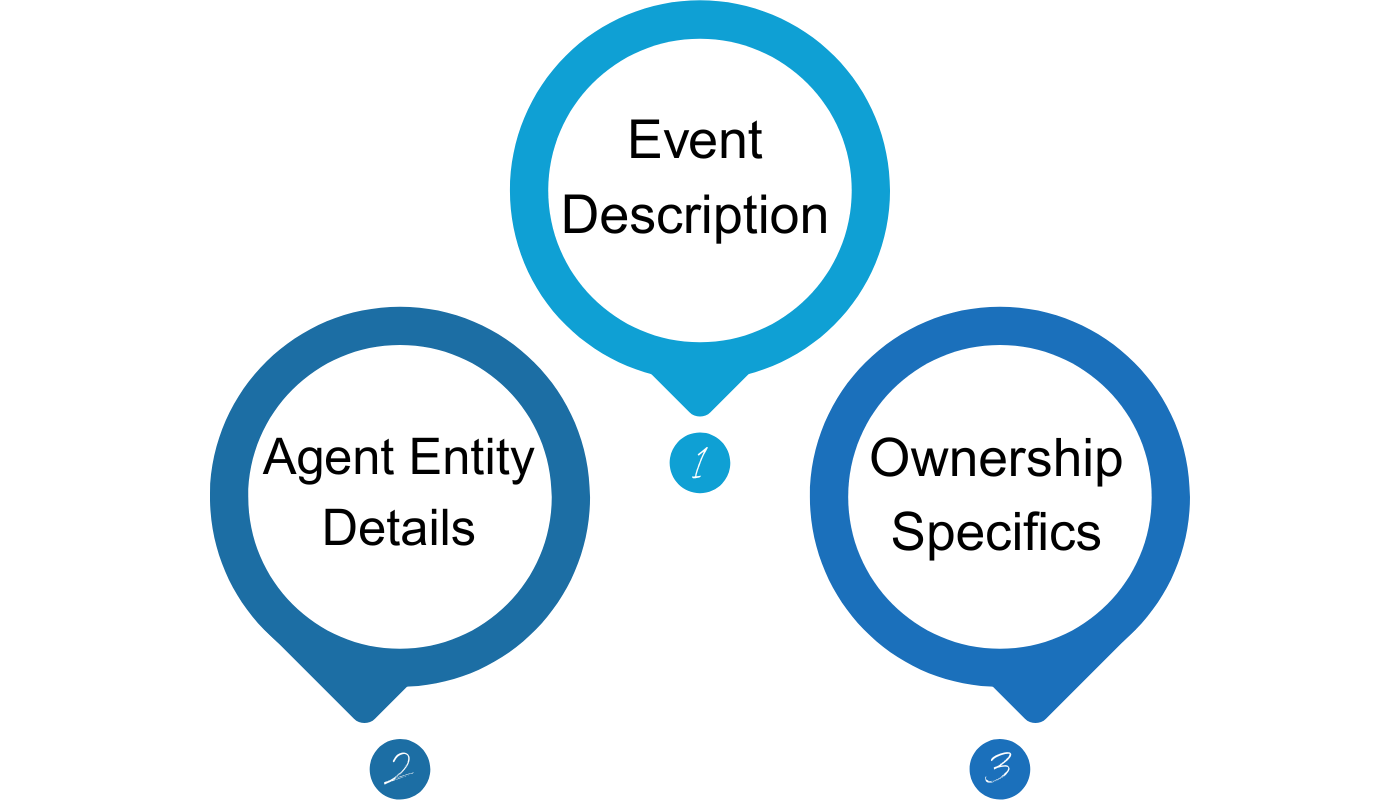
1. Event Description:
State clearly which of the four scenarios applies:
2. Agent Entity Details:
You need everything—legal name, trading names, country of registration, company number (ABN/ACN), head office address, website URL, social media pages, phone number, and a detailed description of what the agent actually does for overseas students.
3. Ownership Specifics:
Name the individual or entity, describe the relationship, specify their position/role, state the percentage or value of ownership, and provide the exact date it began.
💡 Expert Guidance: Time-saving tip: Build a Word document template with all these fields pre-formatted. When a relationship forms or changes, you just fill in the blanks and copy-paste into asqanet. Under pressure with a 10-business-day deadline, having the template ready prevents missed details that could trigger follow-up requests from ASQA.
Warning about the 10-day clock: Business days, not calendar days—but there’s no extension for Christmas holidays or public holidays. If day 10 falls on a weekend or public holiday, the deadline moves to the next business day. Count carefully.
Pre-existing arrangements established before 5 December 2025 don’t require immediate notification—but document them thoroughly because ASQA can request details during audits. However, the moment anything changes about that relationship (ownership percentage increases, new directors join, control arrangements shift), the 10-business-day notification clock starts.
💡 Expert Guidance:Conduct an “existing relationships audit” this month
Even though you don’t need to notify pre-existing arrangements, I strongly recommend documenting them now while memories are fresh. Create a register showing:
Why? Because when ASQA asks during your next audit (and they will), you need to prove the relationship existed before 5 December 2025. Without documentation, ASQA may assume it’s new and demand to know why you didn’t notify within 10 days.
Real-world example: A Sydney RTO I audited in 2024 had a director who was also a sleeping partner in an agent business (15% shareholding acquired in 2022). No written records existed. When ASQA asked about it in a 2025 audit post-amendments, the RTO couldn’t prove the date—ASQA issued a notice to produce bank statements, share transfer documents, and ASIC records going back three years to verify timing. Save yourself this nightmare.

The Secretary (not ASQA—this is the federal Department of Education) can request three data sets about any period from 5 December 2025 onward:
This is targeted data collection. The Secretary isn’t requesting this from everyone automatically—they’ll target providers with red flags like high transfer rates, complaints, or patterns suggesting dodgy recruitment.
Keep meticulous records from 5 December 2025 onward, but you only submit data if formally requested. The Secretary will specify the format when requesting—likely through PRISMS once that functionality is built, but could be via spreadsheet, portal submission, or other method.
💡 Expert Guidance:Build your commission tracking system today
Don’t wait for a Secretary request to build your tracking system—you’ll never comply with the response deadline if you’re starting from scratch.
Minimum viable commission tracking system:
Create a spreadsheet or database with these fields:
A Queensland RTO paid agents 20% of first-year tuition fees, structured as quarterly “marketing service payments” to avoid being classified as commissions. They kept invoices but didn’t maintain a per-agent, per-student breakdown. In mid-2026, the Secretary requested commission data following complaints about aggressive transfer recruitment. The RTO took 8 weeks to reconstruct the data from invoices, bank statements, and enrollment records—far exceeding the Secretary’s 2-week response deadline. Result: $19,800 infringement notice, ASQA compliance investigation, and reputational damage when the notice became public.
The lesson: Paying agents under different names (marketing fees, consultancy, bonuses) doesn’t change the legal reality—if it’s linked to student recruitment, it’s a commission and must be tracked as such.
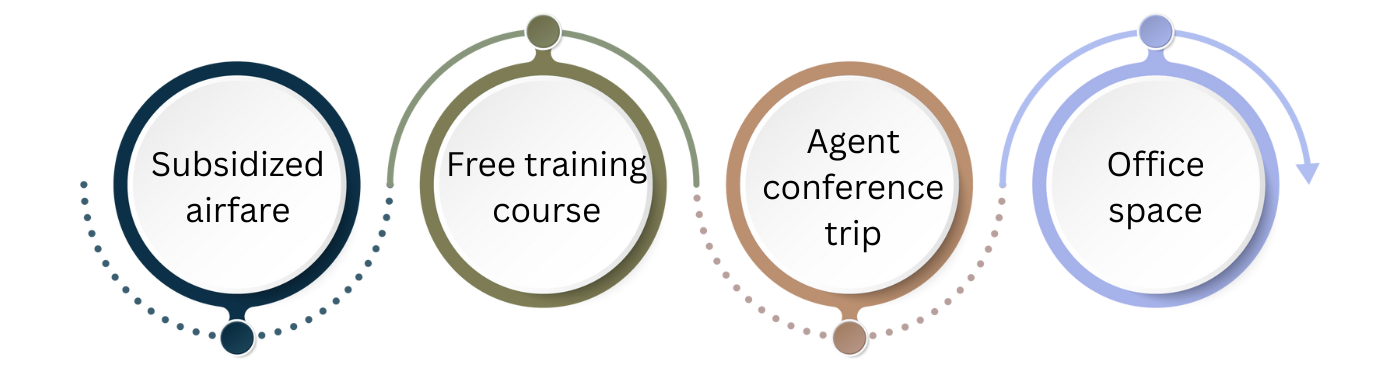
Use arm’s-length market value—what would the benefit cost if purchased on the open market?
Examples of correct valuation:
💡 Expert Guidance:Document your valuation methodology
When you calculate non-monetary benefit values, save the evidence:
Screenshots of comparable market prices
Quotes from alternative providers
Published course fee schedules
Real estate listings for office space
If the Secretary questions your valuation, you need to prove it was reasonable and conducted in good faith.
Once PRISMS functionality is released (expected early 2026), registered providers will access transparency data showing:
This is powerful risk intelligence. You’ll finally be able to see if an agent approaching you has a history of churning students between providers for commission payments.
Only registered CRICOS providers—it’s not public, and agents themselves cannot access it. This prevents agents from manipulating their behavior to game the system, and protects commercially sensitive information.
💡 Expert Guidance:Build agent due diligence into your recruitment workflow
Here’s the process I recommend:
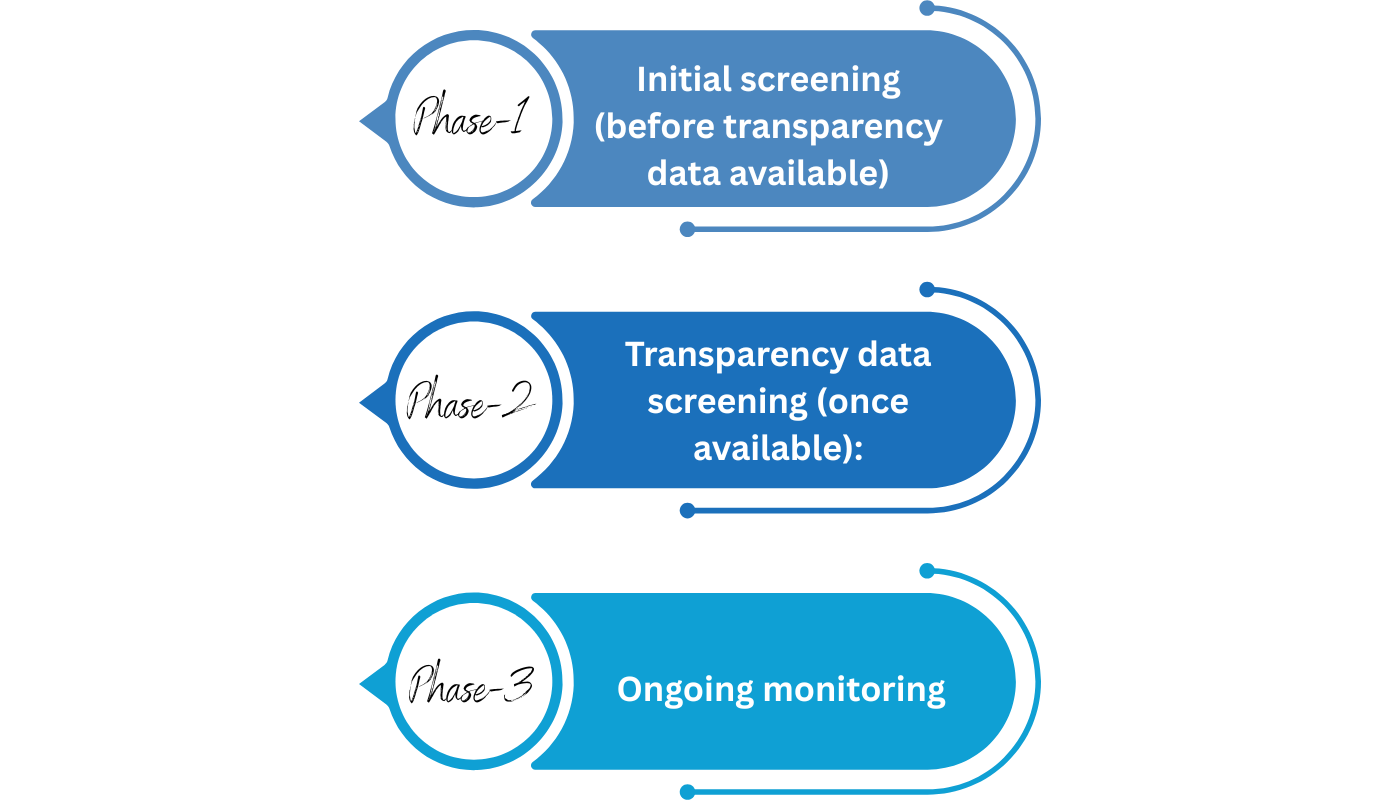
Phase 1—Initial screening (before transparency data available):
Phase 2—Transparency data screening (once available):
Phase 3—Ongoing monitoring:
Trigger review if transfer rate spikes
Quarterly review of your agents’ transfer rates
Annual re-screening using updated transparency data
Case Study—The Transfer Mill:
An education agent in Sydney placed 120 students with a CBD-based RTO in 2024. Of those, 47 students (39%) transferred to other providers within 6 months—always after the ESOS refund period ended. Investigation revealed the agent received commissions from both the original provider and the receiving providers, essentially double-dipping. Once transparency data becomes available, this pattern will be immediately visible to all providers, allowing them to refuse to work with the agent.
If your RTO (excluding schools) goes 12 consecutive months without delivering any training or assessment to at least one overseas student, your CRICOS registration automatically cancels on or after 1 January 2026.
This is not negotiable. It happens by operation of law—ASQA doesn’t make a decision, so you can’t appeal it.
The clock starts from the last day you delivered training or assessment to any overseas student. ASQA will send reminders through PRISMS, but you’re responsible for monitoring your own delivery.
“Delivered training or assessment” means genuine, face-to-face or online delivery—issuing a CoE or enrolling a student doesn’t count unless actual training activity occurs.

💡 Expert Guidance:Build an early warning system
Practical monitoring approach:
Proactive strategy for small providers:
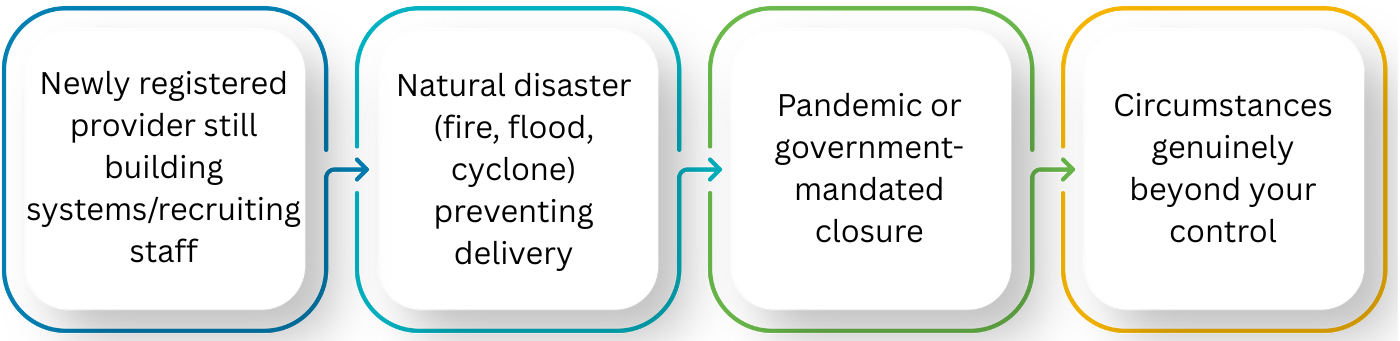
Yes, but you must apply at least 90 days before the 12-month deadline, and ASQA only grants extensions for legitimate reasons beyond your control.
ASQA’s examples of legitimate reasons:
💡 Expert Guidance: The extension request needs bulletproof evidence
Case Study—Extension Success vs. Failure:
Success: A regional Victorian RTO was flooded in March 2026, destroying its training facilities. All classes suspended for 4 months during rebuild. The RTO applied for extension 95 days before the 12-month deadline, providing: insurance assessor reports, builder quotes and timelines, photos of damage, council permits for rebuild, evidence of continued student communication and online theory delivery where possible. Extension granted for 6 months.
Failure: A Sydney RTO hadn’t enrolled international students for 10 months due to “increased competition and marketing challenges.” They applied for extension 85 days before deadline (5 days too late), providing only a statutory declaration explaining business difficulties. Extension refused—application was out of time, and commercial difficulties aren’t legitimate reasons.
The lesson: Apply early (120+ days before deadline gives you buffer), provide objective third-party evidence, and demonstrate circumstances genuinely beyond your control.
If ASQA receives information from law enforcement that your RTO, its directors, or related persons are under investigation for specified offences (fraud, migration-related crimes, or offences the Minister designates), and ASQA determines you’re no longer fit and proper, your CRICOS registration suspends automatically under section 89 of the ESOS Act.
During suspension you cannot:
Current students already studying can continue, but the moment they finish or withdraw, you cannot replace them.

ASQA notifies you directly—usually via email to your registered contact addresses and through PRISMS. Don’t expect a phone call or warning—the notification may be the first time you learn your directors are under investigation.
No—it’s automatic by law, not an ASQA decision, so merits review doesn’t apply. Your only path forward is resolving the investigation and convincing ASQA you’re fit and proper again.
💡 Expert Guidance:Prevention is your only strategy
You cannot prepare for this the way you prepare for other compliance issues. Instead, focus on director and key personnel integrity:
Pre-appointment screening:
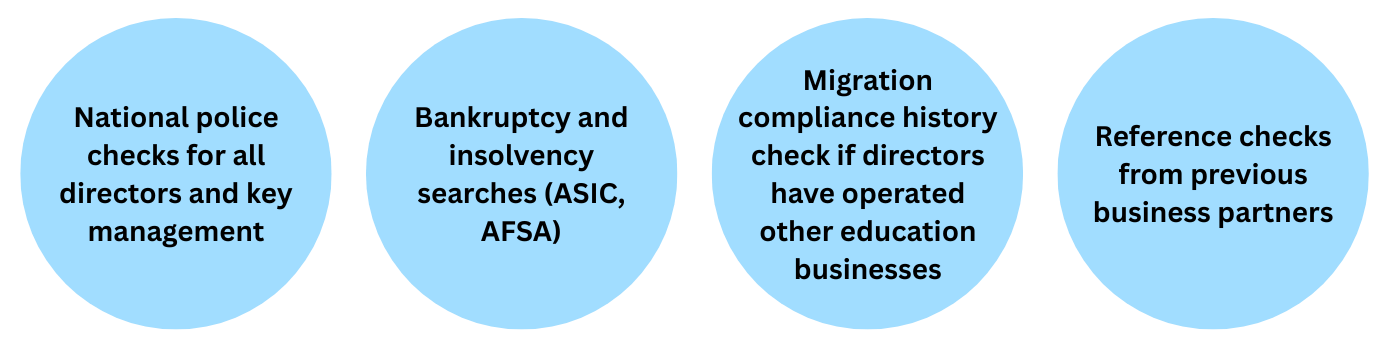
Ongoing monitoring:
A director of a Melbourne RTO was under AFP investigation for alleged migration fraud involving his former business (a migration agency he’d sold two years earlier). He didn’t disclose this to his co-directors at the RTO because charges hadn’t been laid. ASQA learned of the investigation through information-sharing with the AFP and suspended the RTO’s CRICOS registration under section 89. The RTO lost 8 months of international recruitment while the investigation proceeded. The director was eventually cleared, and the suspension was lifted—but the RTO had lost $600,000 in international student revenue and seven staff members during the shutdown.
The lesson: Require directors to disclose investigations, not just charges or convictions. The damage is done the moment ASQA learns of it, regardless of outcome.
Yes. The Minister can issue a legislative instrument listing classes of courses for automatic suspension or cancellation based on systemic quality concerns, misalignment with workforce needs, or public interest issues.
If your course is listed:
You cannot re-apply to add the course back while the instrument is in force.
💡 Expert Guidance: Diversify your CRICOS scope strategically
Risk mitigation strategy:
Don’t build your entire international business on 1-2 courses, especially in high-risk areas like:
Diversification model I recommend:
In mid-2026, the Minister lists “Certificate IV in Patisserie” for automatic cancellation across all providers due to findings that 78% of graduates don’t enter the patisserie workforce and the course has become a migration pathway rather than genuine vocational training.
Provider A: 95% of international students are enrolled in Cert IV Patisserie. When the course is cancelled, the provider loses CRICOS registration entirely (no courses remaining on scope) and must re-apply for registration under section 9—including meeting the two-year domestic delivery requirement. Business closes.
Provider B: 60% enrolled in Cert IV Patisserie, 30% in Diploma of Hospitality, 10% in Cert III Commercial Cookery. The Patisserie course suspends, but the provider pivots marketing to the other courses, retains CRICOS registration, and survives (albeit with 60% revenue hit while rebuilding).
The lesson: Scope diversity isn’t just good business—it’s survival insurance against regulatory intervention.
From 5 December 2025, new VET providers (excluding TAFEs) must deliver training and assessment to domestic students for a consecutive two-year period before they can even apply for CRICOS registration.
The two years includes normal holiday breaks (semester breaks, Christmas, term recesses) but must be genuine continuous operation.
Day 1 of the two years: The date your first domestic student (not an overseas student) commences their course.
💡 Expert Guidance: Build your domestic track record strategically
Smart sequencing for new RTOs planning international delivery:
Year 1:
Year 2:
Month 24:
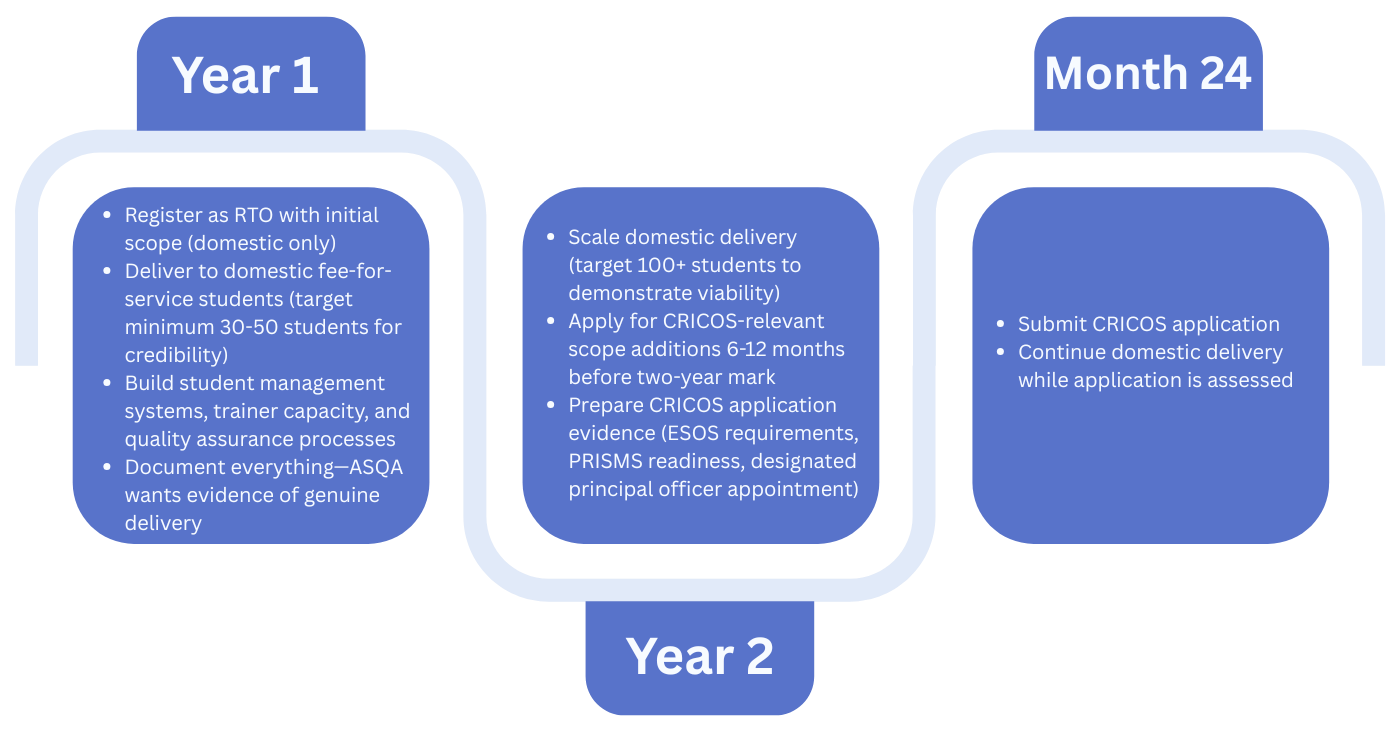
You’ll need to prove two years of genuine delivery. Expect ASQA to request:
A new RTO operator wanted to fast-track CRICOS access. In Year 1, they enrolled 8 domestic students in low-cost short courses. In Year 2, they enrolled 12 students. They applied for CRICOS registration exactly 24 months after the first student started, arguing they’d met the two-year requirement. ASQA refused the application, determining that enrollment of 20 students over two years in short courses didn’t demonstrate capacity, viability, or genuine commitment to domestic delivery—it looked like minimum compliance to access international student market. Application rejected.
The lesson: The two-year requirement isn’t just about time—it’s about demonstrating capability and commitment through substantial domestic delivery.
From 5 December 2025, when you lodge an internal review application challenging an ASQA decision, ASQA has 120 days (not 90) to make the review decision.
This applies even if you lodged before 5 December 2025—if ASQA hasn’t decided yet, they now have 120 days from your original application date.
💡 Expert Guidance: Factor the longer timeframe into your business planning
Practical implications:
Strategic consideration: Sometimes it’s faster and cheaper to address ASQA’s concerns and re-apply rather than fighting through internal review, especially if the review period will cost you market opportunities or student intake cycles.
Example scenario:
ASQA refuses your application to add Diploma of Leadership and Management to scope, citing inadequate assessment tools. You have two paths:
Timeline: 2-3 months to fix tools, 3-4 months ASQA assessment. Total: 5-7 months to approval.
Path B is often faster, cheaper, and less adversarial—and you end up with better assessment tools anyway.
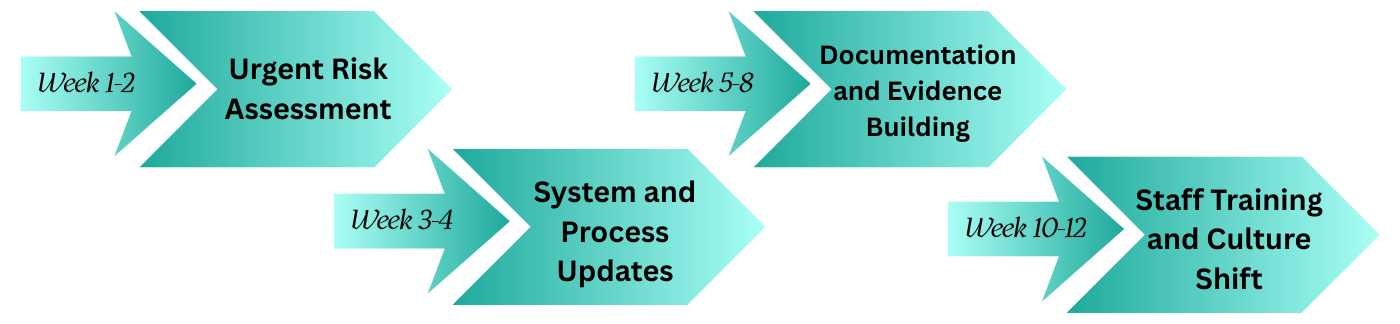
Week 1-2: Urgent Risk Assessment
Action 1—Ownership Mapping Exercise
Action 2—Commission Data Audit
Action 3—Delivery Activity Check
Week 3-4: System and Process Updates
Action 4—Agent Agreement Review
Action 5—Commission Tracking System Build
Action 6—Compliance Calendar Update
Week 5-8: Documentation and Evidence Building
Action 7—Pre-Existing Relationship Documentation
Action 8—Valuation Methodology Documentation
Action 9—Extension Request Preparation (if needed)
Week 9-12: Staff Training and Culture Shift
Action 10—Compliance Team Training
Action 11—Leadership Communication
Action 12—Business Model Review
After 15 years in this sector, I’ve seen regulatory cycles come and go. This one is different.
The ESOS amendments aren’t about checking boxes—they’re about changing provider behavior permanently. The Government wants to drive unethical operators out and create lasting consequences for those who treat international students as migration commodities rather than genuine learners.
Three principles to survive and thrive:
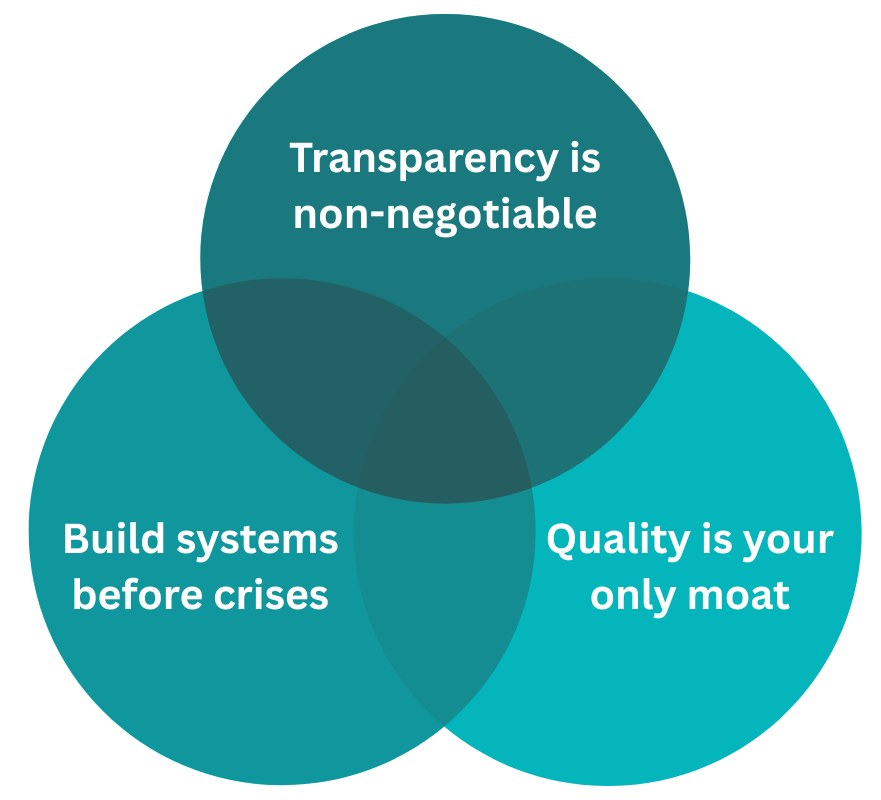
1. Transparency is non-negotiable
Disclose everything, early. Hidden relationships, complex ownership structures, and creative commission arrangements will be found—and the consequences are automatic and severe.
2. Build systems before crises
Don’t wait for a Secretary request, ASQA audit, or 10-day deadline to build your compliance systems. The providers who weather this transition are those who treated 5 December 2025 as a system-building opportunity, not just a compliance date.
3. Quality is your only moat
When ASQA transparency data shows transfer rates and commission patterns, the providers who survive will be those with strong completion rates, quality training, genuine student outcomes, and ethical agent relationships. You can’t hide poor quality anymore—it will be visible to every provider, every regulator, and increasingly to students themselves.
This is the new normal. Adapt or close.
This guide synthesizes official ASQA FAQ guidance (Version 1.0, 4 December 2025) with 15 years of VET compliance auditing experience to provide practical, actionable guidance for RTO operators. All case studies are based on real scenarios with identifying details changed. All legal references and dates have been verified against primary sources as at 8 December 2025

