Standards 2.5 & 2.6

Standards 2.5 & 2.6: Creating Culturally Safe, Inclusive, and Wellbeing-Focused Learning Environments

The 2025 Standards have fundamentally transformed how RTOs approach student diversity, inclusion, and well-being. Standards 2.5 & 2.6 represent more than compliance requirements – they’re a blueprint for creating learning environments where every student can thrive, regardless of their background, culture, or personal circumstances.

Understanding the Paradigm Shift

Standard 2.5: Diversity and Inclusion

Outcome Standard: “The learning environment promotes and supports the diversity of VET students”

Performance Indicators:

  • (a) Foster a safe and inclusive learning environment for VET students
  • (b) Foster a culturally safe learning environment for First Nations people
The Learning Environment

Standard 2.6: Wellbeing Support

Outcome Standard: “The wellbeing needs of the VET student cohort are identified and strategies are put in place to support these needs”

Performance Indicators:
  • (a) Identify wellbeing needs by reference to training product content and provide appropriate support services
  • (b) Advise students of wellbeing support availability and additional actions they can take

The Cultural Safety Imperative: First Nations Focus

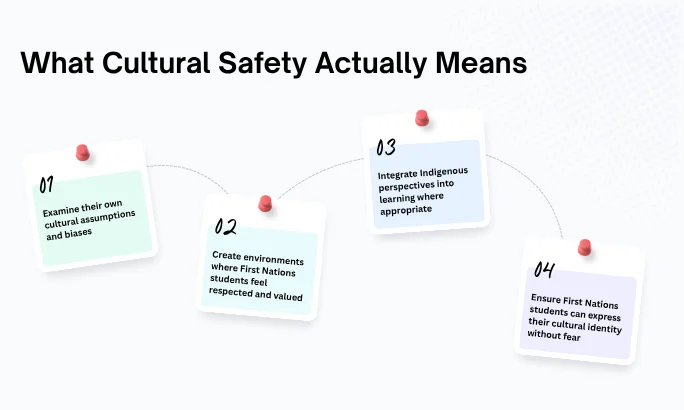
What Cultural Safety Actually Means

Cultural Safety

Cultural safety goes beyond cultural awareness or cultural sensitivity. It requires RTOs to:

  • Examine their own cultural assumptions and biases
  • Create environments where First Nations students feel respected and valued
  • Integrate Indigenous perspectives into learning where appropriate
  • Ensure First Nations students can express their cultural identity without fear

Practical Implementation Strategies

Learning Environment Design

Learning Environment Design:

  • Include Indigenous art, symbols, and cultural representations
  • Create quiet spaces for cultural practice and reflection
  • Ensure physical spaces accommodate diverse cultural needs
  • Display clear anti-discrimination policies and reporting procedures

Curriculum Integration:

  • Incorporate Indigenous knowledge systems where relevant to training products
  • Use case studies and examples that reflect Indigenous experiences
  • Engage Indigenous industry professionals as guest speakers
  • Provide optional cultural competency training for all students
Curriculum Integration
Staff Development 1

Staff Development:

  • Mandatory cultural competency training for all staff
  • Regular cultural safety audits and improvement planning
  • Partnership with local Indigenous community organisations
  • Indigenous mentor or support person available on-site or via referral

Comprehensive Wellbeing Framework

Identifying Student Wellbeing Needs

By Training Product Content

Different qualifications create different stressors and wellbeing challenges:

High-Stress Training Areas:

  • Healthcare and Aged Care Programs: Emotional labor, exposure to trauma
  • Emergency Services Training: Psychological stress, physical demands
  • Hospitality Programs: Irregular hours, workplace pressure
  • Construction and Trades: Physical safety, workplace culture

Specific Risk Factors

  • Work placement requirements and workplace integration
  • Assessment anxiety and academic pressure
  • Financial stress from course costs and reduced income
  • Social isolation, particularly for online learners
  • Cultural adjustment challenges for international students

Wellbeing Support Service Categories

Mental Health and Counseling

  • Professional counseling services (on-site or referral)
  • Crisis intervention protocols
  • Stress management workshops
  • Mental health first aid training for staff

Academic and Learning Support

  • Study skills development programs
  • Time management and organization training
  • Exam anxiety support
  • Learning disability accommodations

Financial and Practical Support

  • Financial counseling and budgeting assistance
  • Emergency financial aid programs
  • Food security support (food banks, meal programs)
  • Transport assistance for rural and remote students

Social and Community Connection

  • Student clubs and social activities
  • Peer mentoring programs
  • Community service opportunities
  • Cultural celebration events

Physical Health and Safety

  • Basic health services or referrals
  • Workplace safety training
  • Ergonomic assessments for learning spaces
  • Emergency medical response procedures

Implementation Framework: Your 120-Day Action Plan

Phase 1: Assessment and Planning (Days 1-30)

Diversity and Inclusion Audit

  • Current student demographic analysis
  • Staff cultural competency assessment
  • Learning environment accessibility review
  • Policy and procedure gap analysis

Wellbeing Needs Analysis

  • Training product-specific risk assessment
  • Student cohort wellbeing survey
  • Community resource mapping
  • Staff capacity evaluation for support delivery

Stakeholder Engagement

  • Partnership development with local Indigenous organizations
  • Collaboration with community mental health services
  • Industry consultation on workplace wellbeing expectations
  • Student representative involvement in planning

Phase 2: Infrastructure Development (Days 31-60)

Policy Development

  • Comprehensive anti-discrimination and harassment policies
  • Cultural safety protocols and procedures
  • Wellbeing support service delivery standards
  • Crisis intervention and emergency response procedures

Staff Training Programs

  • Cultural competency mandatory training
  • Mental health awareness and response training
  • Reasonable adjustment implementation
  • Support service referral protocols

Physical Environment Modifications

  • Inclusive design improvements
  • Cultural representation in learning spaces
  • Quiet zones for reflection and cultural practice
  • Accessible facilities for students with disabilities

Phase 3: Service Integration (Days 61-90)

Support Service Network

  • Formal partnerships with external wellbeing providers
  • Internal support role definitions and responsibilities
  • Referral pathway development and testing
  • Crisis response team establishment

Communication Systems

  • Student information sessions on available support
  • Clear signage and promotional materials
  • Multiple communication channels (digital, print, verbal)
  • Regular check-in protocols with at-risk students

Monitoring and Evaluation

  • Student satisfaction survey development
  • Support service utilization tracking
  • Staff feedback collection systems
  • Continuous improvement planning
Continuous Enhancement

Phase 4: Continuous Enhancement (Days 91-120)

Quality Assurance:

  • Regular review of support service effectiveness
  • Student outcome analysis and improvement planning
  • Staff professional development planning
  • External evaluation and feedback integration

CRICOS Considerations: International Student Wellbeing

Additional Requirements for International Students

  1. Cultural Adjustment Support:

    • Comprehensive orientation programs covering Australian culture
    • Buddy systems pairing international and domestic students
    • Regular check-ins during first semester
    • Cultural celebration and education events
  2. Practical Life Skills:

    • Banking, healthcare, and legal system navigation
    • Public transport and accommodation assistance
    • Emergency contact and crisis support procedures
    • Integration with broader international student support networks
  3. Academic Adaptation:

    • Australian academic culture and expectations training
    • English language support beyond initial entry requirements
    • Study group facilitation and peer learning opportunities
    • Assessment and feedback culture explanation

Technology Solutions for Scale and Effectiveness

Digital Wellbeing Platforms

1

Student Support Apps:

  • Anonymous wellbeing check-in systems
  • Resource and referral directories
  • Crisis support contact integration
  • Progress tracking and goal setting
2

Early Warning Systems:

  • Academic performance monitoring
  • Attendance tracking with intervention triggers
  • Social engagement level indicators
  • Predictive analytics for at-risk identification
3

Communication Platforms:

  • Multi-language support capabilities
  • Cultural preference settings
  • Anonymous reporting systems
  • Real-time crisis intervention alerts

Data Analytics for Proactive Support

Predictive Modelling:

  • Risk factor identification algorithms
  • Intervention effectiveness tracking
  • Resource allocation optimisation
  • Long-term outcome prediction
Predictive Modeling
Privacy And Security

Privacy and Security:

  • Secure data storage and access protocols
  • Student consent and control mechanisms
  • Regular privacy audit and compliance checking
  • Ethical data use policies and procedures

Measuring Success: KPIs and Outcomes

Student Experience Metrics

Inclusion and Safety Indicators:

  • Student sense of belonging surveys
  • Discrimination and harassment incident rates
  • Cultural representation satisfaction scores
  • First Nations student retention and completion rates

Wellbeing Outcome Measures:

  • Mental health and stress level assessments
  • Support service utilisation rates
  • Academic performance correlated with well-being support
  • Student feedback on support effectiveness

Operational Excellence Indicators

Staff Competency:

  • Cultural competency assessment scores
  • Response time to student well-being concerns
  • Support service quality ratings
  • Professional development participation rates

System Effectiveness:

  • Early intervention success rates
  • Crisis response time and effectiveness
  • Referral pathway success rates
  • Continuous improvement implementation speed

Comprehensive FAQ: Standards 2.5 & 2.6 Implementation

Cultural Safety and Inclusion (Standard 2.5)

Cultural awareness involves learning about different cultures. Cultural sensitivity means being respectful of cultural differences. Cultural safety goes further – it requires examining power imbalances and ensuring that people from different cultures feel safe to express their cultural identity without fear of discrimination or judgment.

Not necessarily separate programs, but you must demonstrate how your learning environment specifically supports First Nations people. This could include cultural mentorship, Indigenous perspectives in curriculum where appropriate, cultural leave policies, and partnerships with local Indigenous organisations.

Develop inclusive language policies, provide gender-neutral facilities where possible, train staff on inclusive practices, have clear anti-discrimination policies, and ensure support services are LGBTI+ friendly. Display visible symbols of inclusion like rainbow flags or inclusive statements.

Yes, the standards apply regardless of size. Scale your approach appropriately – small RTOs might rely more on external partnerships and referrals, but must still demonstrate inclusive practices and cultural safety measures.

Wellbeing Support (Standard 2.6)

Analyse your specific training products for inherent stressors. For example, aged care students face emotional challenges from working with vulnerable populations, construction students need physical safety awareness, and hospitality students may struggle with work-life balance due to irregular hours.

You can refer to external services, but you must ensure students know how to access support and that referral pathways are effective. You remain responsible for ensuring students can access appropriate well-being support, whether provided directly or through partnerships.

Students should be informed about available support services during orientation and have regular reminders throughout their studies. They should also receive specific information when particular stressors or challenges arise related to their training.

The assessment should be comprehensive enough to identify major risk factors for your specific student cohort and training products. This includes academic, financial, social, mental health, and physical well-being considerations.

Implementation Challenges

You must make services available and inform students about them, but you cannot force participation. Document your efforts to provide information and support. For students showing signs of distress, gentle encouragement and multiple touchpoints may help.

Develop clear privacy policies that explain when information may need to be shared (e.g., immediate safety risks). Offer various levels of support from completely anonymous resources to more intensive support requiring some information sharing.

Have clear referral protocols to professional mental health services. Ensure staff know when and how to escalate concerns. Maintain supportive contact while professional help is being sought, but don’t attempt to provide therapy or clinical intervention.

Provide materials in multiple languages where possible, use interpreters when needed, understand cultural attitudes toward mental health and help-seeking, and partner with multicultural community organisations.

Quality Assurance and Compliance

Auditors examine policies and procedures, staff training records, student feedback and satisfaction surveys, incident reports and responses, partnership agreements with support organisations, and evidence of continuous improvement based on student needs.

Conduct formal reviews at least annually, with ongoing monitoring through student feedback, incident tracking, and outcome measurement. Adjust services based on changing student demographics and emerging needs.

These standards work together. Standards 2.5 & 2.6 create the inclusive environment and identify needs, while Standard 2.4 ensures specific adjustments are made for individual students with disabilities or other requirements.

Resource and Partnership Development

Research local mental health services, cultural organisations, community health centres, and specialised support services. Contact your local Primary Health Network, multicultural resource centres, and Indigenous community organisations.

Document the gap and explore alternatives like telehealth services, online support resources, travel assistance for students to access services, or partnering with other RTOs to develop shared resources.

Provide regular training on cultural competency, mental health awareness, crisis response, and referral procedures. Ensure clear role definitions so staff know their responsibilities and limitations in providing support.

The Strategic Advantage: Beyond Compliance

Building Competitive Differentiation

RTOs that excel in diversity, inclusion, and wellbeing support create significant competitive advantages:

1

Student Attraction and Retention:

  • Word-of-mouth referrals from satisfied students
  • Higher completion rates and better employment outcomes
  • Positive online reviews and reputation
  • Reduced marketing costs through organic growth
2

Staff Satisfaction and Performance:

  • Lower staff turnover in positive, inclusive environments
  • Increased job satisfaction from meaningful support work
  • Professional development opportunities in specialized areas
  • Enhanced team cohesion through shared values
3

Industry Recognition:

  • Preferred provider status with employers valuing diversity
  • Awards and recognition for inclusive practices
  • Media coverage of innovative support programs
  • Partnership opportunities with community organizations

Long-term Sustainability

Investment in comprehensive diversity and wellbeing support creates sustainable business advantages:

Risk Mitigation:

  • Reduced complaints and grievances
  • Lower liability from discrimination or negligence claims
  • Improved crisis response capability
  • Enhanced reputation protection

Quality Improvement:

  • Better learning outcomes through supported students
  • More inclusive curriculum and teaching practices
  • Continuous improvement culture
  • Innovation in support service delivery

Community Integration:

  • Stronger relationships with local organizations
  • Enhanced community reputation and trust
  • Increased referral networks and partnerships
  • Positive social impact and community contribution

Conclusion: Creating Transformational Learning Environments

Standards 2.5 & 2.6 represent an opportunity to fundamentally transform how VET education approaches human diversity and wellbeing. RTOs that embrace this transformation will create learning environments where:

check icon Every student feels valued, respected, and supported
check icon Cultural diversity is celebrated and leveraged for rich learning experiences
check icon Wellbeing support is proactive, comprehensive, and effective
check icon Inclusion is embedded in all practices, not treated as an add-on
check icon Students graduate not just with technical skills, but with confidence and resilience

The future of VET belongs to organizations that understand that student success depends not just on quality training delivery, but on creating environments where every student can thrive. Standards 2.5 & 2.6 provide the framework – your commitment and implementation will determine the outcomes.

Remember: These standards aren’t just about compliance – they’re about creating the kind of learning environment where you would want to study, work, and grow. When you achieve that, compliance becomes a natural byproduct of excellence.

This comprehensive guide draws on 15 years of audit experience and current best practices in diversity, inclusion, and wellbeing support. For specific compliance advice tailored to your RTO context, consult with qualified VET compliance and student support professionals.

Disclaimer:
The information presented on the VET Resources blog is for general guidance only. While we strive for accuracy, we cannot guarantee the completeness or timeliness of the information. VET Resources is not responsible for any errors or omissions, or for the results obtained from the use of this information. Always consult a professional for advice tailored to your circumstances.

Related Products

Get Free Sample


    TALK TO OUR EXPERTS NOW! DIAL 1800 959 958

      Get A Free Sample