Navigating the world of the Australian Skills Quality Authority (ASQA) can be daunting for any Registered Training Organisation (RTO). This Ultimate Guide, explicitly tailored for RTOs, provides practical support for ASQA Audit Preparedness, with essential insights into meeting the pivotal Standards for RTOs 2025. Maintaining these standards within the Australian Qualifications Framework isn’t just about ticking boxes; it’s about ensuring students receive the finest infection control training and other valuable courses.
As we dive deeper, this guide aims to clarify frequently asked questions and arm you with a thorough RTO registration checklist. Beyond mere compliance, it’s about upholding a gold standard in education and ensuring your establishment stands out in Australia’s rich educational landscape. So, whether you’re an RTO veteran or new to the RTO, guidance from the best RTO Audit Experts can help you embark on this journey towards ASQA audit excellence.
Understanding the Standards for RTOs 2025
This section demystifies the Standards for RTOs 2025, a cornerstone for any Registered Training Organisation aiming for excellence in the Australian educational sector.
Overview of the Standards
Importance and Application
Establishes benchmarks for quality education
Ensures alignment with the Australian Qualifications Framework
Fundamental for offering courses like infection control training
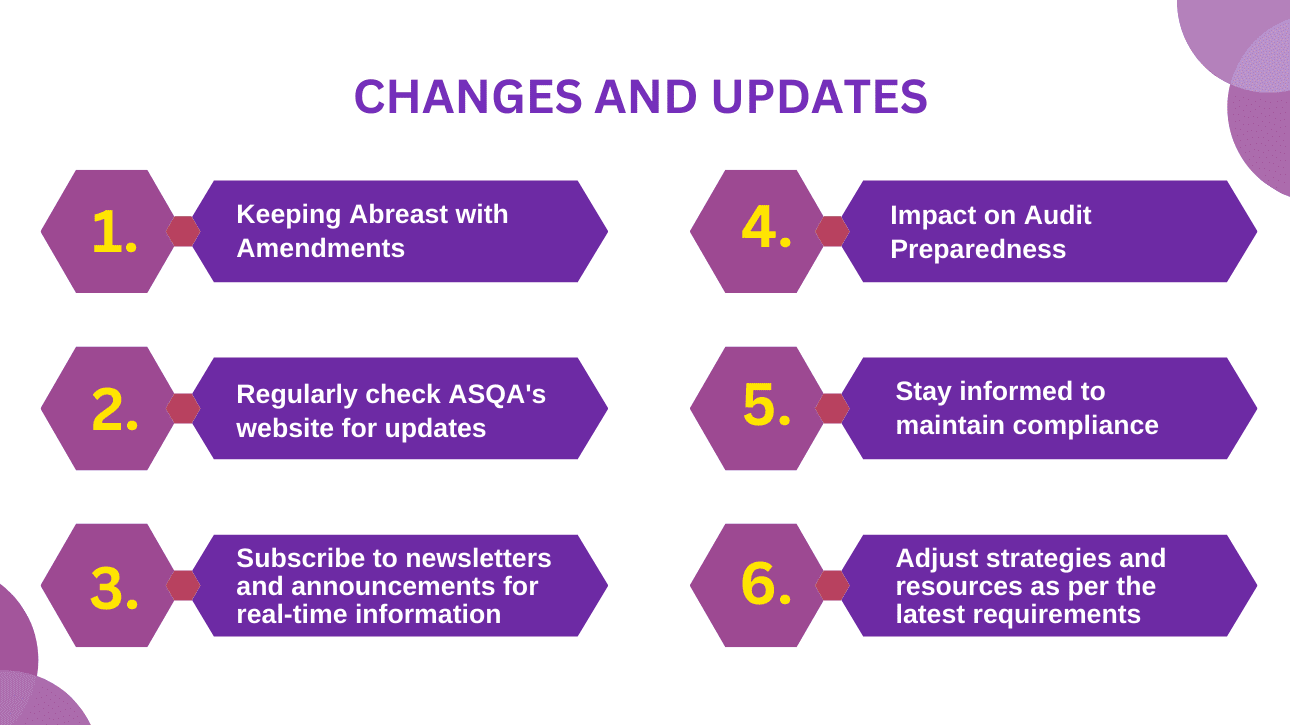
Subscribe to newsletters and announcements for real-time information
Impact on Audit Preparedness
Stay informed to maintain compliance
Adjust strategies and resources as per the latest requirements
Understanding and implementing the Standards for RTOs 2025 is non-negotiable. It’s your ticket to ensuring your educational programs’ quality, credibility, and ongoing success.
Preparing for the ASQA Audit
Embarking on the journey of ASQA audit preparedness is essential for every Registered Training Organisation. This section provides a succinct yet comprehensive blueprint to ensure your RTO is well-prepared.
Importance of Preparedness
Benefits of Being Prepared
Smooth audit process
Enhanced reputation and credibility
Assurance of compliance with the Standards for RTOs 2025
Consequences of Unpreparedness
Potential sanctions
Loss of reputation
The strain on resources and operations
Developing an Audit Preparation Plan
Identifying Areas of Focus
Review standards and criteria
Assess previous audit findings
Prioritise high-risk areas
Allocating Resources and Responsibilities
Assign tasks to appropriate team members
Ensure adequate resources for infection control training
Set timelines and monitor progress
Gathering and Reviewing Evidence
Types of Evidence
Training and assessment records
Student feedback and testimonials
Documentation of resources and facilities
Ensuring Compliance with Standards
Cross-check evidence against the Standards for RTOs 2025
Address discrepancies promptly
Consult ASQA guidelines for specific requirements
Addressing Non-compliances
Identifying and Rectifying Issues
Conduct internal audits
Develop and implement corrective action plans
Document all rectification efforts
Navigating the ASQA Audit Process
Navigating the ASQA audit process requires a thorough understanding and strategic approach. In this section, we’ll guide you through each phase to ensure your Registered Training Organisation is in good standing.
Pre-Audit Phase
Notification and Communication with ASQA
Respond promptly to ASQA notifications
Clarify doubts and seek guidance through ASQA’s communication channels
Document Submission and Review
Compile relevant evidence and documentation
Ensure accuracy and compliance with Standards for RTOs 2025
Onsite Audit Phase
Hosting the Audit Team
Arrange for a conducive environment for the audit team
Facilitate access to resources, facilities, and personnel
Participating in Interviews and Demonstrations
Be prepared to showcase practical demonstrations, especially for courses like infection control training
Engage in open and honest communication with the auditors
Post-Audit Phase
Receiving and Reviewing the Audit Report
Carefully review the findings and recommendations
Develop a plan to address any non-compliance
Addressing Findings and Recommendations
Implement corrective actions promptly
Communicate progress and completion to ASQA
Managing Non-compliance and Sanctions
Understanding the Implications
Familiarise yourself with potential sanctions and their impact
Review ASQA’s frequently asked questions for guidance
Developing and Implementing Rectification Plans
Prioritise addressing high-risk non-compliances
Document rectification efforts and communicate with ASQA
Post-Audit Activities and Continuous Improvement
Post-audit activities are pivotal for any Registered Training Organisation (RTO) in maintaining compliance and achieving continuous improvement in accordance with Australian educational standards.
Analysing Audit Outcomes
Understanding Findings and Recommendations
Review the audit report meticulously
Identify areas of non-compliance and areas for improvement
Assessing the Impact on the Organisation
Evaluate the implications of the findings on operations and reputation
Develop strategies to mitigate any negative impact
Developing and Implementing Action Plans
Prioritising Areas of Improvement
Address high-risk non-compliances immediately
Allocate resources efficiently for rectification efforts
Monitoring and Evaluating Progress
Set clear objectives and milestones
Regularly review progress against the set action plans
Continuous Improvement Strategies
Leveraging Feedback and Lessons Learned
Utilise audit findings and stakeholder feedback for continuous improvement
Adapt training programs, especially infection control training, based on lessons learned
Engaging with Industry and Educational Updates
Stay up-to-date on changes in industry standards and educational requirements.
Participate in forums and workshops to enhance organisational capabilities
Maintaining Compliance and Preparedness
Regular Internal Audits and Reviews
Conduct periodic internal audits to ensure ongoing compliance with Standards for RTOs 2025
Address discrepancies and update documentation promptly
Staying Informed on ASQA Updates and Requirements
Monitor ASQA’s website and communication channels for updates and guidelines
As we wrap up this Ultimate Guide for ASQA Audit Preparedness in Australian RTOs, it’s essential to consolidate the knowledge gained and plan to ensure your Registered Training Organisation meets and exceeds the Standards for RTOs 2025.
Key Takeaways
Understanding and Implementing Standards
Familiarise yourself with the Standards for RTOs 2025
Ensure adherence to regulations, especially for courses like infection control training
Audit Preparedness
Develop a detailed audit preparation plan
Gather and review evidence, address non-compliances, and stay informed through ASQA guidelines.
Navigating the Audit Process
Engage proactively during pre-audit, onsite audit, and post-audit phases
Address findings promptly and maintain open communication with ASQA
Continuous Improvement
Leverage audit findings and feedback for ongoing improvement
Stay abreast of industry updates and maintain a cycle of learning and adaptation
Next Steps for RTOs
Implementing Action Plans
Prioritise and execute action plans developed post-audit
Monitor progress and adjust strategies as needed
Staying Engaged with ASQA and Industry Updates
Regularly check ASQA’s website and subscribe to newsletters
Participate in industry forums and workshops to stay informed
Seeking Additional Support and Resources
Utilise VET Resources for comprehensive guides and support
Consult ASQA’s frequently asked questions and user guides for clarification
Embarking on the journey of ASQA audit preparedness is an ongoing commitment to quality and excellence. With the insights from this guide, your RTO is well-equipped to thrive within the Australian Qualifications Framework and deliver exceptional educational experiences.
Core ASQA Audit Preparedness FAQs
1. What is an ASQA audit, and why is it important for RTOs?
An ASQA (Australian Skills Quality Authority) audit is an assessment conducted to ensure that Registered Training Organisations (RTOs) comply with the Standards for RTOs. It is essential because it ensures the quality and integrity of training services and confirms that RTOs meet regulatory requirements, which helps maintain accreditation and funding.
2. How often do ASQA audits occur for RTOs?
ASQA audits are typically conducted every 3 to 5 years, depending on the RTO’s performance history and risk level. However, audits can also happen more frequently if there are concerns about compliance, complaints, or if the RTO is undergoing a change in scope or structure.
3. What are the main areas ASQA auditors focus on during an audit?
ASQA auditors primarily focus on the RTO’s compliance with the Standards for RTOs, including:
Training and assessment practices
Delivery methods
Learner support services
Record-keeping and documentation
Continuous improvement processes
Staff qualifications and competence
4. What documents should I prepare for an ASQA audit?
RTOs should have documentation ready in the following key areas:
Training and assessment strategies
Assessment tools and validation records
Learner enrolment and progress records
Staff qualifications and professional development records
Complaints and appeals procedures
Continuous improvement and self-assessment records
Policies and procedures for compliance with the Standards
5. How can I ensure my RTO is ready for an ASQA audit?
To ensure audit preparedness:
Regularly review and update your policies, procedures, and training materials.
Conduct internal audits to identify and address compliance gaps.
Ensure your staff is well-trained and aware of compliance requirements.
Maintain accurate, up-to-date records for all training and assessment activities.
Engage in ongoing self-assessment and continuous improvement.
6. What happens if my RTO fails an ASQA audit?
If your RTO fails an ASQA audit, you will typically receive a non-compliance notice. This means that you must take corrective actions to address the areas of non-compliance. If the issues are not resolved, your RTO’s registration may be suspended or revoked. It’s essential to act quickly and address all non-compliance issues before rescheduling a follow-up audit.
7. Can an RTO appeal an ASQA audit decision?
Yes, an RTO can appeal an ASQA audit decision. The RTO has the right to appeal if they believe the audit findings are incorrect or if they believe they were treated unfairly during the audit process. The appeal process involves submitting a formal response to ASQA, and in some cases, the RTO may be required to provide additional evidence to support their case.
8. What are common mistakes RTOs make during ASQA audits?
Common mistakes include:
Incomplete or poorly maintained documentation
Lack of evidence for assessment validation or continuous improvement processes
Failing to keep staff qualifications up-to-date or document staff professional development
Inconsistent application of training and assessment strategies
Lack of regular internal audits or reviews of compliance
9. How can RTOs maintain continuous compliance with ASQA standards?
RTOs can maintain continuous compliance by:
Regularly reviewing and updating policies and procedures
Implementing a continuous improvement plan based on feedback and audit results
Training staff on compliance requirements and best practices
Conducting regular internal audits and mock audits
Keeping accurate records and documentation for all training and assessment activities
10. What is the role of the RTO CEO in ensuring ASQA audit preparedness?
The CEO plays a crucial role in ensuring ASQA audit preparedness by:
Leading compliance efforts and ensuring the RTO meets all regulatory requirements.
Overseeing the development and implementation of policies and procedures.
Ensuring that staff are well-trained, qualified, and understand compliance obligations.
Allocating resources for internal audits and continuous improvement initiatives.
Engaging with ASQA and addressing any issues raised during audits.
Disclaimer: The information presented on the VET Resources blog is for general guidance only. While we strive for accuracy, we cannot guarantee the completeness or timeliness of the information. VET Resources is not responsible for any errors or omissions, or for the results obtained from the use of this information. Always consult a professional for advice tailored to your circumstances.
Ben Thakkar is a Compliance, Training, and Business specialist in the education industry. He has held senior management roles, including General Manager, with leading Registered Training Organisations (RTOs) and Universities. With over 15 years of experience, Ben brings extensive expertise across audits, funding contracts, VET Student Loans, CRICOS, and the Standards for RTOs 2025.