



The Australian government has introduced significant changes to education agent commission regulations, effective 31 March 2026. These changes, implemented through amendments to the Education Services for Overseas Students (ESOS) Act 2000 and the National Code Standard 4, aim to protect international students from unnecessary transfers and ensure agents work in students’ best interests.
This comprehensive guide explains everything RTOs, education agents, and international education providers need to know about the new commission ban.
From 31 March 2026, registered providers are prohibited from paying commissions to education agents for recruiting overseas students who have already commenced studying with another registered provider in Australia (onshore transfers).
This represents a fundamental shift in how agent commissions can be structured for onshore student movements.
According to the Minister for Education, this measure “removes the incentive for unscrupulous agents to facilitate unnecessary transfers of overseas students, and ensures that agents and institutions are working in the best interests of their students”.
The government identified concerns about:
Under Section 6BB of the amended ESOS Act, “education agent commission” means any consideration or benefit (monetary or non-monetary) given by a provider to an education agent, including:
A transfer occurs when an overseas student moves from one provider to another without first completing their course.
The ban applies even when:
Key Point: If the student has already commenced studies onshore with another provider, it’s considered a transfer scenario.
Standard 4.8 provides three specific exceptions where providers ARE permitted to pay agent commissions:
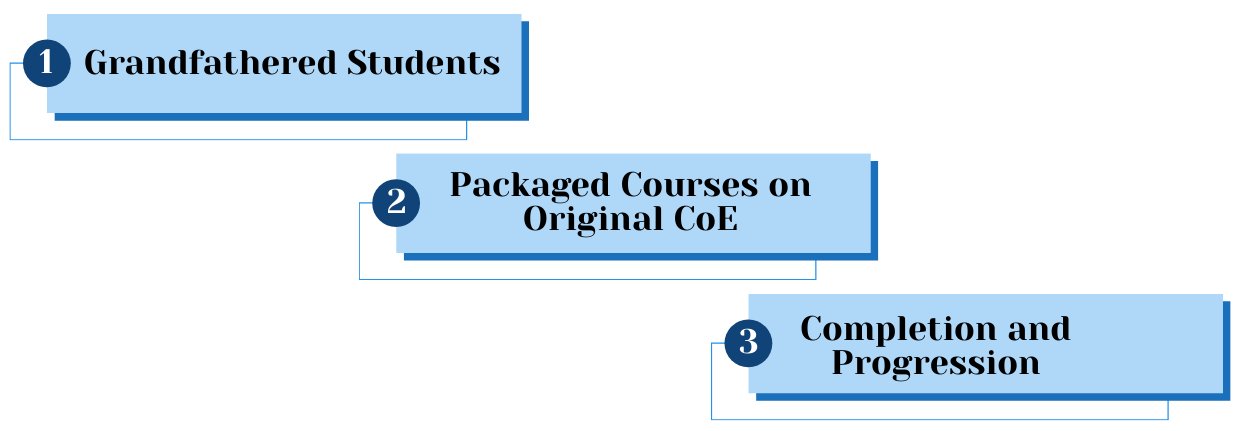
Students who became accepted students on or before 31 March 2026
If a student was accepted for enrolment on or before 31 March 2026, existing contractual commission arrangements can continue, even if the student transfers after that date.
Example: An agent signed a student in February 2026 with payment terms of 50% on enrolment and 50% after 6 months. Both payments can proceed as agreed, even if paid after 31 March 2026.
Courses specified in the original Confirmation of Enrolment (CoE) package for which the student’s visa was granted
Providers can pay commissions for courses that were part of the student’s original package when their visa was granted.
Example: A student’s visa was granted based on:
All three providers can pay agent commission because these courses were on the original CoE package.
Important: The course must have been specified in the original CoE. Adding new courses later does NOT qualify for this exception.
Students who have completed their principal course and are enrolling in a new course
If a student has completed their principal course and then enrols in a different course (pathway progression), the new provider CAN pay commission.
Example: A student completes a Bachelor’s degree at Provider A. They then enrol in a Master’s degree at Provider B. Provider B can pay commission because the student completed their previous course first.
Critical Distinction: The student must have completed the course, not just be partway through it.
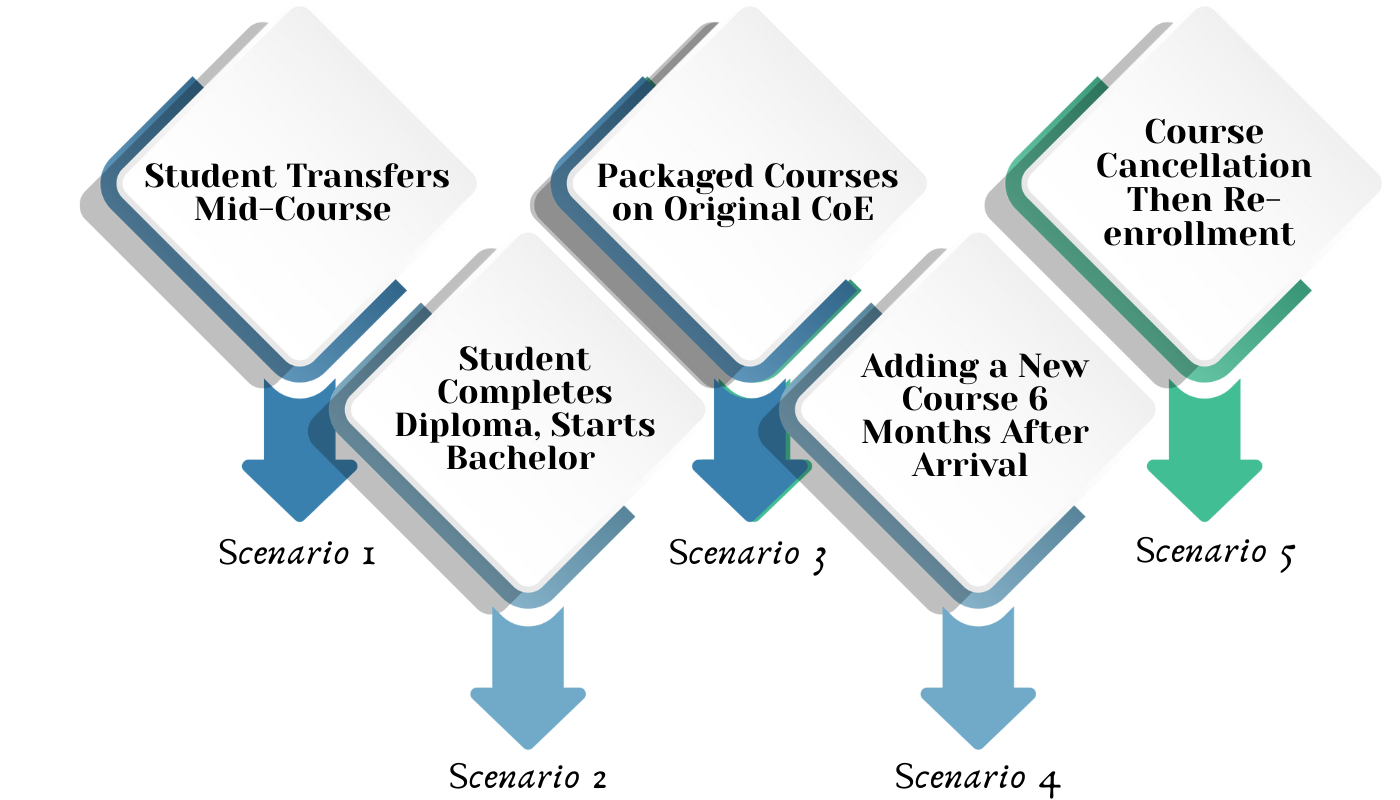
Situation: A student is 6 months into a Diploma at Provider A and wants to transfer to the same Diploma at Provider B.
Can Provider B pay commission?
NO - This is a transfer without completion.
Situation: A student completes a Diploma at Provider A and enrols in a Bachelor’s degree at Provider B.
Can Provider B pay commission?
YES - The student completed their principal course.
Situation: Student’s visa was granted based on the CoE listing:
Can Provider B pay commission?
YES - This was on the original CoE package.
Situation: A student is studying for a Bachelor’s degree. After 6 months, they want to add a VET course at a different provider. The VET course was NOT on the original CoE.
Can the VET provider pay commission?
NO - The VET course was not on the original CoE, and the student has already commenced study onshore.
Situation: A student’s enrolment is cancelled at Provider A. They then enrol at Provider B.
Can Provider B pay commission?
NO - This is still considered a transfer.
Important Note: The government fact sheets do not explicitly address concurrent enrolment scenarios (studying two courses simultaneously with different providers).
Current ASQA guidance states that providers cannot concurrently enrol students who have not completed 6 months of their principal course.
For concurrent enrolment questions, we recommend contacting ASQA directly:
The ban only restricts provider-to-agent payments. Nothing in the legislation prevents agents from charging students directly for professional services.
The Secretary of Education can request providers to report information about agent commissions, including:
Compliance: Providers must respond within at least 30 days (or any later date allowed by the Secretary).
Penalty: Failure to comply is a strict liability offence with a penalty of 60 penalty units.
Providers must disclose and notify ASQA of ownership relationships with agents:
Initial Application: Must declare if the provider (or associate) owns/controls an agent, or if an agent (or associate) owns/controls the provider.
Ongoing Obligation: Must notify ESOS agency within 10 business days of any changes in ownership/control relationships.
The Secretary can share information with registered providers about:
| Compliance Checklist for RTOs | Compliance Checklist for Education Agents |
|
|
The commission ban on onshore student transfers represents a significant shift in Australia’s international education landscape. While it restricts provider-to-agent payments for transfers, it maintains commission structures for genuine new recruitment, packaged courses, and legitimate course progression.
RTOs and education agents must carefully review their practices, update agreements, and ensure full compliance by 31 March 2026. When in doubt about specific scenarios, contact ASQA for clarification.
The overarching goal is to ensure that student advice is driven by educational outcomes rather than commission incentives – ultimately strengthening Australia’s reputation as a quality destination for international education.
Disclaimer: This blog post provides general information only and should not be considered legal advice. For specific compliance questions, consult ASQA or seek independent legal counsel.
A: From 31 March 2026, registered providers cannot pay commissions to education agents for recruiting overseas students who transfer from another provider after commencing study in Australia (onshore transfers). This is implemented through Standard 4.7 and 4.8 of the National Code.
A: The ban applies to students who become accepted students after 31 March 2026. Students accepted on or before this date are grandfathered, and existing commission arrangements can continue.
A: To protect international students from unnecessary transfers driven by commission incentives, and to ensure agents and institutions work in students’ best interests rather than financial gain.
A: The Education Legislation Amendment (Integrity and Other Measures) Act 2025, which amended the ESOS Act 2000 and updated the National Code Standard 4.
A: Under Section 6BB, education agent commission includes ANY consideration or benefit (monetary or non-monetary) given by a provider to an agent, including:
A: A transfer occurs when an overseas student moves from one provider to another without first completing their course. This includes situations where:
A: If the student has “commenced studying” at the first provider, the ban applies. The key test is whether they have already started their course onshore with another provider.
A: Commission can be paid for:
A: If a student became an accepted student on or before 31 March 2026, existing contractual commission arrangements can continue, even for future instalment payments.
Example: Student accepted February 2026 with 3 payment instalments over 12 months – all payments can proceed as agreed.
A: If multiple courses were listed on the student’s original CoE package when their visa was granted, all providers in that package can pay agent commission.
Example: Original CoE shows:
All three providers can pay commission because it was one pre-arranged package.
A: No. The course must have been specified in the original CoE for which the visa was granted. Adding courses later does not qualify for this exception.
A: If a student completes their principal course and then enrolls in a new course (e.g., Diploma → Bachelor, or Bachelor → Master), the new provider CAN pay commission because it’s educational progression, not a transfer.
Critical: The student must have completed their course, not just be partway through.
A: No, unless one of the three exceptions applies (grandfathered, original CoE package, or they completed first).
A: Yes. This is completion and progression, not a transfer. The student finished their course and is moving to the next level of study.
A: The official guidance does not explicitly address concurrent enrolment. ASQA states providers cannot concurrently enrol students who haven’t completed 6 months of their principal course.
For concurrent enrolment commission questions, contact ASQA directly for clarification.
A: No. This is still considered a transfer because the student has not completed their course.
A: No. The ban only applies to onshore transfers (students who have already commenced study in Australia). Offshore recruitment commissions are not affected.
A: Yes. Agents can still provide services to transfer students. The ban only restricts provider-to-agent commission payments, not the agent’s ability to assist students.
A: Yes. The ban only prohibits provider-to-agent commission payments. Nothing prevents agents from charging students directly for professional advisory and consultancy services.
A: Yes. Many agents are developing transparent fee-for-service models where students pay directly for transfer assistance, application services, and advice.
A: Agents should document:
A: Yes. Providers must disclose any ownership or control relationships with agents to ASQA within 10 business days of changes.
A: RTOs should:
A: Yes. Under Section 21B, the Secretary can request providers to report information about agent commissions, including amounts paid, non-monetary benefits, and student numbers.
Timeframe: Providers must respond within at least 30 days or any later date allowed by the Secretary.
Penalty: 60 penalty units for non-compliance.
A: Paying commission in breach of Standard 4.7 is a breach of the National Code, which can result in:
A: Yes. Under Section 17A, providers must notify the ESOS agency within 10 business days if:
A: Absolutely. RTOs can and should continue working with agents. The ban only restricts commission for onshore transfers – new recruitment and legitimate progression are unaffected.
A: The new provider cannot pay commission unless the new provider was specified in the original CoE. Simply being part of a package doesn’t mean any replacement provider qualifies.
A: If the student has commenced study onshore and then re-enrolls at a different provider without completing, this is a transfer and commission cannot be paid.
A: The legislation does not provide exceptions for involuntary transfers. The ban applies regardless of the reason for transfer.
A: No exception is provided for compliance-driven transfers. The ban applies to all transfers not covered by the three specific exceptions.
A: No. The definition in Section 6BB is broad and includes any consideration or benefit (monetary or non-monetary) in connection with recruitment activities.
Attempting to restructure commissions under different names would likely be considered non-compliant.
A: ASQA (Australian Skills Quality Authority) enforces the National Code for VET providers, and TEQSA (Tertiary Education Quality and Standards Agency) enforces for higher education providers.
A: Penalties include:
A: ASQA can:
A: Yes. Providers and agents should contact ASQA for clarification on complex scenarios:
Email: enquiries@asqa.gov.au
Phone: 1300 701 801
A: Contracts remain valid, but commission payments must comply with the new rules. Only students accepted on or before 31 March 2026 qualify for grandfathered treatment.
A: Yes. All agent agreements should be reviewed and updated to:
A: The key date is when the student became an “accepted student” (formal acceptance of enrolment), not when they physically commence. If acceptance occurred on or before 31 March 2026, they’re grandfathered.
A: The government has issued comprehensive fact sheets. For updates, monitor:
ASQA website: https://www.asqa.gov.au
Department of Education: https://www.education.gov.au
ASQA:
Department of Education:
Legislation:
Fact Sheets:
ASQA Resources:
National Code: