The dynamic world of VET training materials plays a pivotal role in Australia’s Registered Training Organisations (RTOs). These essential resources form the backbone of quality training, ensuring vocational education meets current industry standards while equipping learners with the skills and knowledge required for success. From comprehensive RTO training packages to tailored learning materials, RTO training materials support diverse sectors such as construction, ICT, and community services. More than just compliance tools, these materials help develop industry-ready skills and create strong pathways for future opportunities.
This article is set to be your all-encompassing guide, exploring the significance of quality resources, the variety of training content, and their impact on learners and RTOs. Whether you’re looking to buy RTO materials, seeking insights into assessment tools, or curious about compliant learning resources, we’re here to unravel the layers and showcase the innovations and best practices in the Australian VET sector. Embark on this illuminating journey with us and uncover a treasure trove of knowledge and opportunities that VET training materials bring to the vocational education landscape in Australia.
The Landscape of VET Training Materials in Australia
In Australia, the landscape of RTO training materials is diverse and essential to the success of Registered Training Organisations (RTOs). These RTO training materials are carefully developed to meet the needs of different industries, ensuring high-quality training while maintaining compliance with regulatory standards.
Role of RTOs in Vocational Education
Purpose: RTOs are established to deliver structured and compliant vocational training, addressing the skills needs of the Australian industry.
Function: They utilise VET training materials to offer a range of qualifications, from Certificate I to Advanced Diploma, across various sectors.
Outcome: The goal is to equip learners with industry-specific skills, fostering employability and competency.
Essential Requirements: RTOs must meet the Standards for Registered Training Organisations, incorporating quality management, assessment processes, and continuous improvement.
Audit Process: Regular audits are performed to verify compliance, with support tools and resources available for RTOs to maintain standards.
Diversity of Training Resources Across Industries
Variety of Sectors: VET training materials cater to various industries, including construction, ICT, health, community services, and more.
Customisation: RTOs have the flexibility to tailor learning materials to suit specific industry needs and learner demographics.
Innovation: Continuous development and updates ensure that training content remains relevant and aligned with industry advancements.
Table: Diversity of VET Training Materials Across Industries
Industry Sector
Type of Training Material
Customisation Options
Construction
Learning Guides, Assessment Tools
Yes
ICT
E-Learning Units, Practical Workbooks
Yes
Health
Simulation Scenarios, Learner Resources
Yes
Community Services
Role Plays, Case Studies
Yes
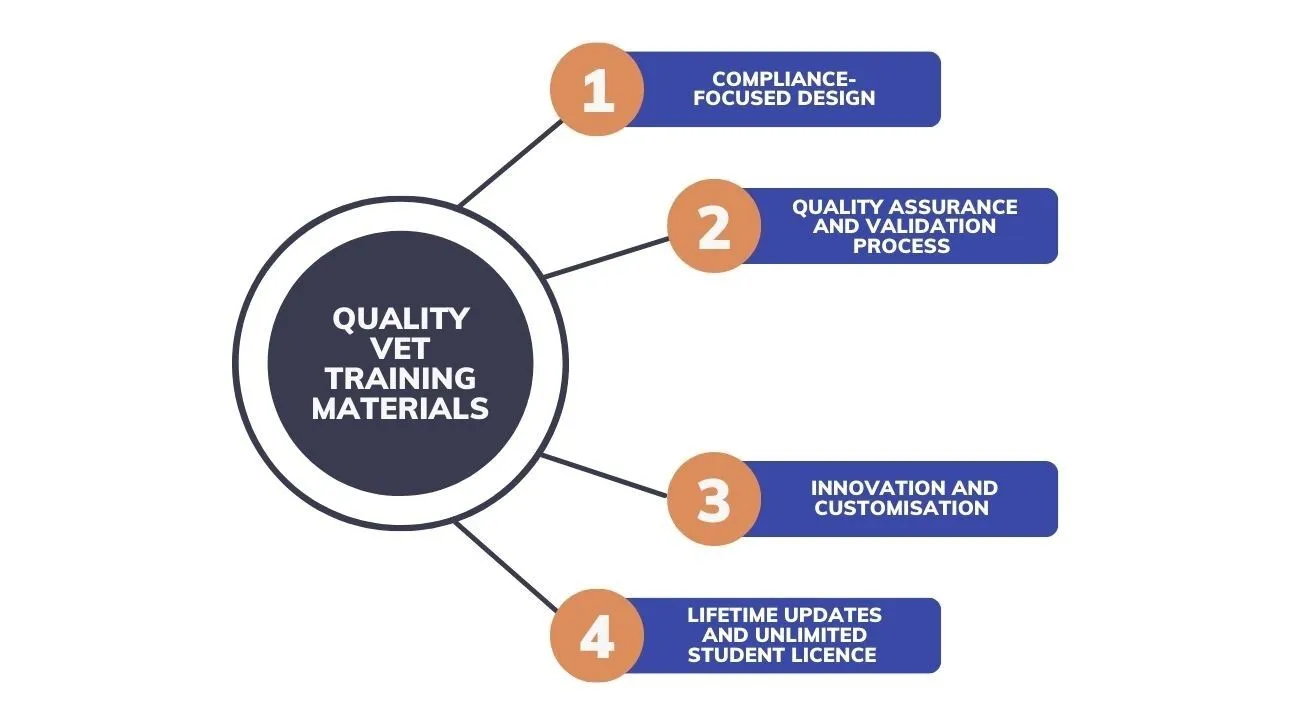
Features and Benefits of Quality VET Training Materials
Quality RTO training materials are the cornerstone of effective vocational education, supporting both learners and Registered Training Organisations (RTOs). These RTO training materials are carefully developed to ensure compliance, adaptability and relevance across a wide range of industry sectors.
Compliance-Focused Design
Adherence to Standards: Materials are designed to meet the ASQA compliance requirements and national standards for vocational education.
Volume of Learning: Ensures that the amount and depth of learning are appropriate to the qualifications awarded.
Industry Alignment: Regular updates and revisions align the content with current industry standards and practices.
Quality Assurance and Validation Process
Rigorous Review: Each training resource undergoes a thorough quality assurance process, including peer review and industry validation.
Continuous Improvement: Feedback loops and regular reviews facilitate ongoing refinement and enhancement of the materials.
Audit Support: Resources are crafted to withstand regulatory audits, with additional support and guidance provided to RTOs.
Innovation and Customisation
E-Learning Adaptability: Materials are versatile and can be customised for online learning platforms and diverse learner needs.
Industry-Specific Customisation: Tailoring options allow RTOs to adapt content to meet the unique demands of different industries.
Technological Integration: Incorporation of the latest educational technologies enhances learning experiences and outcomes.
Lifetime Updates and Unlimited Student Licence
Sustainability: One-time payment grants access to continuous updates, ensuring the longevity and relevance of the materials.
Accessibility: An unlimited student licence allows widespread use, maximising the impact and reach of the training resources.
Cost-Efficiency: This model saves RTOs significant time and money in development, validation, and resource acquisition.
Table: Key Features and Benefits of VET Training Materials
Feature
Benefit
Compliance-Focused Design
Ensures adherence to regulatory standards and industry alignment
Quality Assurance and Validation
Guarantees the reliability and effectiveness of the materials
Innovation and Customisation
Provides adaptability to diverse learning environments and industry needs
Lifetime Updates and Unlimited Licence
Offers sustainability, accessibility, and cost-efficiency
Exploring VET Training Materials Providers in Australia
Australia is home to several reputable providers of VET Training Materials, each offering a unique blend of resources, support, and innovation to cater to the diverse needs of RTOs and learners.
Compliant Learning Resources
Focus on Compliance and Quality: Ensures all materials meet ASQA standards and industry requirements.
Impact of VET Training Materials on Learners and RTOs
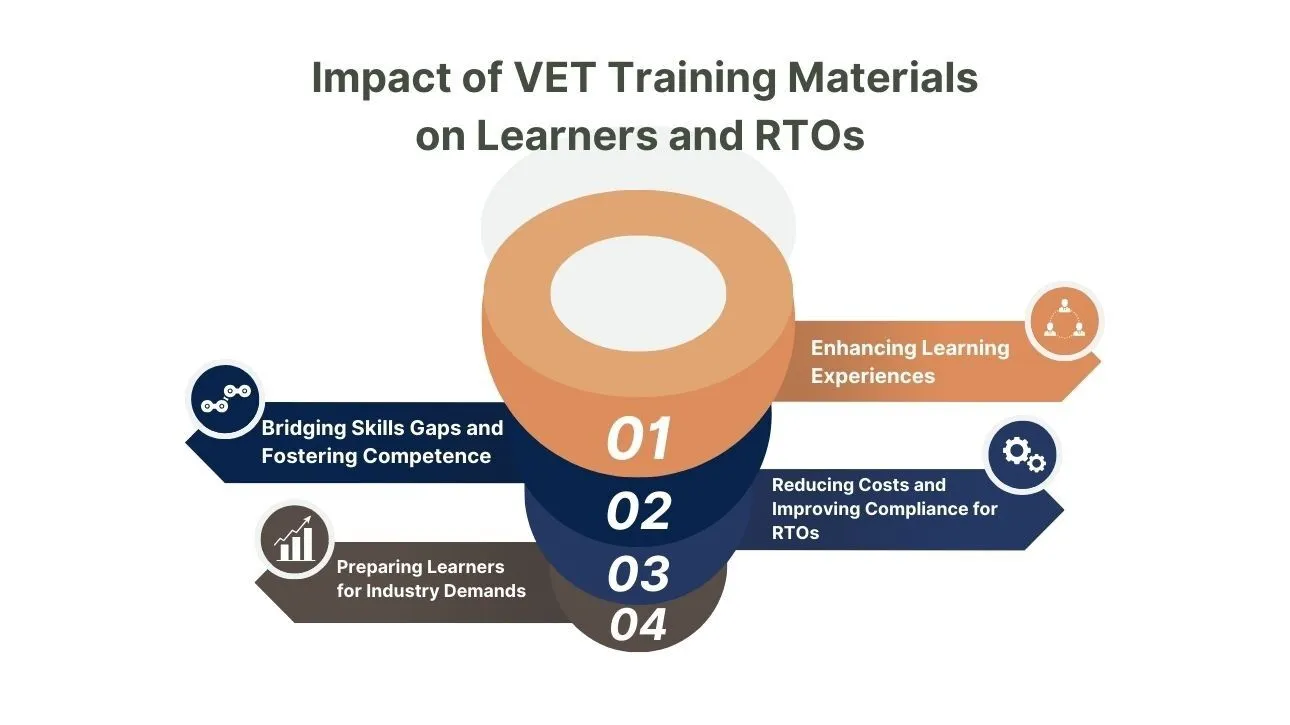
The utilisation of quality VET Training Materials has a profound impact on learners and Registered Training Organisations (RTOs), enhancing learning experiences and ensuring compliance and adaptability across various industry sectors.
Enhancing Learning Experiences
Interactive Content: VET training materials offer interactive and engaging content catering to diverse learning styles and preferences.
Practical Application: Resources include real-world scenarios, case studies, and practical exercises to bridge theory and practice.
Skill Development: Focused on developing industry-specific skills and competencies, preparing learners for the workforce.
Bridging Skills Gaps and Fostering Competence
Industry Alignment: Materials are aligned with current industry standards and demands, ensuring relevance and applicability.
Competency-Based Learning: Emphasis on developing practical skills and knowledge to meet specific industry competencies.
Career Readiness: Prepares learners for various vocational pathways, enhancing employability and career prospects.
Reducing Costs and Improving Compliance for RTOs
Cost-Efficiency: Access to quality resources and continuous updates reduces development costs and time for RTOs.
Compliance Assurance: VET training materials are designed to meet regulatory requirements, aiding in successful audit outcomes.
Customisation and Adaptability: Flexibility to tailor materials to specific industry needs and learner demographics.
Preparing Learners for Industry Demands
Relevance: Regular updates and industry consultation ensure the content remains relevant to the evolving industry landscape.
Practical Skills: Emphasis on practical skill development to meet the demands of various sectors such as construction, health, and ICT.
Career Advancement: Equips learners with the necessary skills and knowledge for career advancement and industry recognition.
Table: Impact of VET Training Materials on Learners and RTOs
Impact Area
Benefits for Learners
Benefits for RTOs
Learning Experiences
Interactive Content, Practical Application, Skill Development
Customisation, Engagement, Diverse Learning Modes
Skills Gaps and Competence
Industry Alignment, Competency-Based Learning, Career Readiness
Compliance, Relevance, Industry-Specific Content
Costs and Compliance
Access to Quality Resources, Career Advancement, Industry Recognition
Industry Alignment, Practical Skill Development, Customisation
Future Trends and Developments in VET Training Materials
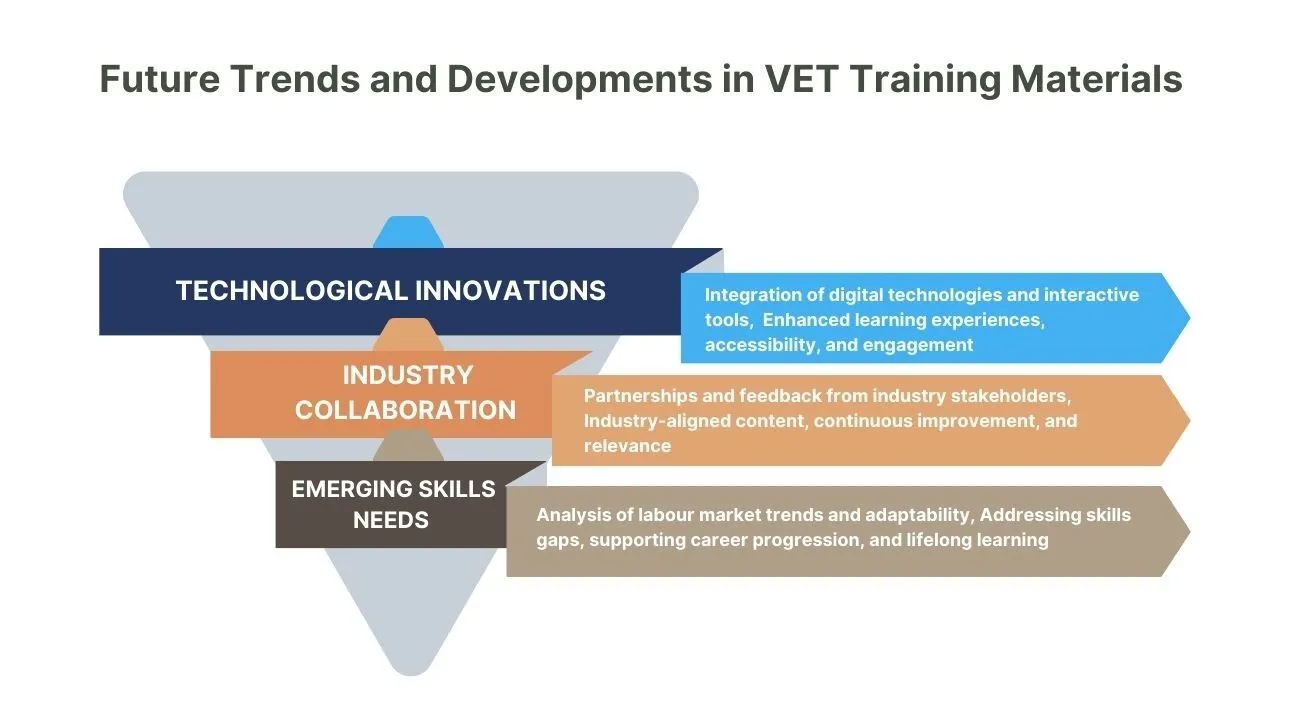
VET Training Materials are continually evolving to meet the industry’s and learners’ changing needs. Anticipating future trends and developments is essential for ensuring the ongoing relevance and effectiveness of vocational education in Australia.
Technological Innovations and E-Learning
Digital Transformation: The integration of digital technologies is enhancing the delivery and accessibility of VET training materials.
E-Learning Platforms: The rise of online learning platforms offers flexibility and adaptability to diverse learning needs and environments.
Interactive Technologies: Augmented reality (AR) and virtual reality (VR) are emerging as innovative tools for immersive learning experiences.
Industry Collaboration and Stakeholder Engagement
Partnerships: Collaborations between RTOs, industry experts, and stakeholders foster the development of industry-aligned content.
Feedback Mechanisms: Regular consultations and feedback from industry professionals ensure continuous improvement and relevance.
Skills Service Organisations: These organisations play a crucial role in developing and reviewing training packages to meet the evolving industry standards.
Addressing Emerging Skills Needs and Labour Market Demands
Labour Market Analysis: Ongoing analysis of labour market trends informs the development of training materials to address emerging skills needs.
Adaptability: VET training materials are being designed with a focus on adaptability to respond to changes in industry demands quickly.
Lifelong Learning: The emphasis on continuous learning and upskilling shapes the development of resources to support career progression and adaptability.
Table: Future Trends and Developments in VET Training Materials
Trend/Development
Description
Impact on Vocational Education
Technological Innovations
Integration of digital technologies and interactive tools
Enhanced learning experiences, accessibility, and engagement
Industry Collaboration
Partnerships and feedback from industry stakeholders
Industry-aligned content, continuous improvement, and relevance
Emerging Skills Needs
Analysis of labour market trends and adaptability
Addressing skills gaps, supporting career progression, and lifelong learning
Conclusion
In conclusion, VET Training Materials are a pivotal component in Australia’s vocational education landscape. They ensure quality training, compliance, and adaptability across various industry sectors. From technological innovations to industry collaborations, the future of VET training materials is promising, with continuous developments aimed at meeting the evolving needs of learners and industry.
Call to Action:VET Resources stands out as a provider of choice for those seeking top-notch VET training materials that align with the highest standards of quality and compliance. Explore their diverse resources and experience the difference in fostering competency and excellence in vocational education.
Disclaimer: The information presented on the VET Resources blog is for general guidance only. While we strive for accuracy, we cannot guarantee the completeness or timeliness of the information. VET Resources is not responsible for any errors or omissions, or for the results obtained from the use of this information. Always consult a professional for advice tailored to your circumstances.
Ben Thakkar is a Compliance, Training, and Business specialist in the education industry. He has held senior management roles, including General Manager, with leading Registered Training Organisations (RTOs) and Universities. With over 15 years of experience, Ben brings extensive expertise across audits, funding contracts, VET Student Loans, CRICOS, and the Standards for RTOs 2025.