


Running a Registered Training Organisation in Australia is not just about delivering training programs and issuing certificates at the end of a course. RTO Compliance Management is what holds every part of the operation together.
RTOs must comply with strict ASQA standards, maintain quality systems, manage trainers, handle audits, and keep operations running efficiently every single day.
Without a proper management framework, even well-intentioned providers end up facing compliance issues they didn’t see coming.

Effective RTO Compliance Management helps training providers stay compliant, improve learner outcomes, and build a sustainable education business that holds up under scrutiny.
Whether you’re a newly registered RTO or an established provider looking to tighten your systems, the quality of your management directly affects your results.
This blog explains what RTO Management actually involves and why it matters.
RTO Management covers every system, process, and decision involved in running a registered training organisation effectively.
It’s not one single function; it spans compliance, administration, quality assurance, training systems, and financial operations. Every one of these areas connects to the others, and a weakness in any one creates risk across the whole organisation.
At its core, RTO Compliance Management involves keeping compliance obligations up to date, maintaining the quality of training and assessment, managing student records and reporting, and monitoring trainer performance.
It also includes internal audits, risk management, policy maintenance, and continuous improvement processes running consistently in the background.
Miss any of these areas repeatedly, and the consequences show up in audit findings, student complaints, or regulatory action.
RTOs in Australia must comply with the Standards for Registered Training Organisations and the VET Quality Framework to keep their registration and deliver nationally recognised qualifications.
These aren’t optional frameworks; they’re the legal basis on which your organisation operates every day.
Without proper RTO Compliance Management, providers face non-compliance risks, audit issues, student dissatisfaction, and financial instability that compound over time.
| RTO Management Area | Purpose |
| Compliance Management | Ensures adherence to ASQA and regulatory requirements |
| Training & Assessment System | Maintains quality delivery and assessment practices |
| Student Administration | Handles enrolment, attendance, records, and certification |
| Internal Audits | Identifies compliance gaps before external audits |
| Trainer Management | Ensures trainers meet competency and industry standards |
| Quality Assurance | Supports continuous improvement processes |
| Risk Management | Reduces operational and compliance risks |
| Data Reporting | Manages AVETMISS and regulatory reporting obligations |
| Policy Development | Maintains updated operational and compliance policies |
| Business Strategy | Supports growth, expansion, and operational efficiency |
Each of these components requires consistent attention and properly documented processes.
Letting one area slide creates pressure on every other area in the table above.
Professional RTO consultants often assist organisations with these management functions to ensure operations stay on track and audits don’t turn into emergencies.
Compliance is the foundation of your entire operation.
All need to be actively managed, not just reviewed annually.

RTO Management gives you the systems to stay on top of all of it continuously, not just when an audit is approaching.
Regulatory requirements also change, and what was compliant last year may not satisfy updated standards this year.
Without active compliance management, organisations discover these gaps at the worst possible time, when ASQA is already making contact.
Regular updates to compliance systems are what keep RTOs ahead of those risks before they become penalties.
Good management is what separates organisations that deliver quality training from those that just deliver training. Consistent assessment practices, strong trainer oversight, and functioning quality management systems are what produce reliable learner outcomes that hold up under validation. RTO Management creates the structure that makes high-quality delivery repeatable across every cohort and every trainer on your team.
Student satisfaction is also a direct output of management quality, not just teaching quality.

When systems work properly, students get accurate enrolment information, timely support, consistent assessment, and qualifications issued on schedule. When systems are weak, students notice it first, and they don’t stay quiet about it.
ASQA audits are straightforward for organisations with strong systems and stressful for organisations without them. Proper RTO Management means your documentation is current, your assessment validation records are complete, and your policies are updated as a matter of routine — not because an audit notice just arrived. The difference between a confident audit and a damaging one is preparation that started months earlier.
Internal audits, compliance reviews, and regular policy checks are the practical tools that make external audits manageable. RTOs that invest in strong RTO Management systems don’t dread audits. They’re ready for them because readiness is already built into how they operate.

Growth without operational discipline creates more problems than it solves for any registered training organisation. Adding qualifications to the scope, entering new markets, or building industry partnerships all require systems that can handle increased complexity without breaking down under pressure. RTO Management provides the operational foundation that makes growth sustainable rather than a source of new compliance risk.

Strategic planning, knowing where you want to take the organisation and what systems you need to get there, is a core management function too. Organisations that grow successfully do so because their management structure grows with them, not behind them.
Students choose an RTO based on reputation and stay or leave based on day-to-day experience. Efficient enrolment systems, reliable support services, quality learning experiences, and timely certification are all products of management that work properly at every level. When these things function well, students trust the organisation and refer others to it.
When they don’t work, students complain, withdraw, or share their experience publicly.

The student experience is a direct measure of how well your RTO is being managed, and it affects enrolment numbers whether you track it carefully or not.
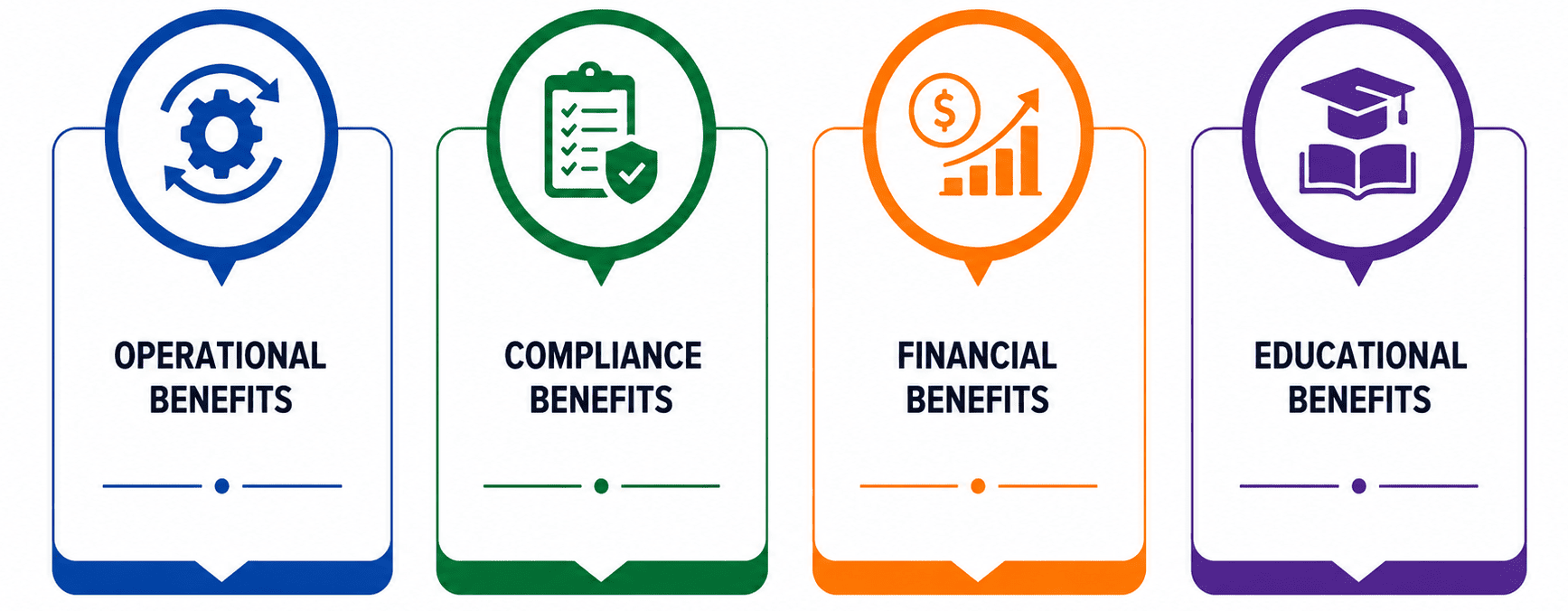
Streamlined workflows and better document management reduce the administrative load on your team significantly. Staff accountability improves when roles, responsibilities, and processes are clearly defined and consistently documented across the organisation. Less time spent on administrative firefighting means more time and resources directed at what actually matters — delivering quality training.
Audit readiness stops being a crisis response and becomes a standard operating procedure when systems are properly built. Accurate reporting systems and stronger quality assurance processes reduce the risk of non-compliance findings that cost time, money, and reputational standing. The compliance benefits of strong RTO Management compound over time as systems mature and evidence accumulates across reporting periods.
Non-compliance penalties are expensive in both financial and operational terms, and avoidable with proper systems in place. Improved resource allocation and better operational efficiency reduce waste across the business at every level. Organisations that manage well tend to be more profitable because they stop paying for the consequences of weak or poorly maintained systems.
Consistent management at the operational level translates directly into better educational outcomes for the students who come through your doors. Enhanced learner engagement, consistent training quality, and improved assessment consistency all increase completion rates and learner satisfaction scores over time. Better educational outcomes build the reputation that drives sustainable enrolment growth — and that reputation is built through RTO Management, not marketing.
Compliance systems need to be active and maintained, not archived and revisited before audits. Regularly monitor regulatory updates, review assessment practices, check trainer qualifications, and keep documentation processes current and audit-ready at all times. A compliance system that only gets attention when ASQA makes contact is not a compliance system — it’s a liability.
Internal audits find problems before ASQA does, and that timing makes all the difference to how those problems get resolved. Schedule quarterly compliance reviews, validation activities, and policy checks as fixed items in your operational calendar throughout the year. Risk assessments should also be routine, not a reaction to something already going wrong inside the organisation.
Your trainers and assessors are your compliance frontline, and their currency directly affects your audit outcomes. They need to stay current with industry practices, updated compliance requirements, evolving training methodologies, and assessment standards specific to their delivery areas. An organisation that invests consistently in trainer development is an organisation that invests in its own long-term audit readiness.
Technology makes modern RTO Management manageable at scale across complex operations. A reliable student management system handles enrolment tracking, attendance management, AVETMISS reporting, and certification issuance without the manual errors that create compliance issues. Choose systems that integrate with your compliance and quality assurance processes rather than sit separately from them.
Continuous improvement works when it’s genuinely embedded in daily operations — not treated as an annual review exercise or a box to tick for ASQA. Collect feedback from students, trainers, employers, and industry stakeholders consistently throughout the year, not just at course completion. Use that feedback to improve training quality, fix operational problems early, and update processes before they become compliance findings.
Some areas of RTO compliance and operations are complex enough that external expertise makes more sense than building internal capacity from scratch. Professional consultants support RTO setup, audit preparation, compliance reviews, policy development, scope additions, and strategic planning for organisations at every stage of their lifecycle. VET Resources provide tailored RTO consulting and management support for training organisations across Australia.
Working with experienced RTO Management consultants removes the guesswork from complex compliance and operational decisions that carry real regulatory risk.
Running an RTO without strong management systems is like building on unstable ground — you can operate for a while, but the cracks appear at audit time. RTO Management is what builds the stable foundation that holds every other part of your operation up. From compliance systems and quality assurance to student administration and operational efficiency, every function performs better when it’s properly managed.
The organisations that stay registered, stay competitive, and grow sustainably are the ones that treat management as a core business function and not an administrative afterthought. They audit themselves before ASQA does, they develop their trainers before currency gaps appear, and they fix operational problems before students experience them. That discipline is what separates providers that thrive from providers that constantly react to problems.
Whether you’re launching a new RTO or strengthening an existing operation, professional RTO Management support reduces risk, improves performance, and positions your organisation for growth that lasts. VET Resources brings the expertise and hands-on experience to help you manage operations and compliance with genuine confidence. Get in touch to find out what a stronger management framework can do for your organisation.
RTO Management refers to the systems, processes, and strategies used to operate and maintain a Registered Training Organisation effectively.
It helps ensure compliance, improves operational efficiency, supports quality training delivery, and reduces regulatory risks.
An RTO manager oversees compliance, training operations, audits, staff performance, student services, and quality assurance processes.
It ensures that policies, systems, assessments, and reporting processes align with ASQA and VET Quality Framework requirements.
Common challenges include regulatory changes, audit preparation, trainer management, data reporting, and maintaining training quality.
Most RTOs should conduct internal audits at least quarterly or annually depending on operational complexity and compliance risks.
Yes, professional consultants provide support with compliance, audits, operational systems, policy development, and strategic growth.
Student Management Systems (SMS), Learning Management Systems (LMS), and compliance tracking software are commonly used.
Strong management systems improve training quality, student support services, assessment consistency, and learner engagement.
VET Resources offers expert consulting, compliance assistance, internal audits, policy development, and tailored RTO support services across Australia.


