


Learners are attending the assessment. Have you ever wondered who prepares their assessment sheet and evaluates their mark? The assessor is responsible for it.
So basically, assessors ensure that students or trainees meet the required standards of their qualifications.
Unlike instructors who mainly teach, assessors focus on evaluating and verifying competence or knowledge.
They may work in a variety of environments, including colleges, training centres, workplaces or virtually. Assessors work within regulatory frameworks to ensure consistency and credibility of qualifications.
This blog defines what assessors do and describes their typical responsibilities and skills.
An Assessor is a qualified professional responsible for evaluating an individual’s skills, knowledge, and experience against competency standards, most commonly in Vocational Education and Training (VET).
To assess competence, assessors need a Certificate IV in Training and Assessment (TAE40116 or TAE40122) or higher. An assessor is also called a vocational assessor, competency assessor, or training assessor.

The Certificate IV in Training and Assessment (TAE40122) is the standard qualification for VET trainers and assessors.
This nationally accredited course covers essential areas such as training design, delivery, and competency-based assessments.
A candidate typically needs to demonstrate competency or skill in their chosen field to enrol.
After completing TAE40122, you’ll be able to “plan, design, deliver and assess training programs effectively”.
A Diploma or Advanced Diploma in Vocational Education & Training is also an option for some assessors. In addition, ASQA‘s Standards require assessors to keep up on their subject area skills.
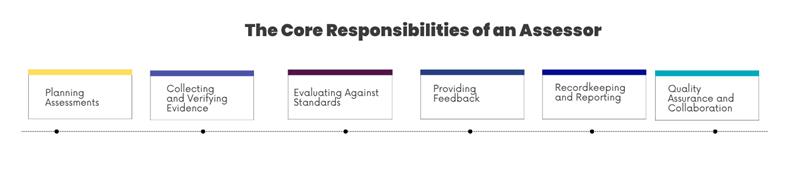
An assessor’s role is to evaluate whether the learners meet the required standards and ensure the assessment process is fair. Key responsibilities include:
Depending on the qualification standards, the assessor develops a customised assessment plan (like practical tests, projects, simulations, etc.) for each learner or group. It involves scheduling assessment activities, getting ready with training materials and making sure the learners’ needs are met.
Planning is just the beginning, where the assessor has to plan the location, timing, and methods that match learners’ needs.
During assessments, the assessor observes or tests the learner’s skills in a real or simulated work setting. Portfolios, exams, quizzes, professional discussions, or third-party reports like supervisor witness statements might be examined.
The assessor’s goal is all about collecting the valid and sufficient evidence.
The ASQA guideline lists methods like
Using a combination of methods gives you a reliable result.
Assessors need to compare the collected evidence to learning outcomes and competency criteria.
It’s about making professional judgments: is the evidence authentic and sufficient? Do the performance criteria get met consistently?
Assessors need to make sure their decisions are based on evidence. For regulated qualifications, assessors use specified marking schemes or competency checklists to make a pass/fail decision.
Giving constructive feedback is the assessor’s core duty.
Assessment will help the students to self-evaluate their skills, identify their areas of improvement, and determine how well the standards are met.
It’s important to provide clear and on-time feedback, which must be linked to the assessment criteria. By doing this, you can keep track of the student’s progress and also earn credibility for the assessment results.
The assessor handles and maintains the full records of learner assessment performance, evidence gathered and final decisions.
All these records prove that you are following the awarding body and regulatory requirements.
They often fill out standard paperwork for apprenticeship and accredited courses. It’s also a crucial task because the assessor must be confidential and ensure data protection while handling learner information.
In order to standardise assessments, assessors often work with the internal quality team (IAQ). During the standardisation meeting, they would share practices and gain knowledge from their colleagues and undergo periodic observation.
They also work with employers, training staff, and other stakeholders to support learner development.
A typical day for an assessor may look like arranging workplace visits, conducting an interview or on-site assessment, reviewing projects, coaching, updating logs and preparing reports.
Here are some examples of assessor job descriptions:
In addition, the assessor should ensure that all assessments follow the awarding body regulations and education laws.
An assessor needs a mix of professional skills and personal qualities beyond the qualifications. Here are some of the essential skills you need:
Communication: The assessor must deliver clear feedback, explain the feedback, and conduct interviews. For writing detailed reports, good writing skills are also a must.
Interpersonal/coaching: Motivating the students is more important, especially when assessing their skills. Students will do better if you are patient, listen actively, and encourage them consistently.
Plan and organise: Assessors often juggle multiple candidates, schedules, resources, and paperwork. Being able to create an assessment plan, use checklists, and maintain accurate, up-to-date records is key to managing these tasks effectively.
Subject Matter Expertise: The assessor must ensure their assessment are relevant and accurate.
Critical judgement and analysis: The assessor uses judgement when deciding if evidence meets criteria. To do this, you need analytical skills.
Fairness and integrity: All candidates must be treated equally by assessors following legal standards to avoid any form of bias. Students’ data must be kept confidential.
Attention to detail: A small mistake can ruin the assessment’s validity. So an assessor needs to check the evidence record and the quality assurance process.
Technical/Practical skills: Digital tools and hands-on work are a part of many assessments. So assessors need to be comfortable with the practical aspects of vocation and digital assessment platforms.
In one line, assessors combine teaching/training skills with examiner-like objectivity.
They balance empathy with firmness, guiding learners but never compromising the standard.
A quick checklist for those considering a career as an assessor:
An assessor’s role is to plan and conduct assessments for learners to determine whether they meet the required standard for a qualification.
Cert IV in Training and Assessment (TAE40122) is mandatory.
A good assessor must possess skills like
They use various methods to collect and evaluate the evidence, such as:
Assessors’ daily tasks include meeting the learners, conducting observations, reviewing portfolios of evidence and holding professional discussions.
Yes, it exists in every Industry that has formal qualification and competency standards.
A teacher focuses on delivering learning and developing skills.
Whereas an assessor focuses on evaluating the learners’ skills and measuring their competency.
With experience, an assessor can move into senior or specialist roles like:
If you enjoy interacting with people, have attention to detail and maintain standard values, then this would be the right choice for you.
In summary, an assessor is a specialist who ensures learners meet defined competence or qualification standards. Their role bridges education and industry: they plan and carry out assessments, make judgment calls on evidence, give feedback, and keep meticulous records. Official definitions (from NCVET, Ofqual bodies, etc.) emphasise that assessors must be qualified, independent and fair. To become one, candidates typically need both vocational/industry expertise and a formal assessor qualification (Cert IV TAE in Australia).
This role is vital in maintaining the quality and credibility of vocational and professional education. Qualified assessors can advance into quality assurance, training management or curriculum design. For those interested in this career, start by gaining industry experience and then seek out accredited assessor training.

