

The Australian Skills Quality Authority (ASQA) has released its Annual Report for 2024-25, revealing a landmark year of transformation, enforcement, and innovation in Australia’s vocational education and training (VET) sector. For training providers, educators, students, and industry stakeholders, this report offers crucial insights into regulatory changes, compliance requirements, and the future direction of vocational education in Australia.

In this comprehensive analysis, we delve deep into the data, achievements, challenges, and implications of ASQA’s work over the past year. Whether you’re an RTO manager, compliance officer, aspiring training provider, or simply interested in Australia’s education landscape, this detailed breakdown will help you understand what these changes mean for the VET sector.
The 2024-25 period marks the most significant regulatory transformation in Australian vocational education since ASQA’s establishment. With the implementation of the 2025 Standards for Registered Training Organisations, enhanced fraud detection capabilities, and decisive enforcement actions, ASQA has fundamentally reshaped how vocational education operates in Australia.
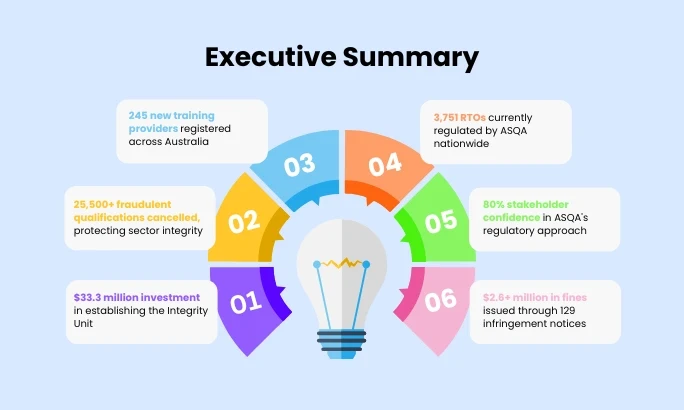
These figures represent more than statistics—they reflect ASQA’s commitment to ensuring every Australian who pursues vocational education receives genuine, industry-relevant training that leads to real employment outcomes.

Before diving into the specifics of the annual report, it’s essential to understand ASQA’s fundamental role in Australian education. As the national regulator for vocational education and training, ASQA serves as the quality assurance guardian for Australia’s VET sector, which serves millions of students and supports hundreds of thousands of employers annually.
ASQA’s regulatory reach is extensive. As of 2024-25, the authority oversees:
This comprehensive oversight ensures that vocational qualifications awarded in Australia meet rigorous standards, are recognised by industry, and provide genuine pathways to employment.
The distribution of RTOs across Australia reflects economic activity, population density, and regional training needs:
Victoria (VIC)
1,191 RTOs – The highest concentration, reflecting Melbourne’s status as an education hub
Queensland (QLD)
1,119 RTOs – Strong presence supporting tourism, mining, and healthcare sectors
New South Wales (NSW)
841 RTOs – Serving Australia’s most populous state and largest economy
South Australia (SA)
200 RTOs – Supporting advanced manufacturing and defense industries
Western Australia (WA)
162 RTOs – Crucial for mining, resources, and construction sectors
Australian Capital Territory (ACT)
118 RTOs – Focused on government, public administration, and professional services
Tasmania (TAS)
49 RTOs – Serving regional and rural training needs
Northern Territory (NT)
47 RTOs – Supporting remote and Indigenous community training
This geographic spread highlights both opportunities and challenges. While major metropolitan areas enjoy diverse training options, regional and remote areas face accessibility challenges that ASQA continues to address through flexible regulatory approaches and support for regional providers.
The centrepiece of ASQA’s 2024-25 achievements is the successful implementation of the 2025 Standards for Registered Training Organisations. This represents the most significant regulatory reform in over a decade and fundamentally changes how training providers operate in Australia.

The new standards represent a paradigm shift from prescriptive, process-focused regulation to outcomes-based oversight. Rather than dictating exactly how training must be delivered, the 2025 Standards focus on what students and employers should achieve as a result of training.
The standards prioritize measurable learning outcomes and employment results over rigid delivery methods. This gives RTOs greater flexibility to innovate while maintaining accountability for student success.
Training providers can experiment with new delivery models, technologies, and pedagogical approaches, provided they demonstrate positive outcomes for learners and industry.
The standards explicitly recognize that quality training must consider the student journey, from enrollment through to post-completion support.
RTOs must demonstrate meaningful partnerships with employers and industry bodies, ensuring training remains relevant to current workplace needs.
While offering flexibility, the standards provide unambiguous benchmarks for compliance, making it easier for quality providers to understand and meet requirements.
Recognising the magnitude of this change, ASQA invested heavily in supporting training providers through the transition:
Comprehensive Workshop Program:
Over 20 face-to-face and online workshops reached providers nationwide, offering practical guidance on interpreting and implementing the new standards.


Extensive Guidance Materials:
ASQA developed detailed practice guides, frequently asked questions documents, and case studies demonstrating successful implementation approaches.
ASQAcast Podcast Series:
This ongoing educational resource provides accessible, on-demand learning for busy training professionals, covering everything from basic compliance to advanced quality improvement strategies.


Survey Results Demonstrate Success:
Feedback from providers showed they felt highly motivated (4.6 out of 5) and well-prepared (4.0 out of 5) to implement the new standards—a testament to ASQA’s support efforts.
The 2025 Standards create both opportunities and obligations for RTOs:
Perhaps the most consequential development in 2024-25 was ASQA’s decisive action against fraudulent training providers. With $33.3 million in government funding, ASQA established its Integrity Unit, fundamentally strengthening the authority’s capacity to detect, investigate, and disrupt bad-faith operators.
The data from 2024-25 reveals the concerning extent of fraudulent activity in the VET sector:
25,500+ qualifications cancelled that were issued without appropriate training or assessment
23,000+ individuals affected by fraudulent qualifications
7 critically non-compliant providers had their registrations cancelled for systematically issuing bogus qualifications
3,127 tip-offs received through the VET Tip-off line, with approximately 50% providing actionable intelligence
200+ serious matters relating to 158 providers under investigation
79% of serious matters related to alleged fraud, including cash-for-qualifications schemes, fabricated evidence, and funding fraud
The report identifies several categories of fraudulent activity plaguing the sector:
Certificates issued without any training or assessment taking place. Students pay fees but receive worthless credentials that don’t reflect genuine learning or competence.
Arrangements where students pay for certificates based on claimed work experience or prior learning, without proper recognition of prior learning (RPL) assessment processes.
Providers creating false documentation to suggest training occurred, including forged attendance records, assessment evidence, and trainer qualifications.
Misuse of government funding programs, including claiming for students who never enrolled, inflating training hours, or claiming for training never delivered.
Particularly concerning is that 60% of fraud matters involved providers delivering training to international students, who are especially vulnerable to exploitation and may unknowingly receive worthless qualifications.
ASQA’s Integrity Unit operates as an intelligence-led investigation body, employing sophisticated analytical techniques to identify fraud patterns:

Data Analytics:
Advanced analysis of enrollment patterns, qualification issuance rates, and provider behaviors to identify statistical anomalies suggesting fraudulent activity.

Multi-Agency Collaboration:
Partnership with over 20 government agencies through the Fraud Fusion Taskforce, sharing intelligence and coordinating responses to cross-jurisdictional fraud.

Targeted Investigations:
Over 60% of investigations were linked to multi-jurisdictional operations involving law enforcement agencies and other regulators, ensuring comprehensive responses to complex fraud networks.

Proactive Intelligence Gathering:
The VET Tip-off line provides a confidential channel for whistleblowers, industry insiders, and concerned students to report suspicious activity.
ASQA’s enforcement toolkit expanded significantly in 2024-25:
While enforcement actions primarily target bad actors, they have positive spillover effects for the broader sector:
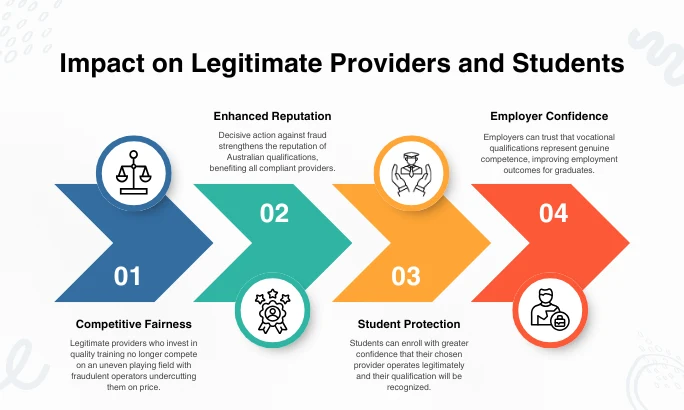
Understanding ASQA’s regulatory activity provides insight into the scale and complexity of overseeing Australia’s VET sector.
The 2024-25 period saw substantial activity in provider registration:
Applications Received
5,210 total applications, including new registrations, renewals, and scope changes
New Providers Registered
245 new entrants to the market, expanding training access across various regions and industries
Provider Renewals
927 existing providers successfully renewed their registration, demonstrating ongoing compliance
Applications Approved
4,709 applications received approval, reflecting ASQA’s support for quality providers
Applications Rejected
187 applications were rejected for non-compliance with standards, demonstrating rigorous quality control
Applications Withdrawn
360 applications were withdrawn, often because applicants realized they couldn’t meet requirements
Applications Finalized
5,256 total applications finalized, exceeding applications received due to processing of previous year’s backlog
These numbers reflect a healthy, dynamic sector with significant interest in providing vocational training, balanced by robust quality assurance processes.
For those considering becoming an RTO, understanding the registration process is crucial:
Course accreditation ensures that training programs align with industry needs and national standards:

Course accreditation is particularly important for specialised industries or emerging fields not covered by national training packages. The rigorous assessment ensures these courses meet the same quality standards as nationally recognised qualifications.
ASQA’s monitoring activities provide ongoing quality assurance across the sector:
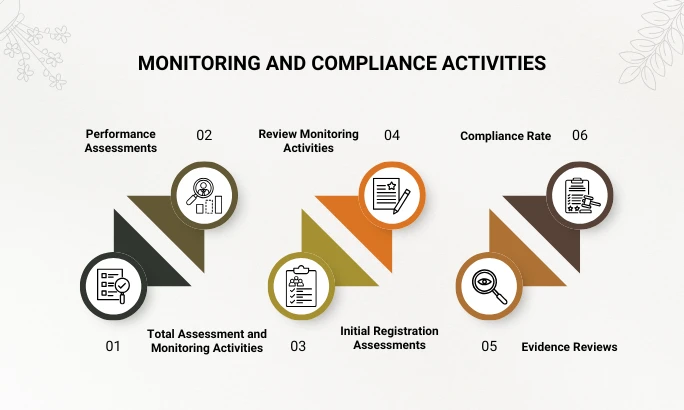
These monitoring activities serve multiple purposes: identifying and addressing non-compliance, providing feedback for continuous improvement, and gathering intelligence about sector trends and emerging risks.
ASQA’s responsiveness to community concerns strengthens sector oversight:
The tip-off line has proven particularly valuable, with community reporting leading to many of the most significant enforcement actions. This demonstrates the importance of whistleblowers and informed stakeholders in maintaining sector integrity.
ASQA’s performance against its service standards provides accountability and transparency about regulatory efficiency.
ASQA met 7 of its 12 service standards in 2024-25, with notable improvements in critical areas:

Outstanding Performance Areas:
Areas Requiring Improvement:
While ASQA achieved significant successes, gaps in other service standards indicate areas for continued focus, particularly in processing times for complex regulatory decisions that require extensive investigation and evidence review.

For training providers, these metrics have practical implications:

Predictability:
Improved performance in renewals and scope changes means providers can plan business operations with greater certainty.

Accessibility:
Strong telephone response times ensure providers can quickly obtain guidance when facing compliance questions.

Transparency:
Published performance metrics hold ASQA accountable and provide benchmarks for continuous improvement.

Resource Allocation:
Areas where standards weren’t met highlight where ASQA needs additional resources or process improvements.
Perhaps the most telling indicator of ASQA’s effectiveness is the independently administered stakeholder confidence survey.
The survey showed marked improvements across all strategic objectives:
80% agreed ASQA’s approach promotes quality through self-assurance and continuous improvement (up from 78%)
80% agreed ASQA’s regulation is best practice, risk-based, and proportionate (up 14 percentage points from 66%)—a significant improvement
67% agreed ASQA’s approach is transparent and accountable (up from 61%)
72% agreed ASQA engages and collaborates effectively (up from 69%)

These improvements are particularly significant given the increased enforcement activity during the same period. Typically, regulatory crackdowns can decrease stakeholder satisfaction as affected providers express dissatisfaction. The fact that confidence improved while enforcement intensified suggests stakeholders recognise the value of decisive action against fraudulent operators.
The 14-percentage-point increase in perceptions of best-practice regulation is especially noteworthy, suggesting the 2025 Standards and Integrity Unit initiatives resonated positively with legitimate providers who want clear, fair, risk-based oversight.
However, the lower scores for transparency and accountability (67%) indicate areas for continued improvement. Stakeholders want better insight into decision-making processes, clearer explanations of regulatory decisions, and more accessible appeals processes.
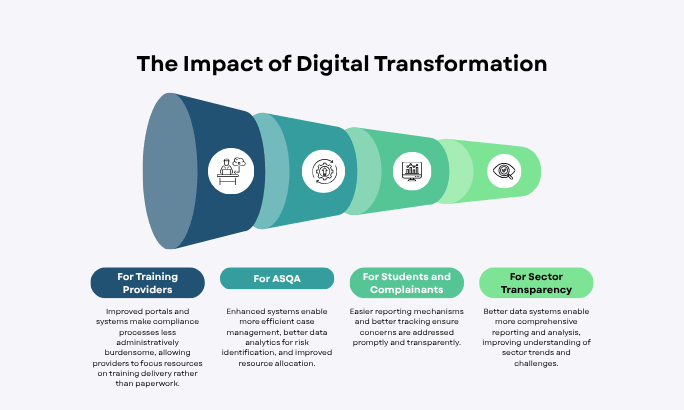
ASQA invested significantly in digital capabilities to improve service delivery and operational efficiency.
The integration of Genesys Contact Centre with Dynamics 365 CRM system provides seamless customer relationship management, ensuring enquiry histories are accessible and enabling more personalized support.
The launched portal features improved tip-off and complaints capabilities, making it easier for community members to report concerns and for providers to submit applications and evidence.
Enhanced navigation and search functionality help stakeholders find relevant information more quickly, reducing enquiry volumes and empowering self-service.
ASQA’s published statement outlines ethical, safe, and transparent artificial intelligence use, addressing stakeholder concerns about automated decision-making while leveraging AI for efficiency gains.
These digital investments deliver multiple benefits:
ASQA’s financial position reflects the balance between cost recovery through regulatory charges and government appropriation for expanded capabilities.
Total Expenses: $54.446 million supporting regulatory operations
Operating Loss: $4.358 million (in line with net cash appropriation arrangements)
Total Assets: $46.390 million including operational infrastructure and reserves
Total Liabilities: $23.741 million covering operational obligations
Net Assets: $22.649 million providing financial stability
Administered Revenue: $25.009 million from regulatory charges and fees, supporting the cost recovery model
ASQA operates on a partial cost recovery model, where regulatory charges (such as registration fees, renewal fees, and change of scope charges) fund a significant portion of operations, with government appropriation covering the remainder, particularly for expanded capabilities like the Integrity Unit.
This model balances several objectives:
Provider Contribution
Training providers contribute to regulatory costs through fees, ensuring those who benefit from the regulatory framework support its operation.
Affordable Regulation
Fees are calibrated to avoid creating barriers to entry for quality providers, particularly smaller operators in regional areas.
Government Investment
Strategic government funding enables expansion of capabilities (like fraud investigation) that benefit the entire sector and broader economy, not just individual providers.
Financial Sustainability
The combination of revenue sources provides stability, allowing ASQA to maintain consistent operations regardless of short-term fluctuations in application volumes.
ASQA’s participation in the Fraud Fusion Taskforce represents a strategic evolution toward coordinated government fraud prevention.
Established to detect, resolve, and prevent fraud across government programs, the Taskforce brings together over 20 government agencies, including:
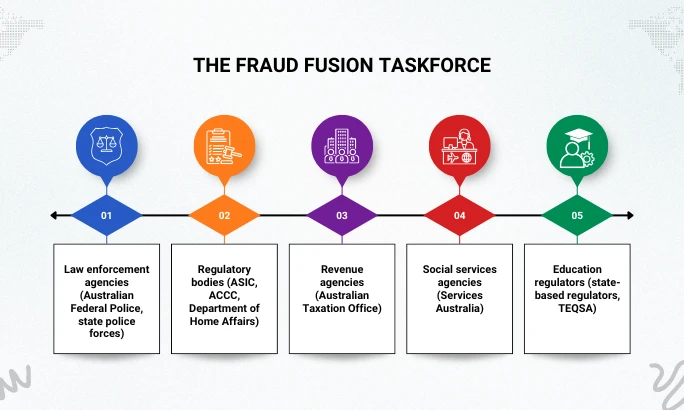
Vocational education fraud rarely exists in isolation. Fraudulent training providers often engage in multiple forms of misconduct:
Enrolling international students primarily to facilitate visa applications rather than genuine training
Failing to report income, claiming false expenses, or facilitating tax evasion for students or associated parties
Using stolen identities to create false enrollment records or obtain government funding
Using training fees to launder proceeds of other criminal activities
Enrolling students to enable them to claim welfare benefits they’re not entitled to receive
By coordinating responses across agencies, the Taskforce ensures:

Comprehensive Intelligence:
Information from multiple sources provides a complete picture of fraud networks and their operations.

Coordinated Responses:
Simultaneous action across multiple jurisdictions prevents fraudsters from simply relocating operations.

Effective Penalties:
Criminal prosecution, financial penalties, migration consequences, and regulatory sanctions collectively create powerful deterrents.

Resource Efficiency:
Agencies share investigative resources and expertise rather than duplicating efforts.
The 2024-25 data demonstrates collaboration effectiveness:
Over 60% of serious matters linked to multi-jurisdictional operations
Well over half of investigations coordinated with law enforcement or other regulators
More comprehensive responses to complex fraud networks
Enhanced intelligence sharing leading to earlier detection of emerging fraud patterns
Behind ASQA’s achievements is a skilled, professional workforce dedicated to maintaining sector quality.
As of June 30, 2025, ASQA employed 278 APS (Australian Public Service) employees distributed across all Australian capital cities except Darwin:
ASQA implemented a comprehensive Capability Framework defining the skills, knowledge, and attributes required for regulatory excellence:
Technical Capabilities
Understanding of training and assessment, Standards for RTOs, compliance assessment methodologies, and quality assurance principles.
Regulatory Capabilities
Investigation techniques, evidence assessment, decision-making frameworks, and enforcement option analysis.
Stakeholder Engagement
Communication skills, conflict resolution, cultural awareness, and collaborative partnership development.
Business Acumen
Financial literacy, project management, risk assessment, and strategic thinking.
Personal Effectiveness
Integrity, resilience, adaptability, and continuous learning commitment.

ASQA invested in staff capability development through:
ASQA’s updated Reconciliation Action Plan 2023-25 demonstrates commitment to diversity:

Training ensuring staff understand and respect Aboriginal and Torres Strait Islander peoples, cultures, and histories.

Targeted recruitment initiatives increasing Indigenous representation within the workforce.

Culturally appropriate approaches when engaging with Indigenous training providers and students.

Collaboration with Indigenous organizations ensuring regulatory approaches support self-determination and community-led training initiatives.
The 2024-25 achievements position ASQA and the broader VET sector for continued evolution and improvement.
While the annual report focuses on past achievements, several themes suggest future priorities:
Embedding the 2025 Standards
Continued support for providers implementing outcomes-based approaches, sharing emerging good practices, and refining guidance based on early implementation experiences.
Sustaining Anti-Fraud Efforts
The Integrity Unit’s establishment was just the beginning. Ongoing investment in intelligence capabilities, multi-agency coordination, and enforcement will remain critical.
Digital Transformation Continuation
Building on 2024-25 investments to further improve stakeholder experience, operational efficiency, and data-driven decision-making.
Stakeholder Trust Building
Addressing areas where confidence remains lower (particularly transparency and accountability) through enhanced communication and engagement.
Emerging Skill Needs
Ensuring the regulatory framework adapts to emerging industries (clean energy, digital economy, care economy) and new training modalities (micro-credentials, online learning, workplace-integrated training).
The VET sector faces ongoing challenges that will shape ASQA’s work:
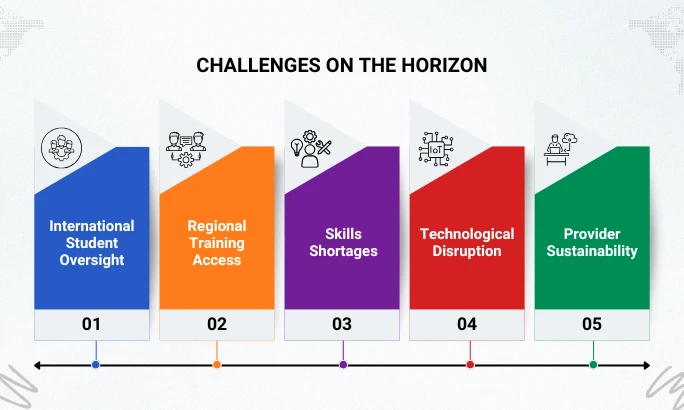
The regulatory reforms and integrity strengthening create opportunities:
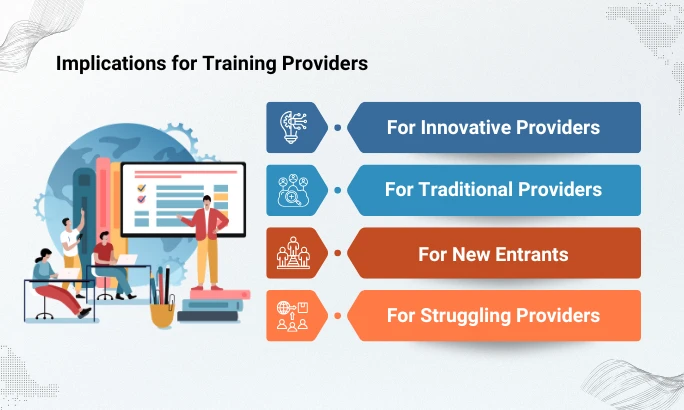
The annual report has different implications for various VET sector participants.
The 78% non-compliance rate in performance assessments indicates ASQA maintains high standards. Proactive compliance management is essential.
The 2025 Standards create space for innovation. Providers should explore new delivery models, technologies, and industry partnerships.
Quality providers benefit from enforcement against fraudulent operators, as the playing field becomes more level.
Investment in staff capability, particularly around outcomes-based training and assessment practices, will differentiate leading providers.
Based on the annual report’s insights, different stakeholders should consider specific actions.
Conduct a Compliance Health Check
Review operations against the 2025 Standards, identifying any gaps or improvement opportunities before ASQA’s next audit.


Invest in Staff Development
Ensure trainers and assessors understand outcomes-based approaches and can demonstrate how their practices lead to employment-ready graduates.
Strengthen Industry Partnerships
Develop formal relationships with employer groups, industry associations, and individual businesses to ensure training remains relevant.


Review Data and Evidence
Ensure systems can demonstrate student outcomes, graduate employment data, and employer satisfaction—key evidence under the 2025 Standards.
Engage with ASQA Resources
Utilize practice guides, attend workshops, and listen to ASQAcast podcasts to stay current with regulatory expectations.


Consider Voluntary Audits
Some providers engage external consultants for mock audits, identifying potential issues before regulatory assessment.
Research Providers Thoroughly
Use ASQA’s public register (training.gov.au) to verify provider registration status and scope before enrolling.
Ask About Outcomes
Inquire about employment rates, graduate satisfaction, and employer feedback—quality providers should have this data readily available.
Verify Trainer Qualifications
Ensure your trainers hold appropriate qualifications and current industry experience relevant to what they’re teaching.
Keep Records
Maintain copies of all assessment evidence, attendance records, and communications in case qualification verification is needed later.
Report Concerns
If training seems inadequate or suspicious practices emerge, use ASQA’s tip-off line to report confidentially.
Understand Your Rights
Familiarize yourself with consumer protection provisions and complaint processes before issues arise.
Use ASQA’s systems to verify the authenticity of qualifications presented by job applicants, particularly for critical roles.
Reach out to local RTOs about partnership opportunities, including workplace training, customized programs, or trainee/apprentice hosting.
When employing VET graduates, communicate with their training provider about how well their education prepared them for workplace requirements.
Encourage and facilitate employee participation in vocational training, recognizing that upskilling benefits both workers and employers.
Participate in industry advisory committees and training package development processes, shaping VET sector direction.
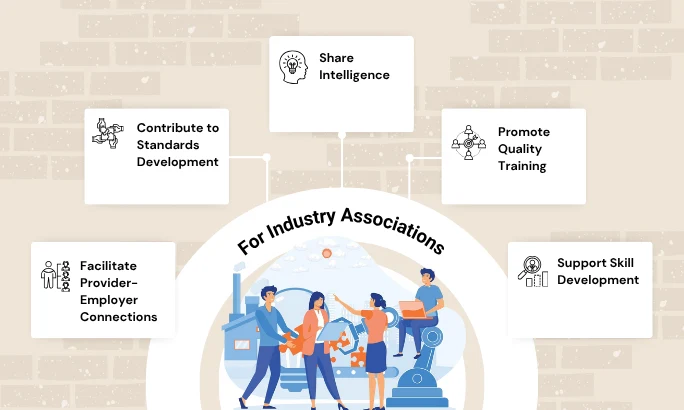
The annual report’s data and achievements must be understood within the broader context of vocational education’s role in Australian society and economy.
The VET sector is a significant economic contributor:
Training millions of students annually in skills critical to Australia’s economic activity across all industries.
Providing pathways to employment for school leavers, career changers, and workers seeking advancement.
Upskilling existing workers improves productivity, innovation capacity, and competitive advantage.
Many small businesses rely on VET-qualified workers and trainee/apprentice programs for workforce development.
In regional areas, RTOs are often significant employers and community anchors, supporting local economic development.
International education, including vocational training for international students, is a major export industry contributing billions to the Australian economy.
Beyond economics, VET delivers social benefits:
VET is central to addressing Australia’s most pressing challenges:

Climate Transition
The shift to renewable energy, sustainable practices, and circular economy requires massive skills development that VET must deliver.

Aged Care Crisis
Australia’s aging population creates unprecedented demand for care workers, with VET qualifications providing the foundation.

Digital Economy
As automation and digitalization transform work, VET must continually update curricula to ensure workers have relevant digital capabilities.

Housing Shortage
Addressing Australia’s housing crisis requires significantly more qualified construction workers, electricians, plumbers, and related trades.

Health Workforce
Nursing, allied health, and health support roles—many VET-qualified—face critical shortages that threaten healthcare system sustainability.

Defense Capability
Advanced manufacturing, cybersecurity, and defense technology require sophisticated technical skills that VET programs develop.
The annual report’s focus on quality, integrity, and outcomes directly supports VET’s capacity to meet these challenges effectively.

Understanding Australia’s VET system relative to international approaches provides perspective on ASQA’s achievements.
Unlike some countries with fragmented systems, Australia’s nationally consistent standards (supported by state and territory regulators) facilitate mobility and qualification recognition.
Australia’s focus on demonstrable workplace competence rather than time-served or knowledge-only approaches aligns with modern skill development best practices.
The training package system, with industry-led competency standard development, ensures closer alignment between training and workplace needs than purely education-driven systems.
ASQA’s rigorous oversight provides quality assurance levels comparable to or exceeding other developed nations’ VET regulation.
The 2025 Standards’ outcomes-based approach provides flexibility that many international systems, bound by prescriptive regulations, cannot match.
Australian VET qualifications enjoy strong international recognition:
Many countries recognize Australian VET qualifications through mutual recognition agreements, facilitating international mobility for graduates.
Despite competition from other English-speaking countries, Australia attracts significant international student numbers to VET programs.
Other countries study Australia’s VET system when developing or reforming their own vocational education approaches.
Australian RTOs deliver training internationally, extending Australia’s educational influence and supporting regional development.
The annual report’s enforcement actions protecting qualification integrity directly support this international reputation, ensuring Australian credentials maintain their value globally.
ASQA’s approaches reflect international best practices:
Risk-Based Regulation: Focusing resources on higher-risk providers mirrors approaches in countries like New Zealand, the UK, and Canada.
Outcomes Focus: The shift toward outcomes-based regulation reflects international trends recognizing that prescriptive input regulation doesn’t guarantee quality results.
Intelligence-Led Enforcement: The Integrity Unit’s sophisticated analytical approaches draw on successful models from financial services regulation and tax administration.
Multi-Agency Coordination: The Fraud Fusion Taskforce reflects international recognition that complex fraud requires coordinated government responses.
The annual report’s digital transformation initiatives are part of broader technological change reshaping vocational education.
Virtual and Augmented Reality
Immersive technologies enable safe, repeatable practice of dangerous or expensive procedures, from mining operations to surgical techniques.
Artificial Intelligence
Adaptive learning platforms personalize training to individual student needs, accelerating progress and improving outcomes.
Online and Blended Learning
Digital delivery expands training access, particularly for regional students or workers unable to attend face-to-face sessions.
Simulation and Gamification
Engaging digital environments increase motivation and enable practice in realistic scenarios before workplace application.
Mobile Learning
Smartphone-based learning enables training during downtime, commutes, or in workplaces without computer access.
These technologies create both opportunities and challenges for regulation:
ASQA’s AI Transparency Statement and digital transformation initiatives show recognition of these issues, with ongoing work needed to develop appropriate regulatory frameworks supporting innovation while ensuring quality.
Technology is also transforming the trainer and assessor role:
Rather than delivering content, future trainers may focus on facilitating learning, coaching skill application, and connecting training to workplace contexts.
Trainers must be comfortable with digital tools, online platforms, and emerging technologies relevant to their industry.
Learning analytics provide unprecedented insight into student progress, requiring trainers to interpret and act on data effectively.
Technology enables individualized learning pathways, with trainers supporting diverse students progressing at different paces through varied routes.
Trainers themselves must continuously update skills—both technical industry skills and pedagogical approaches—to remain effective.
The 2025 Standards’ focus on outcomes rather than prescriptive delivery methods creates space for these evolving trainer roles to flourish.
The achievements detailed in ASQA’s Annual Report 2024-25 represent significant progress, but the work is far from complete. Building a world-class VET sector that serves all Australians requires ongoing commitment from all stakeholders.
Quality training providers are the foundation of a strong VET sector. Your commitment to genuine training, authentic assessment, and positive student outcomes directly impacts individual lives and Australia’s economic prosperity.


Make the commitment to:
Take action today:

Your education is too important to leave to chance. Being an informed, engaged student protects you from poor-quality training and maximizes your learning investment.

Make the commitment to:

Take action today:
Employers’ engagement with VET directly impacts whether training meets industry needs. Your participation shapes curricula, informs trainers, and creates opportunities for students to apply learning in authentic contexts.
Make the commitment to:
Take action today:
Government policy shapes the VET environment through funding, regulation, and strategic direction. Evidence-based policies that balance access, quality, and sustainability are essential.
Make the commitment to:
Take action today:
Societal attitudes toward vocational education impact student choices, employer practices, and sector investment. Recognising VET as a valuable, prestigious pathway benefits everyone.
Make the commitment to:
Take action today:

At VET Resources, we understand that navigating Australia’s VET regulatory landscape can be complex. Whether you’re an established RTO adapting to the 2025 Standards, an aspiring provider preparing for registration, or a training professional seeking to deepen your compliance expertise, we’re here to support your success.
Our team brings decades of combined experience in VET compliance, having supported hundreds of providers through registration, audits, and improvement initiatives.
We stay abreast of regulatory developments, ASQA guidance updates, and sector trends, ensuring our advice reflects the latest requirements.
We focus on workable solutions that fit your operational reality, not one-size-fits-all approaches that look good on paper but fail in practice.
Aligned with the 2025 Standards’ philosophy, we help you build systems that genuinely improve training quality, not just tick compliance boxes.
We work only with providers committed to genuine training. If you’re looking for shortcuts or ways to game the system, we’re not the right partner—but if you’re dedicated to excellence, we’ll help you achieve it.
Don’t wait until an audit notice arrives to address compliance gaps. Proactive compliance management reduces stress, improves operational efficiency, and most importantly, enhances student outcomes.
Contact VET Resources to discuss how we can support your compliance journey:
📧 Email: [Contact via vetresources.com.au] 🌐 Website: Visit vetresources.com.au for resources, insights, and contact information 📞 Phone: Reach out through our website for direct consultation
Special Offer: Mention this article when contacting us for a complimentary 30-minute compliance review, where we’ll discuss your specific situation and provide initial guidance on priorities and next steps.
The Australian Skills Quality Authority (ASQA) is Australia’s national regulator for vocational education and training. ASQA registers training providers, accredits courses, monitors compliance with the Standards for RTOs, investigates complaints, and takes enforcement action against non-compliant providers. ASQA regulates 3,751 RTOs and 86 ELICOS-only providers across all states and territories except Victoria (which has its own state regulator, the VRQA).
The 2025 Standards for Registered Training Organisations represent the most significant regulatory reform in over a decade. Unlike previous standards that prescribed specific processes, the 2025 Standards take an outcomes-based approach, focusing on what training achieves (student learning, employment readiness, industry relevance) rather than dictating exactly how training must be delivered. This gives RTOs more flexibility to innovate while maintaining accountability for quality results.
Visit training.gov.au and use the RTO search function. Enter the provider’s name or RTO code to verify their registration status, see what qualifications they’re approved to deliver (their scope of registration), and check whether any compliance actions have been taken against them. Never enrol with a provider without verifying their registration status first.
Report your concerns to ASQA through their confidential VET Tip-off line. You can submit a tip-off online through ASQA’s website or by calling their contact centre. Provide as much detail as possible, including the provider’s name, specific concerns, dates, and any supporting evidence. ASQA received 3,127 tip-offs in 2024-25, with approximately half providing actionable intelligence leading to investigations.
Yes. ASQA has the authority to cancel qualifications and statements of attainment that were issued without appropriate training or assessment. In 2024-25, ASQA cancelled more than 25,500 qualifications affecting over 23,000 individuals. While this is difficult for affected students, it protects the integrity of Australia’s qualifications system and ensures employers can trust that credentials represent genuine competence.
The registration process typically takes 6-12 months from initial application to final decision, though timeframes vary depending on application complexity, evidence quality, and how quickly the applicant responds to information requests. ASQA processed 5,256 applications in 2024-25, with 245 new providers successfully registered. Thorough preparation before applying significantly improves success likelihood and reduces processing time.
Applications are typically rejected when applicants cannot demonstrate a genuine capacity to deliver quality training. Common issues include inadequately qualified trainers and assessors, insufficient resources and facilities, weak quality management systems, inadequate financial viability, or failure to demonstrate understanding of compliance obligations. Of 5,210 applications received in 2024-25, 187 were rejected and 360 were withdrawn.
ASQA uses risk-based regulation, meaning audit frequency depends on the provider’s risk profile. Higher-risk providers (new registrants, those delivering to international students, providers in high-risk qualification areas, or those with previous compliance issues) face more frequent monitoring. Lower-risk providers with strong compliance histories may go longer between audits. ASQA completed 797 assessment and monitoring activities in 2024-25.
Consequences depend on the non-compliance severity. Minor issues may result in recommendations or observations requiring action, but no formal sanction. More serious non-compliance may lead to written directions requiring specific actions, conditions placed on registration restricting operations until issues are addressed, or registration suspension. The most serious cases result in registration cancellation. In 2024-25, 78% of performance assessments resulted in non-compliance findings.
Fees vary depending on the type of application and provider size. Initial registration applications involve substantial fees reflecting the assessment workload. Renewal fees are generally lower than initial registration fees. Additional fees apply for scope changes, venue additions, and other modifications. ASQA collected $25.009 million in administered revenue from regulatory charges in 2024-25, supporting the cost recovery model.
The major achievements were: (1) successful implementation of the 2025 Standards for RTOs, (2) establishment of the Integrity Unit with $33.3 million funding, (3) cancellation of 25,500 fraudulent qualifications, (4) improved stakeholder confidence across all measures, particularly a 14-percentage-point increase in perceptions of best-practice regulation, and (5) significant performance improvements in processing change of scope applications (90% vs. 28% the previous year).
ASQA cancelled registration of 7 critically non-compliant providers found to have systematically issued fraudulent qualifications. Additionally, ASQA investigated over 200 serious matters relating to 158 providers, with approximately 79% involving alleged fraud. The establishment of the Integrity Unit significantly enhanced ASQA’s capacity to detect and disrupt fraudulent operations.
The most common fraud types include: cash-for-qualifications schemes where students pay for certificates without completing genuine training; fabrication of evidence, including forged assessment records and attendance documentation; bogus qualifications issued without any training occurring; and funding fraud where providers claim government money for training never delivered. Concerningly, 60% of fraud matters involved providers delivering to international students.
Stakeholder confidence improved across all measured areas. Key improvements include: 80% agreeing ASQA’s regulation is best practice, risk-based, and proportionate (up 14 points from 66%); 80% agreeing ASQA promotes quality through self-assurance and continuous improvement (up from 78%); 72% agreeing ASQA engages and collaborates effectively (up from 69%); and 67% agreeing ASQA is transparent and accountable (up from 61%).
The complete annual report is available on ASQA’s website at www.asqa.gov.au/media/2645. The report includes detailed financial statements, comprehensive performance data, case studies, and an in-depth analysis of regulatory activities throughout the year.
The VET Tip-off line is a confidential reporting mechanism for anyone concerned about potential non-compliance or fraud by training providers. You can submit tip-offs online through ASQA’s website or by phone. ASQA received 3,127 tip-offs in 2024-25, with approximately half providing actionable intelligence. Tip-offs can be submitted anonymously, though providing contact details enables ASQA to seek clarification if needed.
ASQA’s enforcement toolkit includes: warning letters for minor issues; written directions requiring specific corrective actions; conditions on registration limiting operations until compliance is achieved; registration suspension preventing any training delivery; registration cancellation permanently removing the provider from the market; and infringement notices with financial penalties (ASQA issued 129 infringement notices totalling $2,625,240 in 2024-25).
The Fraud Fusion Taskforce brings together over 20 government agencies to detect, resolve, and prevent fraud across government programs. ASQA joined in 2024, enabling coordinated responses to VET fraud that often connects to visa fraud, tax evasion, identity theft, and other criminal activities. Over 60% of ASQA’s serious matters in 2024-25 were linked to multi-jurisdictional operations through the Taskforce.
When ASQA cancels fraudulently issued qualifications, affected individuals are notified and the qualifications are removed from official records. This can be distressing, particularly for those who unknowingly enrolled with fraudulent providers. Affected students may need to complete genuine training to obtain valid qualifications. ASQA provides information about legitimate pathways to gaining proper credentials and may work with other providers to facilitate recognition of any genuine learning that did occur.
Outcomes-based training focuses on what students can actually do as a result of training, rather than inputs like classroom hours or specific teaching methods. Providers must demonstrate that graduates have gained the skills and knowledge specified in competency standards and are ready for workplace application. This might be evidenced through employment outcomes, employer satisfaction feedback, graduate competency demonstrations, and authentic workplace assessments.
It depends on the qualification and specific units of competency. Some qualifications include practical components requiring hands-on demonstration that cannot be assessed purely online. The 2025 Standards provide flexibility for online and blended delivery modes, provided RTOs can demonstrate that students achieve required competencies regardless of delivery method. Always clarify delivery modes with your provider before enrolling.
Trainers and assessors must hold qualifications specified in the relevant training package, typically including vocational competencies in the field they’re teaching, current industry skills and knowledge, and training and assessment qualifications (usually the Certificate IV in Training and Assessment or higher qualifications). The 2025 Standards emphasise that trainers must maintain industry currency through ongoing professional development and industry engagement.
RPL assesses skills and knowledge you’ve gained through work experience, life experience, or previous study against the competency standards for a qualification. Legitimate RPL involves a comprehensive assessment of your actual capabilities, typically including interviews, workplace observations, portfolio reviews, and practical demonstrations. Be wary of providers offering RPL with minimal assessment—if it seems too easy, it’s probably not compliant.
ASQA published an AI Transparency Statement outlining ethical, safe, and transparent use of artificial intelligence. AI applications likely include data analytics for fraud pattern detection, risk assessment models identifying high-risk providers, and potentially automated processing of routine administrative tasks. ASQA has committed to ensuring AI use maintains human oversight for significant decisions and protects privacy and fairness.
Recent digital improvements include: integration of Genesys Contact Centre with Dynamics 365 CRM for better case management; a new external portal with improved tip-off and complaints capabilities; enhanced website navigation and search functionality; and improved systems for tracking applications and communicating with stakeholders. These improvements aim to make interactions with ASQA more efficient and user-friendly.
International student programs face particular fraud risks because: students may be unfamiliar with Australian systems and unable to recognise warning signs; visa requirements create incentives for unscrupulous providers to offer minimal training while maintaining enrollment status; language barriers may prevent students from understanding their rights or reporting concerns; and international students may be more vulnerable to exploitation. In 2024-25, 60% of fraud matters involved international student programs.
International students should: verify the provider is registered on training.gov.au and listed on CRICOS for international student recruitment; research the provider’s reputation through independent sources; visit facilities before enrolling if possible; ask about graduate employment outcomes and employer connections; clarify what support services are available; ensure course information is available in clear language; and be wary of providers offering unusually fast qualification completion or minimal attendance requirements.
ASQA provides extensive guidance on its website, including practice guides, FAQs, and the ASQAcast podcast series. For personalised support, consider engaging compliance consultants like VET Resources, who specialise in helping RTOs understand and meet regulatory requirements. Industry associations and RTO representative bodies also provide member support and professional development opportunities.
Subscribe to ASQA’s email updates for notifications about regulatory changes, new guidance materials, and sector announcements. Follow ASQA on social media for timely updates. Regularly check ASQA’s website for new resources. Listen to the ASQAcast podcast for in-depth discussions of regulatory issues. Participate in industry networks and professional associations that share regulatory intelligence. Consider professional development through VET Resources and similar compliance specialists.
VET Resources offers comprehensive compliance support, including expert consulting on interpreting and implementing the 2025 Standards; registration application preparation and support; professional development for staff; mock audits identifying issues before ASQA assessment; templates and tools streamlining compliance management; and ongoing retainer arrangements for on-demand compliance expertise. Contact us through vetresources.com.au to discuss your specific needs.
The ASQA Annual Report 2024-25 documents a transformational year that has fundamentally strengthened Australia’s vocational education and training sector. The successful implementation of the 2025 Standards for RTOs represents a mature evolution toward outcomes-focused regulation that empowers innovation while maintaining rigorous quality assurance. The establishment of the Integrity Unit and decisive enforcement actions against fraudulent providers sends an unambiguous message: Australia’s VET qualifications must represent genuine competence, and those who issue bogus credentials will face serious consequences.
For legitimate training providers committed to quality, these developments create a more level playing field where investment in genuine training and positive student outcomes is competitively rewarded rather than undercut by fraudulent operators. For students, the enhanced regulatory environment provides greater confidence that enrollment with a registered provider will lead to valuable, recognised qualifications that genuinely prepare them for employment. For employers, strengthened sector integrity means greater trust in vocational qualifications and more confident recruitment of VET graduates.
The data tells a compelling story: 3,751 registered training providers serving communities across Australia; 245 new quality providers expanding training access; 25,500 fraudulent qualifications cancelled to protect sector integrity; 80% stakeholder confidence in ASQA’s regulatory approach; and $33.3 million invested in fraud detection and prevention capabilities.
Yet the report also acknowledges ongoing challenges: the 78% non-compliance rate in performance assessments indicates many providers still struggle to meet standards consistently; service standard gaps show ASQA faces resource constraints in some operational areas; and emerging technologies, changing skill needs, and evolving fraud tactics require continuous regulatory adaptation.
As we look ahead, the foundation established in 2024-25 positions Australia’s VET sector to meet the nation’s most pressing skills challenges—from climate transition and aged care to digital economy and advanced manufacturing. The outcomes-based 2025 Standards provide flexibility for innovative training approaches. The Integrity Unit ensures fraud detection keeps pace with evolving threats. Enhanced digital systems improve efficiency for both ASQA and stakeholders. Improved stakeholder confidence reflects growing trust in the regulatory framework.
Success, however, requires ongoing commitment from all participants. Training providers must embrace quality as their defining characteristic, continuously improving to achieve better student outcomes. Students must be informed consumers, researching providers carefully and reporting concerns promptly. Employers must engage with the sector, partnering with providers and valuing VET qualifications appropriately. Policymakers must sustain investment in quality assurance and evidence-based policy development. The broader community must recognise vocational pathways as valuable, prestigious options worthy of celebration.
At VET Resources, we’re committed to supporting training providers through this regulatory environment, helping you achieve not just compliance but genuine excellence in training delivery. Whether you’re adapting to the 2025 Standards, preparing for registration, or simply wanting to strengthen your compliance foundations, we’re here to help.
The journey toward a world-class VET sector continues. The 2024-25 achievements demonstrate what’s possible when regulation is intelligent, enforcement is decisive, and stakeholders are engaged. Together, we can build a vocational education system that truly serves all Australians, meeting their learning needs, supporting their career aspirations, and equipping them with skills for success in a rapidly changing world.
Ready to take the next step in your VET compliance journey? Contact VET Resources today, and let’s build your compliance excellence together.