


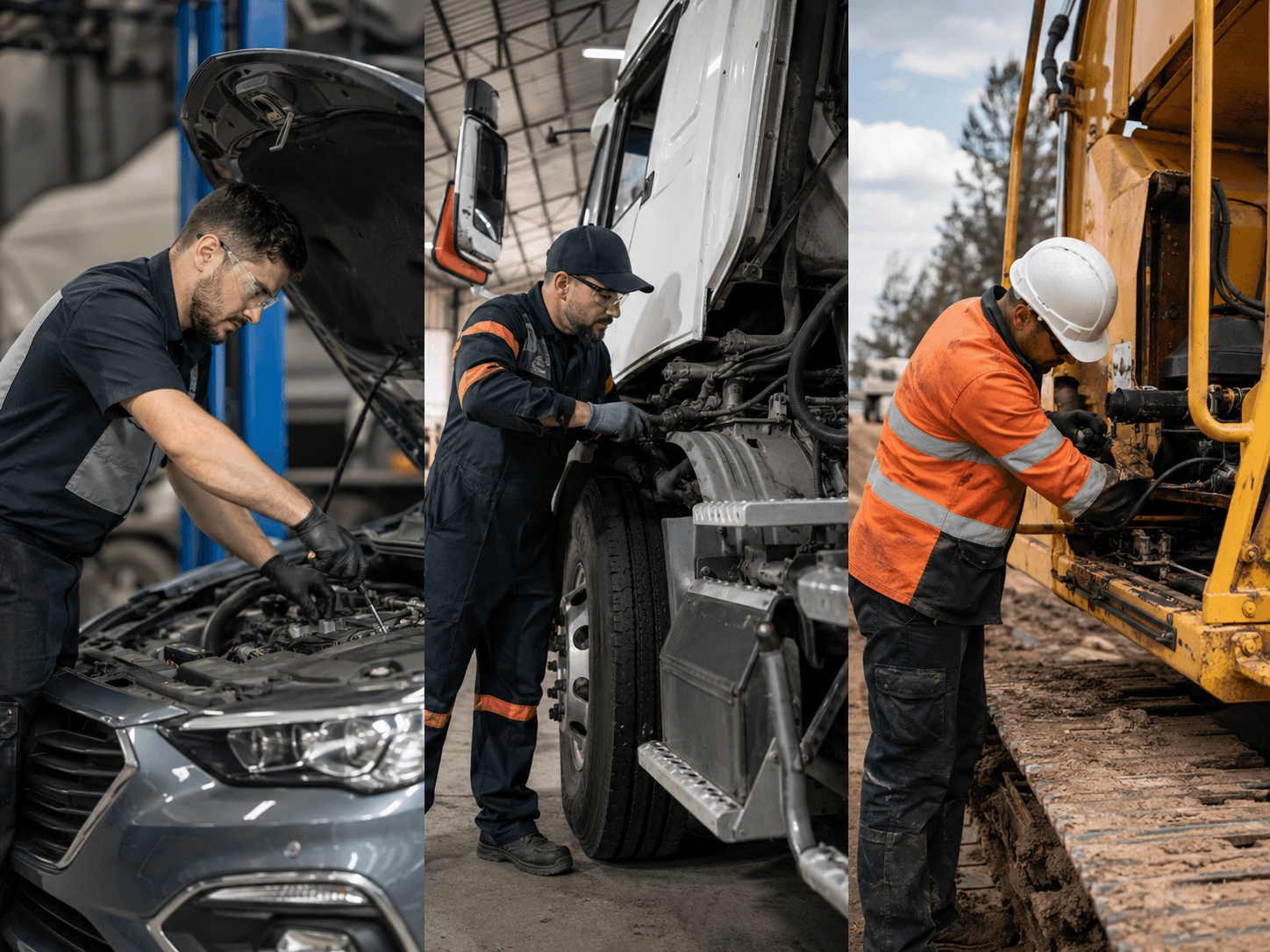
AUR Automotive Qualifications sit under the Automotive Retail, Service and Repair Training Package and prepare learners for three distinct pathways: light vehicle (cars and passenger vehicles), heavy vehicle (trucks, buses, and commercial transport), and mobile plant (construction, mining, and agricultural machinery). The right pathway depends on which vehicles or equipment a learner wants to work on and which industry they want to enter.
This guide breaks down what each pathway covers, how they differ, and how RTOs can deliver each one effectively.
Key Takeaways

AUR Automotive Qualifications are nationally recognised VET qualifications delivered under the Automotive Retail, Service and Repair Training Package. They cover vehicle servicing and repair, automotive electrical systems, heavy vehicle maintenance, mobile plant equipment, diagnostics, parts operations, vehicle body repair, and automotive refinishing.
The automotive industry is changing fast, driven by electric vehicle (EV) adoption, advanced vehicle electronics, computer-controlled systems, and stricter safety requirements. RTOs delivering AUR qualifications must keep training and assessment resources aligned with current requirements listed on Training.gov.au, the Australian Government’s official register for nationally recognised training products.
The core difference is the equipment learners train to service: passenger cars, commercial transport vehicles, or industrial machinery. Each pathway demands different technical knowledge, tools, and workplace skills.
| Feature | Light Vehicle | Heavy Vehicle | Mobile Plant |
|---|---|---|---|
| Main equipment | Cars, SUVs, passenger vehicles | Trucks, buses, commercial vehicles | Excavators, loaders, industrial machinery |
| Common systems | Petrol and diesel engines | Heavy-duty diesel engines, air brakes | Diesel, hydraulic, and electronic control systems |
| Typical workplaces | Workshops, dealerships | Transport fleets, logistics companies | Construction sites, mines, farms |
| Main focus | Vehicle servicing and repair | Commercial vehicle maintenance and safety | Equipment reliability and machinery diagnostics |
| Key skills | Diagnostics, servicing, repairs | Heavy systems, safety inspections, fleet maintenance | Hydraulics, electronics, machinery diagnostics |
Light vehicle qualifications focus on servicing, diagnosing, and repairing cars and passenger vehicles. Technicians typically work on petrol and diesel engines, transmissions, brake systems, steering and suspension, cooling systems, and automotive electrical components.
Common tasks include:
Modern cars carry electronic control units (ECUs) and sensor networks, so technicians read diagnostic fault codes, test electrical circuits, and analyse live performance data alongside traditional mechanical checks. This blend of mechanical and digital skill is now standard, not optional, in light vehicle servicing.
Light vehicle training commonly aligns with Certificate III automotive trade qualifications and light vehicle mechanical or electrical specialisations. RTOs should confirm exact qualification codes, packaging rules, and unit requirements through Training.gov.au before building delivery strategies, since these details change between AUR Training Package releases.

Heavy vehicle qualifications prepare technicians to service trucks, buses, and other commercial vehicles used in transport and logistics. Because a heavy vehicle failure can disrupt transport schedules, supply chains, and public safety, this pathway places extra weight on reliability and safety-critical work.
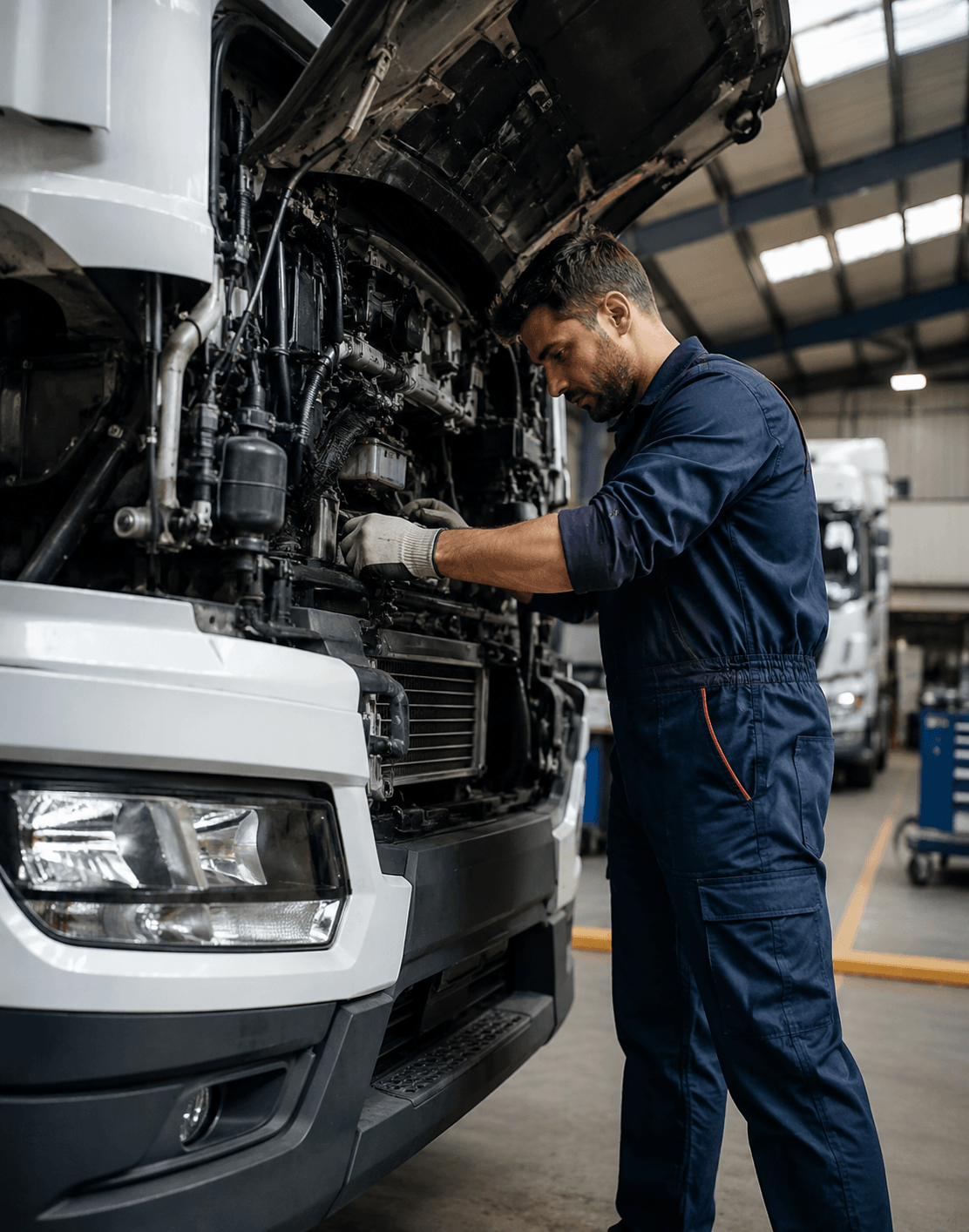
Heavy vehicle technicians typically work with:
The systems are built for sustained, high-load operation rather than everyday commuting, so technicians learn heavy-duty diagnostic processes and safety inspection routines specific to commercial fleets — skills that don’t transfer directly from light vehicle work.
Heavy vehicle technicians are in demand across freight transport, logistics companies, bus operators, government fleets, and agricultural transport, where growth in logistics and infrastructure investment continues to drive demand for skilled staff.
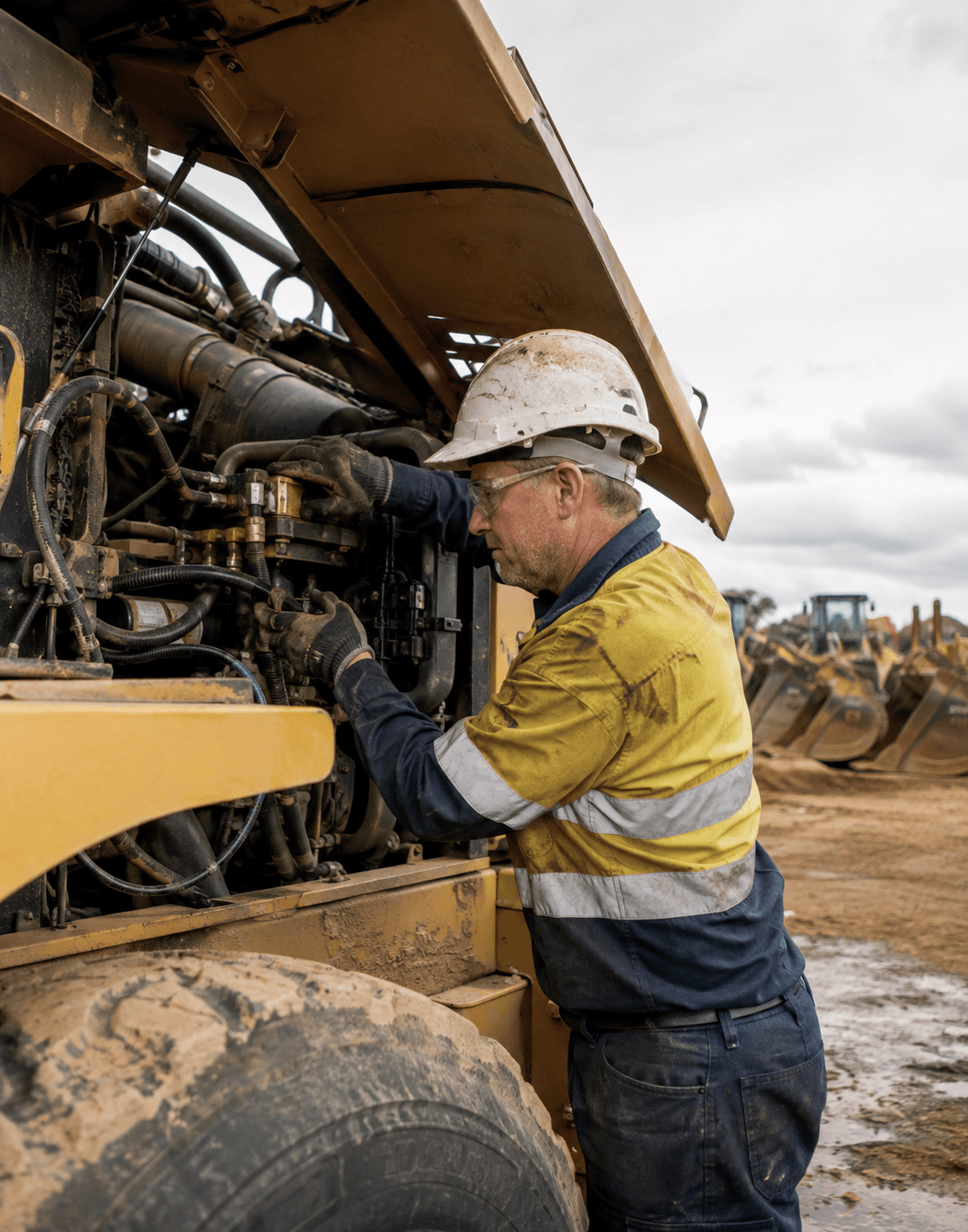
Mobile plant qualifications prepare technicians to maintain machinery used in construction, mining, agriculture, and infrastructure — equipment like excavators, loaders, bulldozers, and other earthmoving or industrial machines. Unlike road vehicles, mobile plant equipment operates in demanding environments where downtime directly affects business operations.
Mobile plant systems typically include:
Because modern machinery combines hydraulic and electronic systems, technicians interpret diagnostic data, test electrical components, inspect hydraulic circuits, and identify mechanical faults before repairing or replacing damaged parts. Strong hydraulic and electrical knowledge is essential here — arguably more central to this pathway than to light or heavy vehicle work.
Mobile plant technicians work across construction, mining, agriculture, civil infrastructure, and equipment hire — industries tied closely to Australia’s ongoing infrastructure and resources investment.
Career goals and preferred work environment should drive the decision, not just what’s available locally.
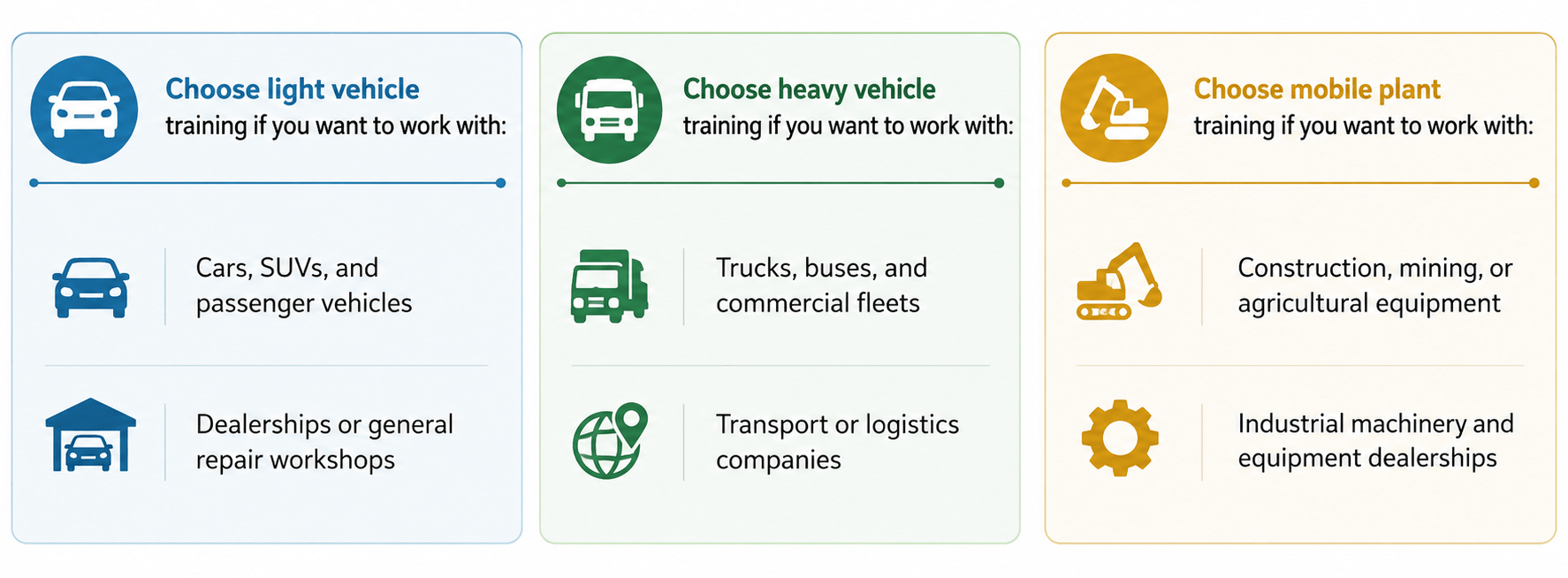
Beyond personal interest, learners should weigh local employment demand, industry growth in their region, and long-term career goals — a light vehicle qualification suits someone aiming for a dealership career very differently than a mobile plant suits someone targeting mining or civil construction.
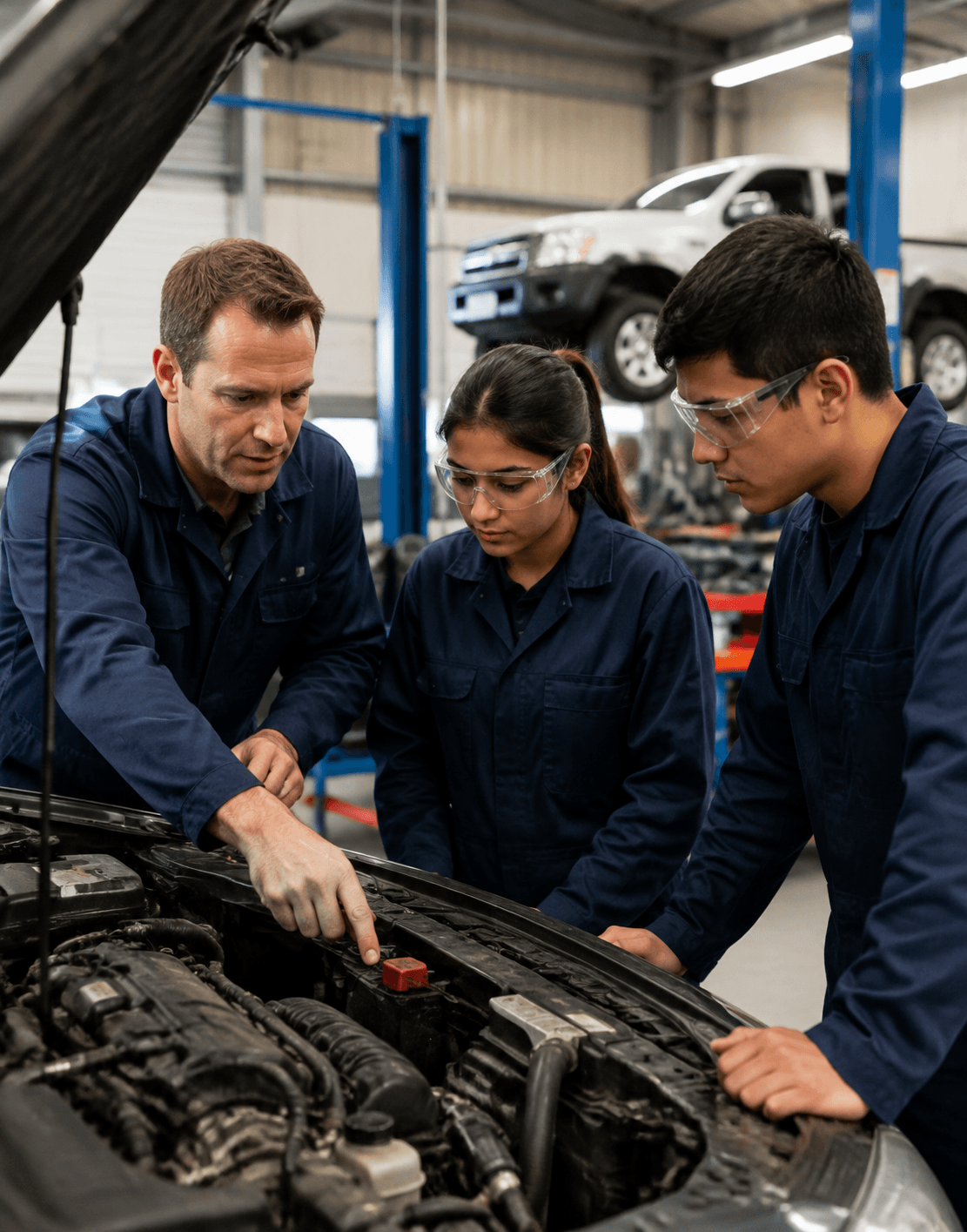
Automotive training is practical by nature, so effective delivery depends on workshop facilities, industry-relevant equipment, qualified trainers, and assessment activities that mirror real workplace tasks — safe equipment use, diagnostic processes, repair procedures, documentation, and technical decision-making.
Core resources RTOs need:
Automotive RTOs looking for structured assessment solutions can explore AUR Automotive Training Package Resources from VET Resources. These resources support learning and assessment development while leaving contextualisation and quality assurance to the RTO’s own systems.
Assessment must reflect real workplace performance, not just classroom knowledge. Under the 2025 Standards for RTOs, RTOs must ensure assessment practices are valid, reliable, flexible, and fair — the four core assessment principles ASQA applies during audits. Providers should also confirm assessment decisions stay consistent across trainers and delivery locations, and that resources match the specific qualification pathway being delivered — a resource built for light vehicle work won’t adequately cover heavy vehicle or mobile plant requirements.
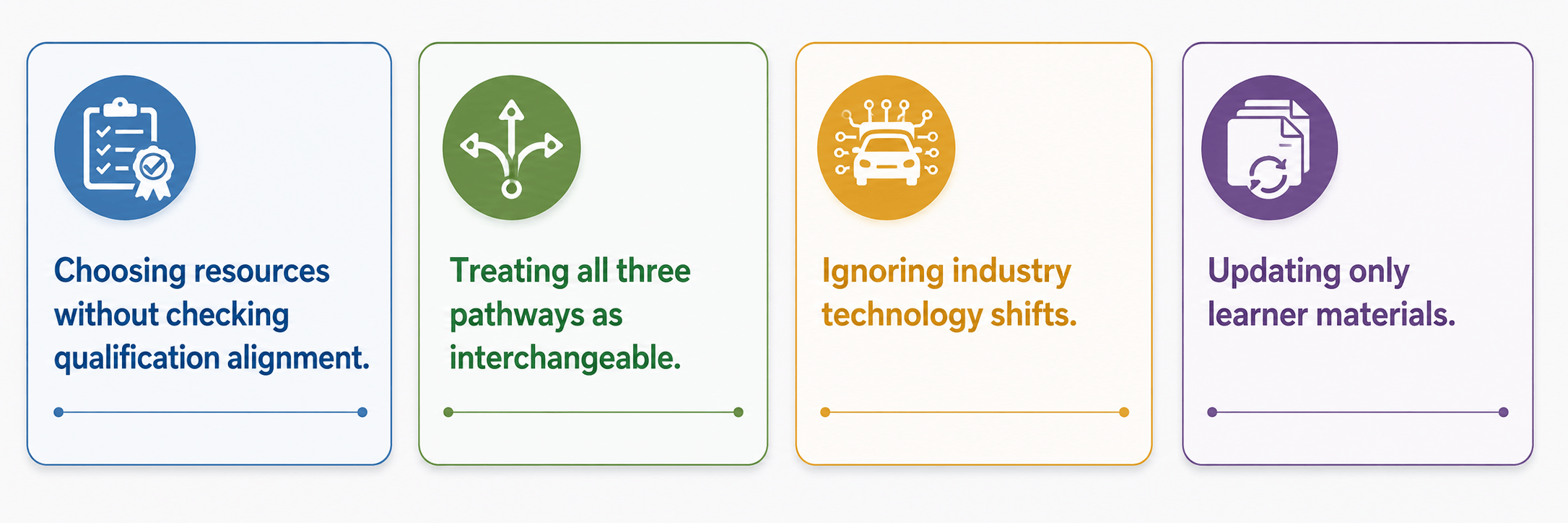
Choosing resources without checking qualification alignment. Confirm any resource matches the qualification, units, and assessment conditions actually being delivered.
Treating all three pathways as interchangeable. Light vehicle, heavy vehicle, and mobile plant have different skill requirements — one resource rarely fits all three well.
Ignoring industry technology shifts. EVs, hybrid systems, and advanced electronics are moving targets; resources need regular review, not a one-off update.
Updating only learner materials. A complete update touches assessment tools, mapping documents, trainer resources, TAS documents, and LMS content together.
VET Resources provides training and assessment solutions for RTOs delivering nationally recognised automotive qualifications, including learning delivery, assessment development, trainer support, and Audit-Ready documentation. Explore AUR Automotive Training Package Resources or structured Learning and Assessment Kits, and pair them with RPL Assessment Resources if you’re building recognition pathways. Review and contextualise every resource through your own quality system before use.
Light vehicle technicians keep passenger cars running. Heavy vehicle technicians keep commercial transport moving safely. Mobile plant technicians keep construction, mining, and agricultural machinery operating. There’s no universally “best” pathway — the right one depends on the equipment a learner wants to work with and the industry they want to enter.
For RTOs, delivering any of these three pathways well comes down to the same fundamentals: current training resources, valid assessment under the 2025 Standards for RTOs, qualified trainers, and genuine alignment with industry expectations.
Nationally recognised VET qualifications under the Automotive Retail, Service and Repair Training Package, covering automotive repair, servicing, diagnostics, and maintenance careers.
Light vehicle qualifications focus on cars and passenger vehicles; heavy vehicle qualifications focus on trucks, buses, and commercial transport vehicles.
A mobile plant mechanic maintains machinery used in construction, mining, and agriculture, working with diesel engines, hydraulic systems, and electronic controls.
It depends on industry demand, location, and personal interest — light vehicle, heavy vehicle, and mobile plant technicians all serve essential, in-demand industries.
VET Resources offers automotive learning and assessment materials designed to support nationally recognised training delivery.


