


Apprenticeships are one of the most powerful pathways in Australia’s skills system—but they’re also one of the hardest to sustain without structured support. That’s exactly where the Australian Apprenticeship Incentive System (AAIS) comes in.
The AAIS was designed to provide targeted financial support that encourages:
For RTOs, this matters because incentives don’t just influence funding conversations—they shape:
enrolment decisions
Australia has over 4,000 RTOs delivering vocational training. When apprenticeship incentives change, it directly impacts enrolments, employer engagement, and audit readiness across the VET sector.

The Australian Apprenticeship Incentive System (AAIS) is a structured program that supports apprenticeships and traineeships through financial incentives and assistance, targeted at roles Australia needs most.
The AAIS supports three key stakeholders:

A major feature of the AAIS is that many incentives are tied to priority occupations—jobs in skills shortage or high workforce demand.

This is where many RTOs see confusion:
Because they influence:
At the point of enrolment, your admin and admissions team should have a consistent process to:
Apprentice incentives can vary depending on:
Important note: Payment amounts and eligibility settings can change. Always verify the latest conditions before advising learners.
Many apprentice supports are structured as milestone payments. From an RTO viewpoint, this often creates a real-world expectation:
What RTOs should prepare:
Some industries (for example, housing-related or new energy trade pathways) may attract additional targeted supports.
RTO best practice:
Where applicable, income-contingent loans may help apprentices manage living/training costs.
RTO caution:
Loan systems are separate from RTO fees and have long-term repayment implications. Provide general guidance only and direct learners to official channels for final confirmation.
Some apprentices may be eligible for allowances if they must live away from home for work/training.
RTO support tip:
Include a “living away” question in your induction checklist so you can refer learners to the right support early.
Employer incentives typically aim to reduce:
Many employers look for incentives that help them during the early months when productivity is still ramping up.
RTO role in employer confidence:
Employers don’t just want incentives—they want predictable training delivery. Clear training plans and consistent communication can be the difference between retention and cancellation.
Where apprentices are hosted through Group Training Organisations (GTOs), there may be structured support options for host employers.
RTO role:
Coordinate timelines and progress updates so the apprentice’s placement doesn’t stall.
Some wage supports may apply for eligible apprentices in specific categories.
RTO best practice:
Avoid giving definitive advice on employer claim eligibility – provide process guidance and refer employers to official claim pathways.
RTOs often aren’t the ones receiving the payment—but they’re a major reason claims succeed (or fail).
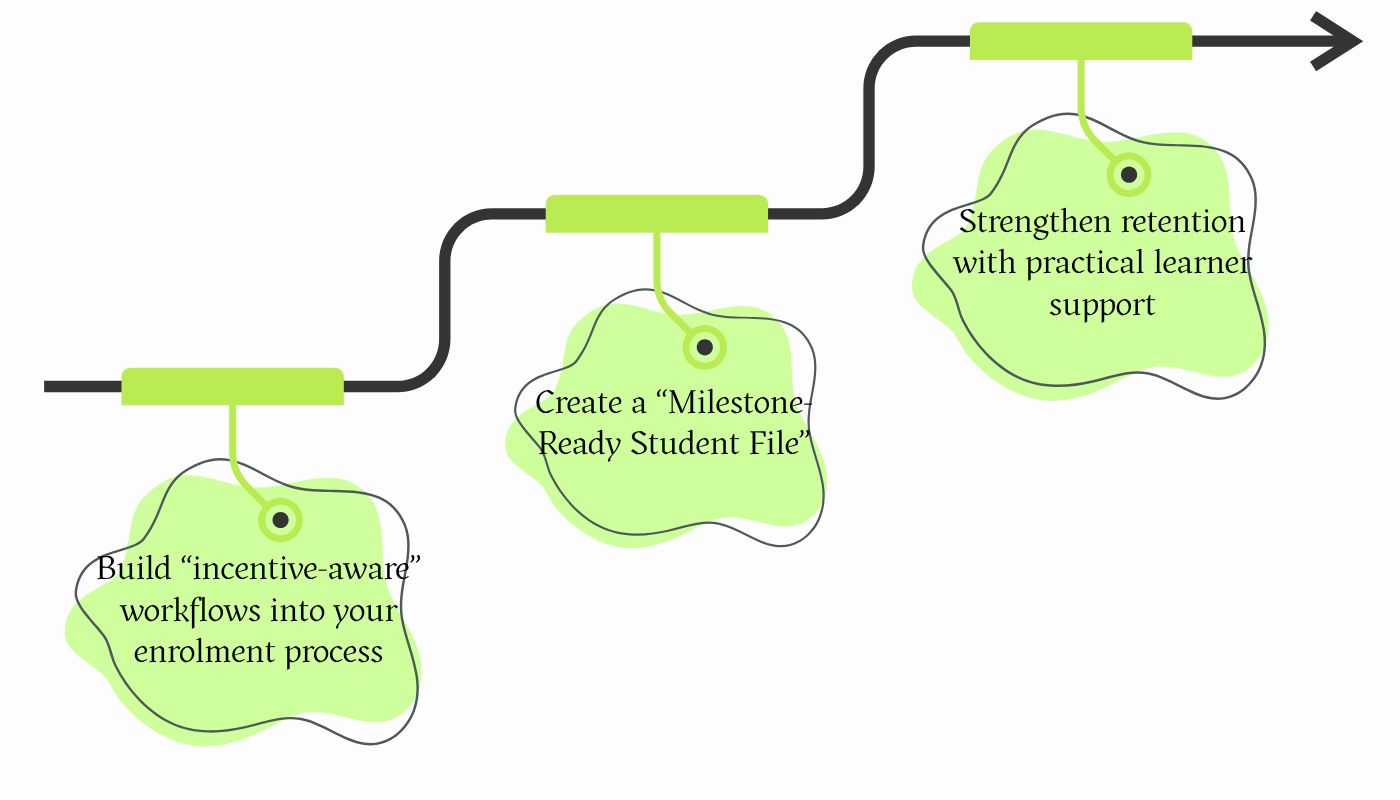
A) Build “incentive-aware” workflows into your enrolment process
B) Create a “Milestone-Ready Student File”
A simple internal checklist can reduce admin chaos:
C) Strengthen retention with practical learner support
Retention isn’t solved by funding alone. Completion improves when RTOs:
Here are the most common breakdown points RTOs can prevent:
No consistent Priority Occupation check at enrolment
Qualification selected doesn’t match the linked occupation pathway
Training plan delays causing start date confusion
Progress records are inconsistent or hard to produce
Milestones aren’t supported with learner check-ins
Completion processing is delayed
No internal apprenticeship incentives contact person
The AAIS is a support framework that influences enrolments, employer decisions, and apprentice retention. RTOs play a key role in eligibility checks, progress evidence, milestone support, and timely completion processing.
Priority settings often increase demand for certain trade and shortage-aligned qualifications. RTOs may see higher enquiries, faster onboarding expectations, and stronger employer focus on milestones.
Focus on process support: verify training plan accuracy, maintain clean progress evidence, standardise milestone check-ins, and direct employers to official channels for final claim decisions.
Maintain an audit-ready student file: enrolment verification, training plan, attendance/engagement, unit progression, learner support notes, employer communications, and completion outcome records.
Yes. Many providers use free samples as lead magnets. A good sample includes contextualised tools and evidence templates that support learner progression and strengthen compliance documentation.
Implement early LLND screening, structured milestone check-ins, workplace-aligned scheduling, and rapid intervention when engagement drops—plus efficient completion processing once competency is achieved.

