

The Australian Skills Quality Authority (ASQA) has launched an important consultation focused on Early Childhood Education and Care (ECEC) training, with far-reaching implications for Registered Training Organisations (RTOs) that offer qualifications such as the CHC30121 Certificate III and CHC50121 Diploma of Early Childhood Education and Care. As one of the most critical sectors within the Vocational Education and Training (VET) landscape, the ECEC industry is evolving rapidly, and ASQA is stepping up to ensure that training is of the highest quality and aligned with industry standards.
The 2025 consultation is designed to help ASQA gain insights into the challenges RTOs face, their current delivery practices, assessment methods, and their approach to compliance. With over 4,000 RTOs delivering qualifications across Australia, this initiative is vital to maintaining the integrity of the sector and ensuring that ECEC professionals are properly trained to meet the needs of young children.
For RTOs, this consultation presents an invaluable opportunity to participate in shaping the future of ECEC training in Australia. In this blog, we will dive deep into what the consultation entails, why it’s so important for RTOs, and the steps that your RTO can take to stay ahead of compliance requirements and enhance your ECEC training programs.
ASQA’s 2025 consultation on ECEC training aims to gather information about how RTOs deliver ECEC qualifications and whether these delivery methods align with industry expectations and regulatory requirements. The consultation will primarily focus on the CHC30121 Certificate III and CHC50121 Diploma of Early Childhood Education and Care, which are key qualifications for individuals entering the ECEC profession.
The consultation is a response to the growing demand for high-quality early childhood educators who are well-equipped to support children in their developmental stages. With the increased focus on the quality of early childhood education across Australia, ASQA wants to ensure that RTOs providing these qualifications are doing so in a way that guarantees their students receive the best possible preparation for real-world challenges.
The ASQA consultation will delve into various aspects of ECEC training, including: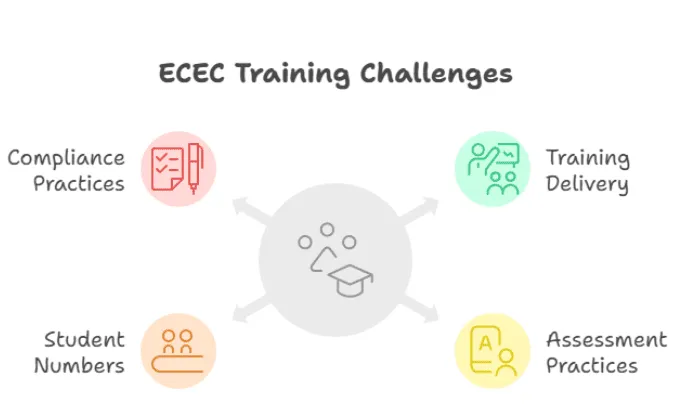
ASQA’s goal is to ensure that ECEC training is of the highest standard, benefiting both students and the broader Australian education system. The data collected through this consultation will inform ASQA’s ongoing efforts to improve the regulatory environment for ECEC training.
ASQA’s 2025 consultation is not just an administrative exercise. It is an important step in shaping the future of the ECEC training sector in Australia. Here’s why RTOs should care about it:
The early childhood education sector is crucial to the development of future generations. Educators play a pivotal role in children’s cognitive, emotional, and social development. For this reason, it is essential that training in this area is of the highest standard, fully preparing educators to meet the needs of children in diverse environments.
By engaging with this consultation, RTOs can help elevate the standard of ECEC training across the nation. This is an opportunity for RTOs to highlight best practices, share successful strategies, and contribute to a national conversation about the future of early childhood education.
ASQA’s oversight of the VET sector plays a key role in maintaining the integrity and reputation of the Australian education system. By addressing issues within ECEC training, ASQA strengthens the VET sector as a whole, ensuring that RTOs are consistently delivering quality education and assessment. A strong reputation for quality will attract more students and foster greater industry trust.
RTOs that participate in the consultation and demonstrate their commitment to continuous improvement will be seen as leaders in the field of ECEC training. This positions them for success in an increasingly competitive market.
The consultation results will likely influence future regulatory changes within the ECEC training space. By participating in the consultation, RTOs will be better positioned to anticipate and adapt to these changes. This proactive approach ensures that RTOs remain compliant with ASQA’s evolving expectations and avoid potential penalties or disruptions to their training operations.
RTOs that stay ahead of regulatory changes are able to integrate improvements into their training delivery without scrambling to meet new requirements at the last minute.
RTOs that provide ECEC training should take immediate action to align themselves with the goals of the ASQA consultation. Here are the steps your RTO can take now to stay ahead of the curve:
The first step is to engage with the consultation process. ASQA is actively seeking feedback from RTOs, and your input can help shape future regulatory decisions. This is a chance to voice your experiences, challenges, and successes in delivering ECEC training. Whether your RTO has faced specific compliance challenges or has developed innovative solutions, ASQA wants to hear from you.
RTOs should stay informed about the consultation timeline and ensure that their feedback is submitted on time. Participating in the consultation is not just about compliance—it’s about contributing to the broader conversation about the future of ECEC training.
RTOs should take this opportunity to assess the quality of their training delivery. Are your training materials engaging and aligned with industry expectations? Are your trainers up to date with the latest pedagogical practices? Are you using innovative technologies to enhance the learning experience?
By reviewing your current practices, you can identify areas where improvements can be made. This could involve updating training RTO resources, adopting new assessment methods, or integrating eLearning tools that make the training experience more interactive and engaging for students.
ASQA is known for its rigorous compliance standards. To remain compliant, RTOs must ensure that their training and assessment practices meet ASQA’s requirements. This includes ensuring that assessments are valid, reliable, and fair. RTOs should regularly review their compliance against ASQA’s guidelines and take corrective action when necessary.
If your RTO hasn’t conducted an internal compliance audit recently, now is the time to do so. This will help ensure that your operations are in line with regulatory requirements and avoid any compliance issues down the road.
The demand for early childhood educators is growing, and with it, the need for high-quality training. RTOs that offer ECEC qualifications should stay ahead of market trends to ensure they are meeting the needs of students and employers. This means offering flexible learning options, incorporating work placements into training programs, and using modern learning technologies.
By staying ahead of trends, your RTO can attract more students and increase enrolments in your ECEC programs.
ASQA’s consultation has the potential to reshape the way ECEC training is delivered in Australia. Here’s how it could impact RTOs and their training programs:
ASQA has expressed an interest in how RTOs integrate work experience into their training programs. This is important for ECEC qualifications, as practical experience is crucial for developing the skills needed to work in early childhood settings. The consultation may lead to stronger guidelines for work placements, ensuring that students gain real-world experience that prepares them for the workforce.
Assessment practices will also be a focal point in the consultation. ASQA aims to ensure that assessments reflect the skills and competencies required for work in the ECEC industry. If your RTO uses outdated assessment methods, this consultation presents an opportunity to revise and improve them to meet the evolving needs of the industry.
The consultation will likely lead to greater collaboration between ASQA, RTOs, and industry stakeholders. By aligning training programs with industry standards, RTOs can ensure that their graduates are job-ready and equipped to meet the demands of employers in the ECEC sector. This collaboration may also help RTOs create more relevant and responsive training programs that cater to the evolving needs of early childhood education.
To ensure that your RTO’s ECEC training programs remain competitive and compliant, here are some practical strategies for improvement:
Partnering with expert content providers like VET Resources can help ensure that your training materials are of the highest quality. VET Resources offers a wide range of interactive and engaging learner resources for the CHC30121 Certificate III in Early Childhood Education and Care, which can help keep students engaged and enhance their learning experience.


Ongoing professional development for trainers and assessors is essential to keeping up with industry changes. Encourage your staff to participate in training workshops, conferences, and online courses that focus on the latest trends in early childhood education and assessment practices.
Leveraging eLearning tools and technology can improve accessibility and engagement in training programs. Consider using learning management systems (LMS), video-based learning, and gamified activities to enhance the learning experience for students.


Providing strong support services to students can enhance their overall learning experience. This includes offering mentorship, career advice, and learning resources to help students succeed in their studies and transition smoothly into the workforce.
ASQA’s 2025 consultation is a pivotal moment for RTOs in the Early Childhood Education and Care sector. By engaging with the consultation and reviewing your training practices, your RTO can ensure that it remains compliant with ASQA’s standards and delivers high-quality training that meets the needs of students and employers. This is an opportunity to shape the future of ECEC training in Australia and set your RTO up for success in the years to come.
The ASQA Corporate Plan outlines the strategic goals and priorities for the agency over the next two years. For RTOs, understanding the plan’s implications helps ensure compliance with ASQA’s evolving expectations for training delivery and assessment.
The changes will impact RTOs by requiring them to refine their training methods, assessment strategies, and delivery approaches. RTOs must stay informed and adapt to these changes to maintain compliance and provide high-quality education.
RTOs should engage with ASQA’s consultation process, review their current training and assessment practices, and implement continuous improvement strategies to align with regulatory expectations.
Yes, free samples of LLND, RPL, and other training resources are available for download. These resources can help RTOs stay compliant while providing high-quality education.
Yes, VET Resources offers a variety of learner and assessment resources aligned with the latest ASQA standards. Check out our CHC30121 Certificate III in Early Childhood Education and Care resources for more details.