


Understanding Your Legal Obligations as an RTO (Without the Jargon)
Quick Takeaways
- Credit Transfer in VET is mandatory where a student provides a valid, authentic AQF certification for an identical, current unit of competency.
- RTOs must not deliver, assess, or charge for units that meet CT criteria — even if a student requests it.
- Exceptions apply only in rare cases like invalid documentation, licensing restrictions, or cancelled qualifications.
What This Blog Covers
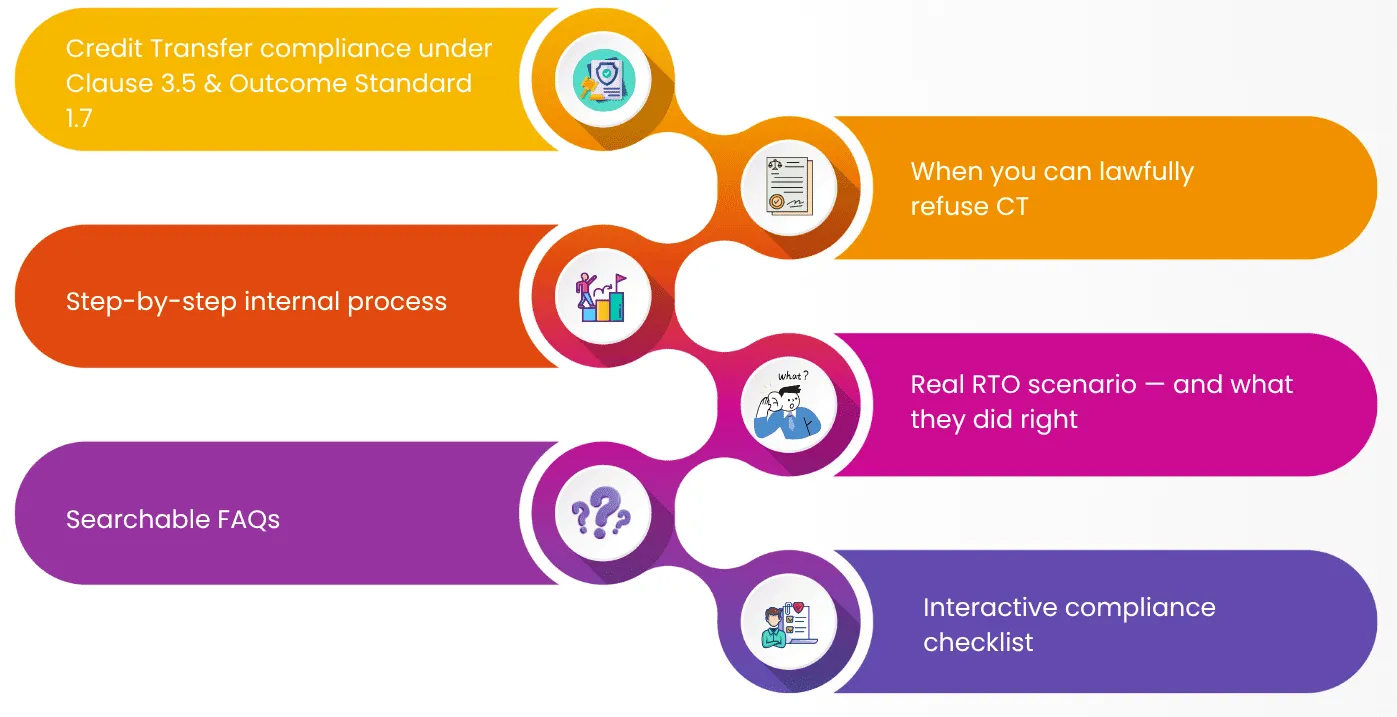
- 🧾 Credit Transfer compliance under Clause 3.5 & Outcome Standard 1.7
- ❌ When you can lawfully refuse CT
- 🧭 Step-by-step internal process
- 🛠️ Real RTO scenario — and what they did right
- 🔍 Searchable FAQs
- ✅ Interactive compliance checklist
What’s This About?
In the world of RTO compliance, Credit Transfer (CT) is one area that continues to spark confusion:
“Can we refuse it?”
“What if the certificate looks odd?”
“What if the issuing RTO is closed?”
These are valid questions — but the answers are often much clearer than most people think. This blog simplifies Credit Transfer rules based on the Standards for RTOs 2015 and the upcoming 2025 Outcome Standards.
Key Requirement: Credit Transfer in VET is Mandatory
Under:
- Clause 3.5 of the Standards for RTOs 2015, and
- Standard 1.7 of the Outcome Standards 2025,
If a student provides an authentic AQF certification for a unit of competency that is identical and current, your RTO must grant the credit.
This means:
When You Can Refuse a Credit Transfer
There are limited scenarios where refusal is justified:
| Reason | Refusal Allowed? | Why |
|---|---|---|
| The documentation is not authentic | ✅ | Missing RTO code, unverifiable, or altered |
| Licensing or regulatory exemptions apply | ✅ | E.g. industry-specific conditions |
| The student’s qualification was cancelled | ✅ | Usually for serious ASQA breaches |
| Full qualification sought via CT only | ✅ | Training or RPL must still be involved |
| RTO was deregistered due to non-compliant assessment | ✅ | Use RPL instead |
Verify authenticity via the USI Transcript Service or contact the issuing RTO.
Navigating Compliance: What Your Process Should Include
Your Credit Transfer Policy must show a clear, defensible pathway:
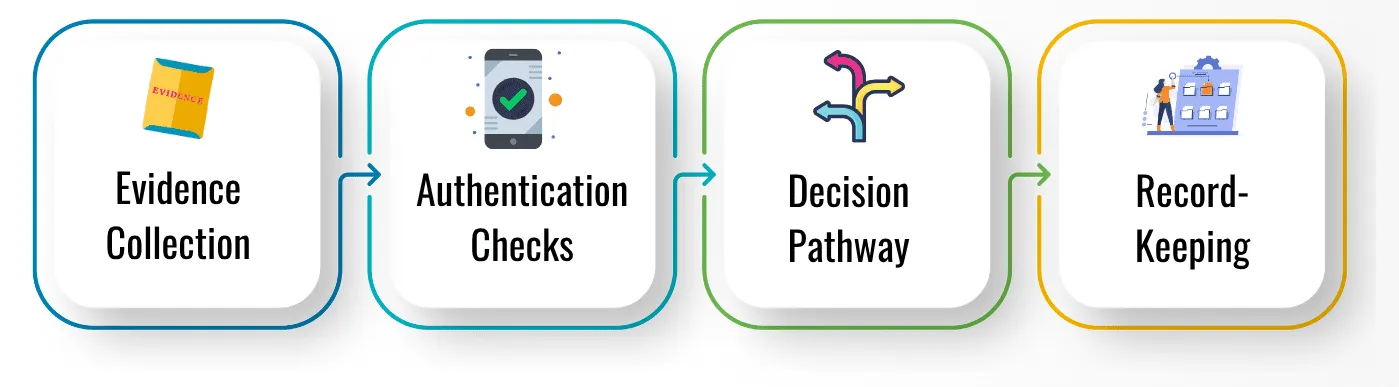
🔍 Evidence Collection
- Statement of Attainment
- Qualification or Record of Results
- USI transcript
🔐 Authentication Checks
- Confirm RTO is/was registered on training.gov.au
- RTO code present
- Document not edited or outdated
⚖ Decision Pathway
- Unit match + authentic? → Grant CT
- Unverifiable or non-compliant? → Deny and offer RPL
- Qualification cancelled? → Deny CT
- Doubtful content quality? → Use RPL, not CT
🗃 Record-Keeping
- CT decision logged with date and outcome
- Copy of documents filed
- Training plan reflects CT status
FAQs – Real Questions from RTOs and Students
❓ Can a student refuse Credit Transfer?
No. If the evidence is valid, you must apply CT. Student preference doesn’t override the Standards.
❓ Can we allow them to attend the class for practice?
No. That may affect course duration, cost, and compliance. CT units must be excluded from delivery entirely.
❓ What if the issuing RTO is now closed?
- If closed for financial reasons → CT may still apply
- If closed for assessment non-compliance → Use RPL
❓ What if the unit code has changed slightly?
If it’s not exactly identical in unit code and outcome, CT does not apply. Consider RPL.
❓ Can we issue a full qualification via CT?
Only if:
- All units are transferred from other authentic sources
- You verify all certifications and meet issuance requirements
You still must provide services (e.g. RPL or support), not just issue.
Case Study: Best Practice in Action
📍Scenario: A student provided a Statement of Attainment from a deregistered RTO.
What the RTO did right:
- Checked ASQA’s cancellation notices
- Discovered the RTO was closed for fraudulent assessments
- Denied CT, offered RPL
- Documented all actions and updated training plan
Result:
- Stayed compliant
- Protected the student and RTO reputation
- No audit risks
Interactive Checklist: Are You Credit Transfer Ready?
Use this to self-audit your CT policy and files:
| ✅ Item | 📄 Description | ☑️ Completed |
|---|---|---|
| 🔍 Evidence collected | SoA, qualification or USI transcript | |
| 🆔 RTO verified | RTO code and registration checked | |
| 📞 Authenticity confirmed | Contacted issuing RTO or USI portal | |
| 📝 Decision recorded | Notes saved in student file | |
| 📋 CT logged in training plan | Unit excluded from delivery/fees |
Final Thought
Credit Transfer in VET is not a suggestion — it’s a legal requirement. When done right, it saves time, cost, and audit headaches. When ignored, it opens the door to serious compliance risks.
If it’s valid, current, and identical, Credit Transfer in VET must be granted.
There’s no “opt-out.”

Disclaimer:
The information presented on the VET Resources blog is for general guidance only. While we strive for accuracy, we cannot guarantee the completeness or timeliness of the information. VET Resources is not responsible for any errors or omissions, or for the results obtained from the use of this information. Always consult a professional for advice tailored to your circumstances.