

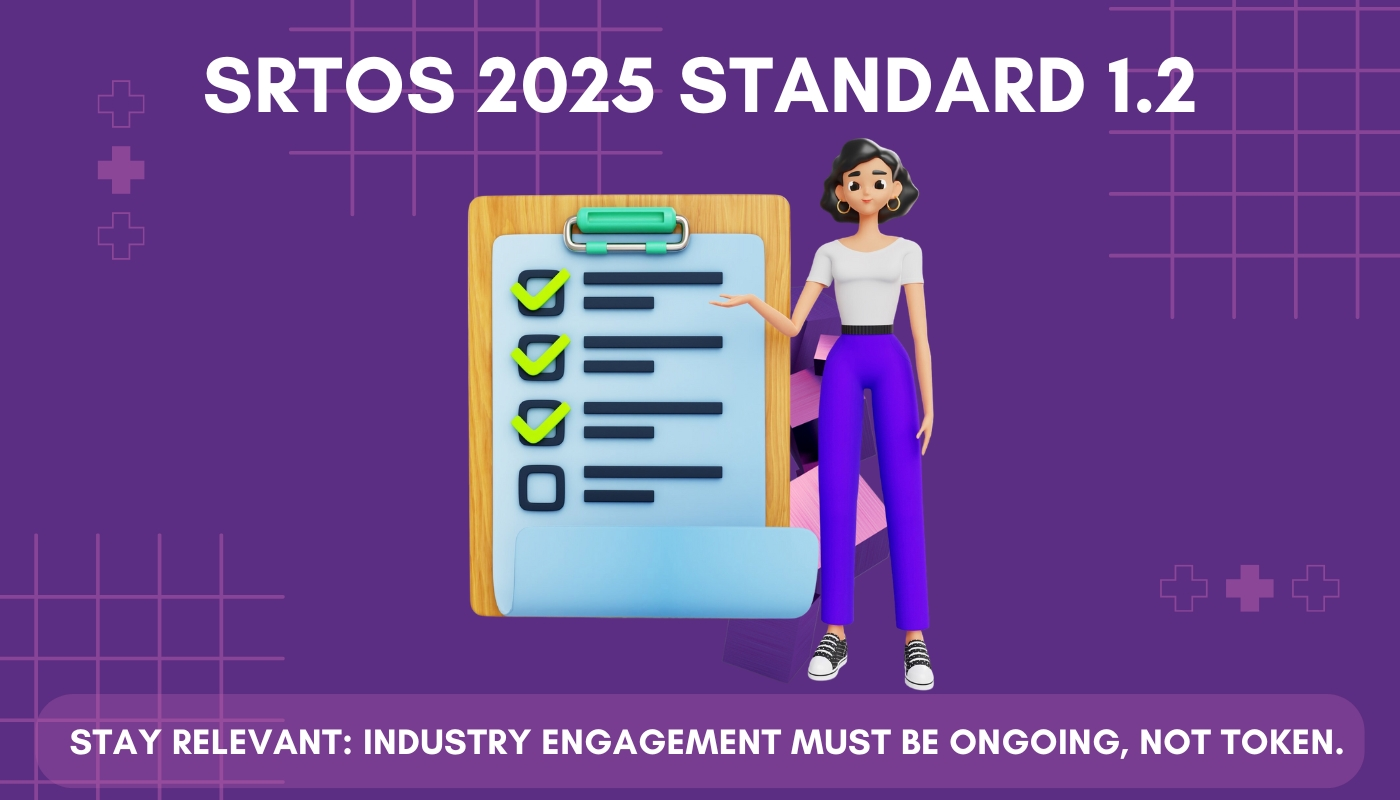
SRTOS 2025 Standard 1.2 – Stay Relevant: Industry engagement must be ongoing, not token. Evidence required (minutes, forms, letters)

Get a Free Sample
Table of Contents
Standard 1.2

Standard 1.2 requires RTOs to engage with industry in a way that is:

  • Ongoing – not a one-off exercise
  • Representative – input from more than one person or group
  • Meaningful – feedback must lead to improvements in TAS, delivery, or assessments
  • Well-documented – evidence such as minutes, forms, consultation letters, and action logs
Quick Summary

Done well, RPL saves learners time and money, supports workforce mobility, and keeps RTOs audit-ready. Done poorly, it’s a fast track to non-compliance.

Why Industry Engagement Matters

  • For CEOs & Directors: Shows your RTO is trusted by employers and delivering job-ready graduates.
  • For Compliance Managers: Demonstrates continuous alignment with Standards.
  • For Trainers & Assessors: Ensures training reflects workplace expectations.
  • For Students: Builds confidence that their skills match industry demand.

Breaking Down Standard 1.2 Requirements

Breaking Down Standard 1.2 Requirements

Audit Context:
An RTO delivering CHC33021 Certificate III in Individual Support was audited for Standard 1.2.

Findings (Non-Compliance):

Talk 1
Gear
Hierarchical Structure
  • Only one aged care supervisor consulted.
  • No engagement with peak bodies, graduates, or broader employer groups.
Keeping
  • Missing minutes and unsigned forms.
  • No file showing what actions were taken.

Compliant Approach (What the RTO Should Have Done):

  • Annual Calendar: Build consultation into TAS and validation cycles.
  • Diverse Stakeholders: Employers, professional associations, and graduates.
  • Action Evidence: Feedback led to:
    • Adding more simulation hours for dementia care.
    • Updating infection control delivery after COVID-19 guideline changes.
  • Strong Records: Signed forms, detailed minutes, action log showing what was updated in TAS.
Compliant Approach

Outcome:

  • Employers confirmed graduates were more placement-ready.
  • TAS clearly showed updates from industry input.
  • Audit evidence was complete and aligned with Standard 1.2.

Self-Assurance for Standard 1.2

ASQA’s new Standards expect RTOs to take responsibility for their own compliance – not wait for an audit to find gaps.

Here’s how your RTO can apply self-assurance to industry engagement:

👉 Self-Assurance Tip: Don’t just store evidence — close the loop. Show consultation → action → improvement. This is exactly what ASQA looks for.

Use our Free Industry Consultation Form Template to start building your self-assurance evidence today.

Common Pitfalls RTOs Face

  • Treating consultation as a tick-and-flick exercise.
  • Only engaging one employer contact.
  • Not revisiting consultation regularly.
  • Failing to record outcomes or changes made.
  • Storing evidence inconsistently or losing it.

FAQs on Standard 1.2

Standard 1.2 requires RTOs to actively engage with industry so that training and assessment remain relevant and reflect current workplace practices. It ensures that students graduate with skills employers actually need and that RTOs adapt to changes in industry standards, regulations, and technologies.

Consultation must be ongoing, not just once a year or at audit time. Best practice is to:

  • Align consultation with TAS reviews, validation cycles, and continuous improvement processes.
  • Conduct additional engagement whenever industry regulations, technologies, or practices change.

Industry representatives may include:

  • Employers and workplace supervisors
  • Professional and industry associations
  • Regulators and licensing bodies
  • Workplace assessors or mentors

Recent graduates employed in the field
👉 Importantly, ASQA expects input from a range of sources, not just one contact.

Evidence should show both consultation and outcomes. This may include:

  • Signed consultation forms or feedback surveys
  • Detailed meeting minutes or email summaries
  • Reports that compile and analyse industry input

Updates made to TAS, assessment tools, or delivery strategies as a direct result of feedback
👉 Auditors look for the consultation → action → improvement loop.

No. A single consultation, especially with only one person, is not sufficient. RTOs must demonstrate:

  • Engagement with multiple stakeholders
  • Consultation occurring across time (ongoing, not one-off)
  • Evidence that consultation led to continuous improvement

Industry feedback should directly inform:

  • TAS updates – sequencing, delivery methods, placement requirements, resources
  • Assessment validation – ensuring tasks are realistic, reflect current industry practice, and are fair
  • Continuous improvement – evidence that feedback has been reviewed and acted upon

  • “Tick-and-flick” consultation forms with yes/no answers and no detail
  • Consultation that is not ongoing (done once, then forgotten)
  • Consulting only one employer or supervisor
  • No evidence that feedback led to improvements
  • Missing or poorly managed records (unsigned forms, no minutes, no action logs)

  • Create an annual industry consultation calendar linked to validation and TAS review cycles
  • Use structured templates for capturing feedback
  • Keep an Industry Consultation Register showing who was consulted, when, and what action was taken
  • Review consultation outcomes in governance meetings and record decisions in your continuous improvement register

Best practice is to use:

  • Structured consultation forms (with sections for stakeholder details, feedback, and suggestions)
  • Meeting minutes signed by participants
  • An action log that records what changes were made to TAS, tools, or delivery
    👉 Using consistent templates makes evidence easy to present at audit.

Yes. Consultation can be done via surveys, email, video calls, or online forums. However:
  • Records must still be detailed and signed/verified.
  • Feedback should be specific enough to demonstrate meaningful input (not just “yes, it’s fine”).

Related Products

Disclaimer:
The information presented on the VET Resources blog is for general guidance only. While we strive for accuracy, we cannot guarantee the completeness or timeliness of the information. VET Resources is not responsible for any errors or omissions, or for the results obtained from the use of this information. Always consult a professional for advice tailored to your circumstances.

Ben Thakkar is a Compliance, Training, and Business specialist in the education industry. He has held senior management roles, including General Manager, with leading Registered Training Organisations (RTOs) and Universities. With over 15 years of experience, Ben brings extensive expertise across audits, funding contracts, VET Student Loans, CRICOS, and the Standards for RTOs 2025.

Get A Free Sample

Autumn Sale is live! Upto 75% Discount Valid till 31st March
Days
Hours
Minutes
Seconds

Request Your Free Sample, Product Info & Pricing Today

By submitting this form, you agree to the VET Resources Privacy Policy.